

Transporting specialty cheeses requires careful temperature management. However, temperature control is only half the battle. Cheese releases volatile organic compounds, moisture, and fats that can cause persistent odors inside commercial delivery bags. This is where working with an experienced cheese thermal tote factory makes a difference.
Standard promotional cooler bags often fail because they absorb food particles and odors over time. At Weierken, a specialized cheese thermal tote factory, we select materials that prevent bacterial growth and chemical absorption. Here is an analysis of the materials and techniques used to keep commercial thermal bags hygienic and odor-free.
1. Inner Lining Materials: Non-Toxic Polymers with Integrated Antimicrobial Agents
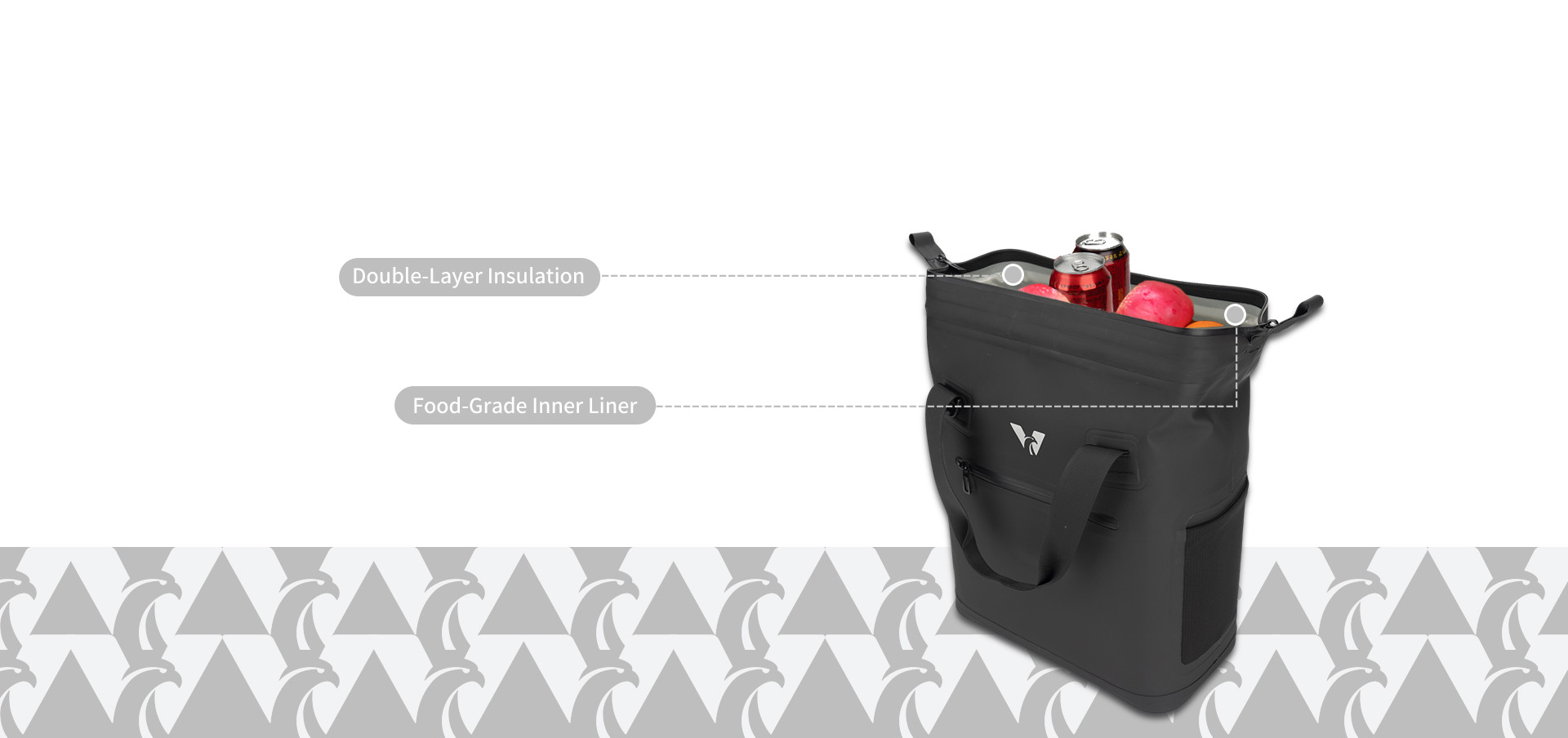
The interior lining of a thermal bag experiences direct contact with cheese packaging, condensation, and occasional whey spills. When choosing an industrial partner, businesses should ask how a cheese thermal tote factory sources its lining materials. Traditional materials often fall short in commercial settings.
This is why an expert cheese thermal tote factory will rarely use standard Polyvinyl Chloride (PVC) for high-end food transport. PVC contains plasticizers that easily absorb fat-soluble odor molecules. Over time, these molecules migrate into the plastic, making the bag impossible to deodorize. Instead, manufacturers utilize high-specification alternatives.
In-Line Antimicrobial Integration
Top-tier factories do not rely on cheap surface sprays that wash away after a few cleaning cycles. Instead, they use in-line antimicrobial modification during the extrusion of Thermoplastic Polyurethane (TPU) or Polyethylene Vinyl Acetate (PEVA) films.
Masterbatch Mixing: Silver-ion (Ag+) or zinc-based antimicrobial masterbatches are blended directly into the polymer resin before extrusion.
Uniform Distribution: The active agents become a permanent part of the material's molecular matrix.
Cell Membrane Disruption: This non-leaching antimicrobial technology continually disrupts bacterial cell membranes, targeting mold and odor-causing bacteria that thrive on residual milk proteins.
The Low-Absorption Advantage of TPU
Compared to PEVA, TPU provides superior performance for commercial distribution. It features a denser molecular structure and lower polarity, meaning it does not readily bond with the free fatty acids found in dairy products.
TPU also offers excellent resistance to grease and lactic acid. This helps ensure that any spilled liquids remain on the surface rather than penetrating the lining. It allows delivery staff to wipe the interior clean with simple sanitizing solutions between shipments.
2. Interlayer Adsorption Materials: Activated Carbon Fiber (ACF) Non-Woven Fabric
Strong cheeses like blue cheese, Limburger, or aged Cheddar release intense odors. Simple physical barriers cannot completely block these volatile compounds. For retail shipments or catering events, a cheese thermal tote factory will integrate secondary active layers to absorb gases.
To solve this, advanced manufacturers insert a specialized layer of Activated Carbon Fiber (ACF) non-woven fabric between the inner lining and the primary insulation core. This fabric usually ranges from 100g/m² to 150g/m² in weight.
The Mechanics of ACF Adsorption
Activated Carbon Fiber offers major advantages over traditional granular carbon filters, which can shift and settle over time:
High Specific Surface Area: ACF boasts a surface area of 1000 to 1500 m²/g, providing vast numbers of microscopic pores for gas trapping.
Rapid Adsorption Kinetics: The micro-pores are located directly on the fiber surfaces, allowing for much faster gas absorption compared to granular carbon.
Targeted Gas Capture: It effectively captures low-molecular-weight organic compounds, including ammonia, hydrogen sulfide, and isovaleric acid, which are responsible for strong cheese smells.
Layered Sealing Structure
A technical cheese thermal tote factory places this ACF fabric layer beneath the waterproof inner lining. By sealing the carbon layer within the bag’s structural envelope, the carbon never makes direct contact with food items.
This configuration allows the carbon to continuously capture any microscopic gas molecules that diffuse through the polymer liner. It ensures the exterior environment remains free of dairy odors during long transit routes.
3. The Thermal Core: Closed-Cell Irradiation Cross-Linked Polyethylene (IXPE)
The selection of the thermal core directly affects how long a bag remains hygienic. Standard open-cell polyurethane (PU) foam acts like a sponge. If liquid whey leaks through a damaged seam, the open pores suck in the moisture, creating a permanent breeding ground for odor-producing bacteria.
A professional cheese thermal tote factory understands that material integrity cannot rely on the inner lining alone. The core insulation must also resist liquid absorption.
This is why Weierken, acting as a direct-to-business cheese thermal tote factory, prefers Irradiation Cross-Linked Polyethylene (IXPE) foam for commercial-grade cold-chain products.
Key Benefits of IXPE Foam
100% Closed-Cell Structure: The individual gas cells inside the foam are completely sealed off from one another, preventing moisture transport.
Near-Zero Water Absorption: Even if the outer skin is punctured, the foam core will not absorb spilled dairy liquids or water.
High Thermal Efficiency: With low thermal conductivity, it maintains the target temperature longer, reducing cheese sweating and volatile emissions.
Chemical Resistance: IXPE does not degrade when exposed to commercial disinfectants, fats, or lactic acids.
By using IXPE, manufacturers protect the structural insulation of the bag from rotting. This ensures the bag does not develop a damp, sour odor after months of intensive use in the field.
4. Seaming Technology: High-Frequency Radio Frequency (RF) Welding
Stitched seams present a significant hygiene challenge in food logistics. Standard sewing needles create thousands of tiny holes. These pinholes allow liquid cheese residues, fats, and condensation to seep into the internal insulation layers where they cannot be cleaned.
Any high-volume cheese thermal tote factory must address this issue. The solution lies in eliminating traditional sewing thread entirely for the interior compartment.
Seamless Radio Frequency (RF) Welding
Our production lines as a cheese thermal tote factory utilize RF welding machines to join polymer panels together at a molecular level.
Molecular Excitation: High-frequency electromagnetic waves cause the molecules of the TPU or PEVA sheets to vibrate rapidly, generating localized heat.
Fused Joints: The materials fuse together under pressure, creating a single, continuous sheet of polymer across the joint.
Zero Stitch Holes: The process yields a completely waterproof, air-tight seam that prevents liquid penetration.
Easy-to-Clean Corners: Eliminating thread lines removes the small crevices where food debris and bacteria usually hide.
This welding process makes the internal bladder of the bag entirely leakproof. Commercial operators can wash or spray the interior compartment without worrying about water trapped inside the insulation layers.
A Comparison of Odor Control Materials
To assist procurement managers, the table below compares standard materials with the advanced alternatives used by professional thermal bag factories.
| Component | Standard Material (High Odor Risk) | Advanced Material (Low Odor Risk) | Primary Benefit |
|---|---|---|---|
| Inner Lining | Standard PVC Film | TPU with Silver-Ion Masterbatch | Resists fat absorption; continuously inhibits bacterial growth. |
| Odor Adsorption | None or Granular Carbon | Activated Carbon Fiber (ACF) | Rapidly traps volatile organic compounds and dairy gases. |
| Insulation Core | Open-Cell PU Sponge | Closed-Cell IXPE Foam | Zero liquid absorption; prevents internal rot and mold. |
| Seam Construction | Traditional Thread Stitching | Radio Frequency (RF) Welding | Eliminates pinholes; prevents liquid from leaking into the core. |
Partner with a Technical Cheese Thermal Tote Factory
Choosing the right cheese thermal tote factory goes beyond simple thermal insulation ratings. For commercial operations, logistics companies, and cheese producers, keeping odors under control is vital for maintaining brand reputation and food safety standards.
As a commercial cheese thermal tote factory, Weierken provides customized thermal solutions engineered for demanding food-logistics environments. We select raw materials that protect against mold, bacteria, and persistent odors.
Contact our engineering team today to discuss your specific requirements. We can assist you with material selection, custom dimensions, and branding options.
Are you ready to upgrade your food delivery equipment? Request a quote from our material specialists today.
Frequently Asked Questions
Why does a premium cheese thermal tote factory reject PVC liners?
PVC liners contain plasticizers that make the material flexible. These chemical additives easily absorb the lipophilic (fat-soluble) odor compounds released by cheese. Once these compounds penetrate the PVC matrix, they cannot be washed away, leaving a permanent sour smell.
How long does the silver-ion antimicrobial lining last?
Because the silver-ion or zinc-based additives are integrated directly into the polymer resin during extrusion, they do not wash off or wear away. The antimicrobial properties last for the entire service life of the polymer lining material.
Can the activated carbon fiber (ACF) layer handle damp environments?
Yes. The ACF layer is sealed beneath the waterproof TPU or PEVA lining. This prevents direct exposure to liquid water while still allowing the carbon to absorb gas molecules that migrate through the thin polymer barrier.
Does a cheese thermal tote factory offer custom sizes for different cheese varieties?
Yes. As a custom manufacturer, Weierken designs thermal bags to match specific logistics requirements. Whether you are shipping large blocks of wheels or small, delicate retail portions, we can customize the dimensions and insulation thickness.
What is the typical lifespan of an odor-control bag made by a specialized cheese thermal tote factory?
With proper care and cleaning, a commercial bag featuring RF-welded TPU linings and IXPE closed-cell insulation can last for several years of daily use. This durability is significantly higher than that of stitched, PVC-lined bags.
What is the best way to clean these specialized thermal bags?
We recommend wiping the seamless interior lining with a damp cloth and a mild detergent or food-safe sanitizing spray. Avoid abrasive scrubbers that could scratch the polymer lining, as micro-scratches can create places for bacteria to settle.