
For any pizza business, the quality of delivery determines customer satisfaction. A pizza straight from the oven has a crisp crust, melted cheese, and a rich aroma. However, transport often degrades this quality. During the journey, steam traps inside the delivery bag, turning a crisp crust into a soggy, wet mess. Finding a reliable pizza insulated tote maker is essential to solving this common delivery problem.
At weierken, we study the science of food transport. We know that thermal bags must do more than keep food hot. They must also manage moisture. A simple sealed bag cannot deliver a high-quality pizza. In this guide, we will analyze the causes of soggy crusts. We will also explain how a professional insulated pizza tote manufacturer designs effective solutions for delivery fleets.
Understanding these technical aspects helps B2B buyers choose the right equipment. Whether you manage a local pizzeria or a large delivery network, selecting the correct thermal tote will protect your food quality and preserve your brand's reputation.
The Physics of the Soggy Crust: A Pizza Delivery Crisis
When a pizza cooks at high temperatures, the dough releases moisture as steam. A fresh pizza leaving the oven at 80°C to 90°C continues to release hot steam for several minutes. When placed in a cardboard box, this steam escapes into the immediate environment.
If you place that box into a completely sealed thermal bag, the trapped steam quickly cools. As the temperature inside the bag drops, the steam undergoes condensation prevention failure. The water vapor transforms into liquid water. This water settles on the cardboard box, making it soft and wet, and eventually transfers back to the pizza crust.
This structural breakdown of the crust leads to several problems for pizza businesses:
Negative Customer Reviews: Customers expect a crisp, oven-fresh texture, not a soggy, rubbery crust.
Damaged Packaging: Condensation weakens cardboard boxes, making them collapse when stacked.
Lower Food Temperatures: Wet cardboard pulls heat away from the pizza faster than dry cardboard, resulting in lukewarm food.
To prevent soggy pizza crust, your delivery bags must balance heat retention with moisture control. This requires specialized materials and smart structural engineering.
Balancing Heat and Humidity: How a Maker Solves the Problem
A professional pizza insulated tote maker designs bags that manage heat and moisture at the same time. This is a delicate balance. If a bag vents too much steam, it loses thermal energy. If it retains too much heat, it traps moisture. We use several key design features to maintain this balance.
1. Precision Ventilation Technology
We install metal or plastic ventilation grommets in specific spots on the tote bag. These vents allow wet air to escape while keeping cold drafts out. We position these grommets along the sides or top flaps, away from direct wind, so air pressure during transit does not force cold air inside the bag.
This simple venting system stabilizes the air pressure inside the bag. It lets steam escape naturally, keeping the cardboard dry and maintaining a high level of thermal efficiency.
2. Breathable Outer and Inner Fabrics
To improve performance, we design breathable pizza delivery bags using multi-layered technical fabrics. Instead of standard solid PVC, we select fabrics with a controlled vapor transmission rate. These materials have micro-pores that allow water vapor molecules to pass through while keeping the larger warm air currents trapped inside.
This design reduces condensation buildup inside the bag, keeping the air dry and warm throughout the delivery route.
3. Specialized Anti-Condensation Linings
The interior lining is critical for managing moisture. Many standard bags use smooth aluminum foil sheets that collect water droplets easily. To prevent this, we use embossed or textured foil linings, or laminated non-woven fabrics.
These textured surfaces spread moisture over a larger area, allowing it to evaporate quickly rather than pooling into large drops. This keeps water from dripping onto the pizza boxes below.
Evaluating a Pizza Insulated Tote Maker: A B2B Buyer's Guide
As weierken continues to innovate in food logistics, we advise B2B buyers to evaluate suppliers on more than just price. A cheap thermal bag often fails after a few weeks of heavy use, increasing your total cost of ownership. Here is how to evaluate a professional manufacturer.
Customization and Engineering Support
A reliable pizza insulated tote maker should offer more than standard off-the-shelf products. They should design custom pizza delivery bags tailored to your specific delivery methods, whether your drivers use cars, motorcycles, or bicycles.
Your manufacturer should help you choose the right sizes (such as 10-inch, 12-inch, or 18-inch options) and configuration styles, including top-loading or front-loading designs. They should also offer integrated heating element options for longer delivery routes.
Material Safety and Food Compliance
Since these totes carry hot food, the materials must meet strict safety standards. Ask your manufacturer if their inner linings are food-contact safe and certified by organizations like the FDA or LFGB. The materials must remain odorless and stable at temperatures up to 100°C.
Industrial Durability Testing
Commercial food delivery places high demands on gear. To ensure your bags last, look for manufacturers who conduct rigorous quality and durability testing:
Stitch Tensile Testing: Verifies that the handles and shoulder straps will not tear when carrying heavy loads.
Zipper Cycle Testing: Ensures the zippers can handle thousands of quick opens and closes without splitting.
Abrasion Resistance Testing: Confirms the outer fabric can withstand rough contact with concrete, vehicle trunks, and metal racks.
Investing in durable, high-quality bags helps you avoid frequent replacement costs and keeps your delivery team working efficiently.
Why Material Choices Impact Your Delivery Performance
To help you compare different options, let us look at the common materials used by a professional insulated pizza tote manufacturer. Each material has unique properties that affect both thermal insulation and moisture management.
| Material Layer | Common Options | Pros | Cons |
|---|---|---|---|
| Outer Fabric | 1680D Nylon / Heavy PVC Tarpaulin | Highly durable, waterproof, easy to wipe clean. | Heavy, less breathable if not vented properly. |
| Insulation Core | 8mm–12mm EPE Foam / Hollow Cotton | Excellent thermal efficiency, lightweight, structural support. | Thicker foam increases overall bag bulkiness. |
| Inner Lining | Embossed Aluminum Foil / Food-grade PVC | Reflects radiant heat, easy to sanitize, non-toxic. | Smooth foil can accumulate surface condensation if unvented. |
By selecting the right combination of these materials, we can design wholesale insulated food totes that meet your specific delivery times, climate challenges, and budget requirements.
Frequently Asked Questions (FAQ)
1. Why do pizzas get soggy during delivery, even in a warm bag?
Pizzas release hot steam as they cool. In a sealed bag, this steam has nowhere to go. It condenses back into liquid water on the bag's cold inner surfaces and drips onto the cardboard box, destroying the crisp texture of the crust. Proper ventilation and breathable materials help prevent this issue.
2. How do ventilation grommets help prevent soggy crusts without letting too much heat escape?
Ventilation grommets allow moist steam to escape the bag naturally. Because steam rises, placing vents near the top or high on the sides of the bag lets humidity escape while keeping the warmer air trapped around the pizza boxes, maintaining a stable temperature.
3. What are custom pizza delivery bags made of?
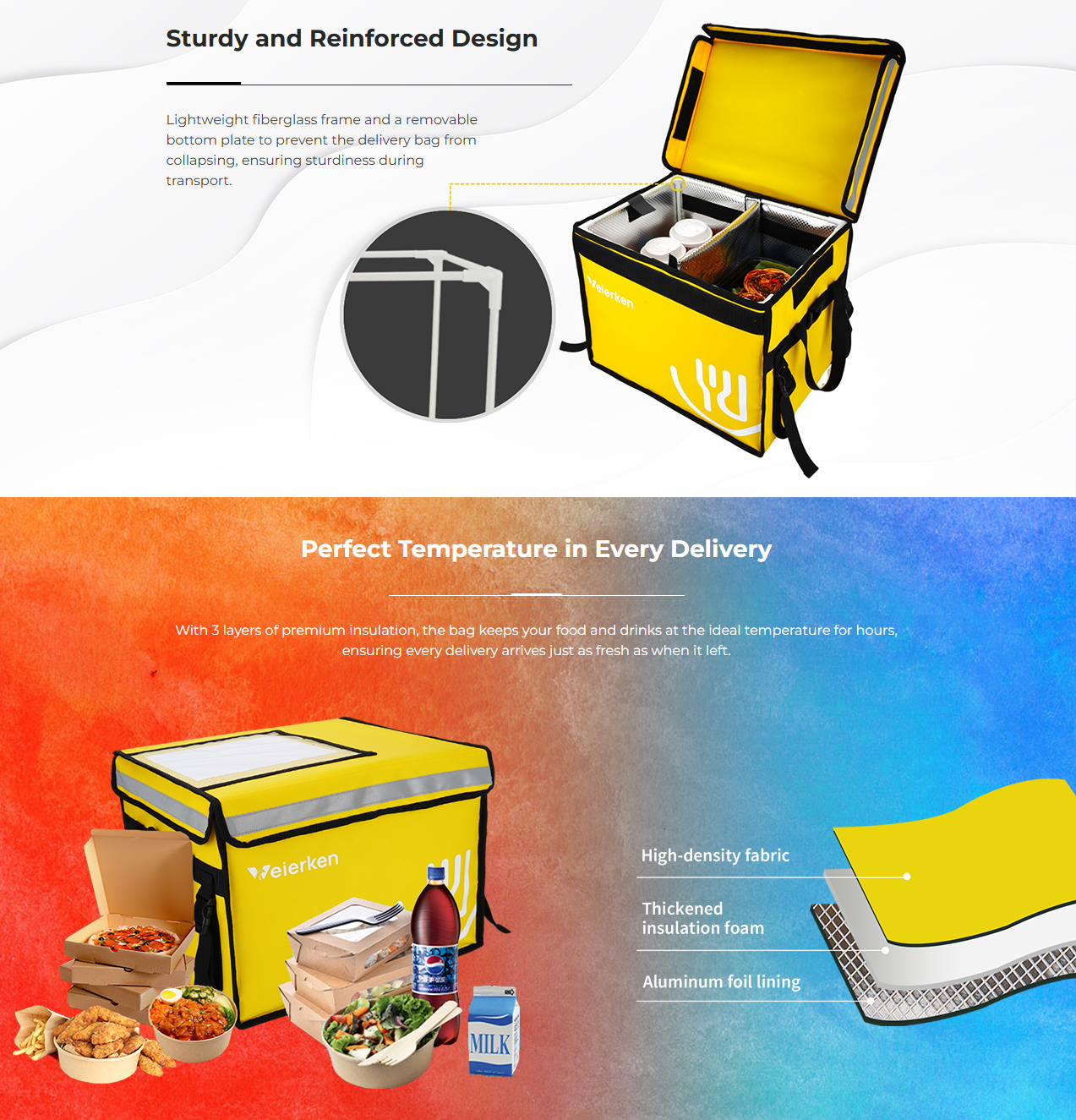
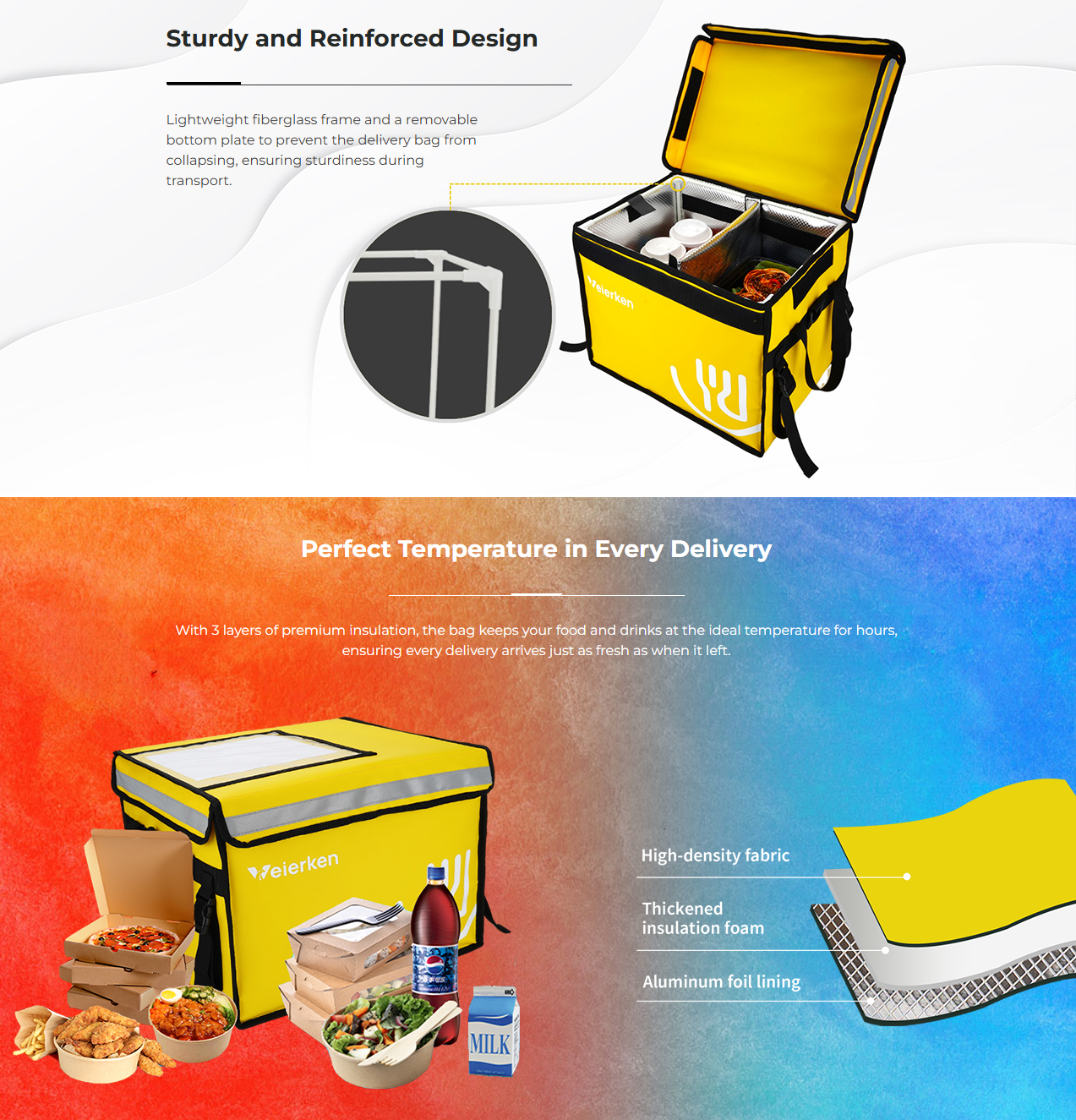
These bags typically use three layers: a water-resistant outer fabric (like 1680D nylon or PVC), a thermal insulation core (usually 8mm to 12mm thick EPE foam), and a food-safe inner lining (like reflective aluminum foil or PVC) that reflects heat and is easy to clean.
4. How do you test the durability of your wholesale insulated food totes?
Our factory runs several quality control tests. We perform load-bearing tests on the carrying straps, cycle tests on the zippers, and abrasion tests on the outer fabrics. This ensures our moisture-control pizza carriers stand up to daily commercial use.
5. Can we print our brand logo and custom colors on the totes?
Yes. As a full-service manufacturer, we offer complete OEM and ODM customization. We can screen-print your logo, add reflective safety strips, match your brand's colors, and size the bags to fit your specific pizza boxes and delivery vehicles.
6. What is the average lifespan of a professional delivery bag?
With daily commercial use, a high-quality delivery bag made with commercial-grade zippers and durable outer fabrics should last between 12 to 18 months. Proper cleaning and care can extend this lifespan even further.
Partner with Weierken for Expert Food Delivery Solutions
Delivering hot, crispy pizza requires more than just a basic bag. It takes a carefully engineered balance of thermal protection and moisture control. Partnering with an experienced pizza insulated tote maker like weierken ensures your delivery fleet has the right tools to keep food fresh and customers satisfied.
We work closely with food service businesses to design, prototype, and manufacture reliable thermal bags. Whether you need standard pizza carriers, large thermal totes, or custom heating solutions, our team is here to support you with high-quality materials and professional manufacturing.
Ready to improve your delivery quality and protect your brand's reputation? Contact our commercial sales team today to discuss your business needs. Request a quote today and find the perfect delivery solution for your business.