

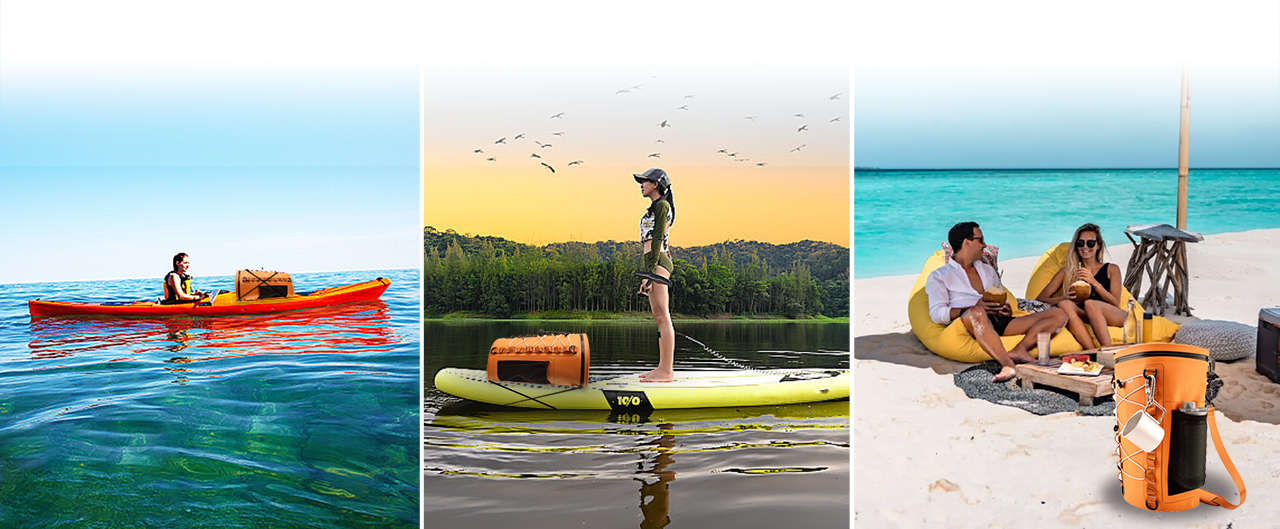
Standup paddleboarding has outgrown simple river-running gear. Paddlers now hit the water carrying smartphones, smart car keys, drone controllers, and battery packs. A splash-proof bag that leaks after a three-second drop into salt water ruins customer trust and spikes warranty returns.
At the same time, international customs and environmental regulations are tightening. Sourcing managers cannot afford to work with low-tier suppliers who still rely on off-the-shelf PVC and manual stitching. You need an engineering-driven paddle board dry bag OEM that controls every millimeter of material science and thermal bonding.
Specialized manufacturers like Weierken build gear to international testing standards rather than marketing guesswork. If you are auditing contract factories for your 2026 product line, use this comprehensive technical checklist to verify their engineering capabilities before signing a manufacturing agreement.
Checkpoint 1: Waterproof Rating Standards – Engineering IPX6 vs. Submersible IPX8
Many suppliers use the word "waterproof" casually. You must force precision. A true marine-grade bag must survive unpredictable capsizes and continuous submersion, not just light rain or surface spray.
The Physical Limitations of Roll-Top Closures
Traditional roll-top bags rely on mechanical friction. Rolling a vinyl strip three times creates a reliable seal against surface splashes (IPX6). However, once dragged underwater or held beneath the surface for two minutes, hydrostatic pressure forces water through the micro-channels at the side folds.
- Roll-tops work well for low-cost, high-volume day bags.
- They fail the safety threshold required for expensive digital electronics.
- If your brand markets dry storage for valuables, a roll-top alone cannot guarantee real submerged protection.
Airtight and Submersible Zipper Integration
True IPX8 performance demands an airtight, gas-impermeable zipper. These closures utilize interlocked thermoplastic teeth wrapped inside a vulcanized rubber or TPU tape. When zipped shut, the teeth press the elastomeric lips together under extreme tension, sealing out air and water.
Look for suppliers experienced in installing genuine TIZIP systems or calibrated airtight TPU tooth zippers. The zipper terminal requires a molded U-dock stop that completely prevents micro-gaps at the puller base. Without a perfectly sealed dock, internal air escapes under load, allowing water into the main compartment.
OEM Audit Points: Immersion Testing Equipment
Ask to inspect the factory floor via video call or in person. Does your paddle board dry bag OEM maintain an in-house hyperbaric testing chamber? You need a partner that submerges pressurized prototypes to simulated depths of 1 meter to 3 meters for 30 minutes, backed by third-party testing reports from SGS or TÜV.
Checkpoint 2: The 2026 Material Shift – Phasing Out PVC for Eco-TPU
The materials that built the early watersports accessory market are becoming commercial liabilities. Transitioning your accessory catalog to technical polyurethane is no longer an optional upgrade; it is an operational requirement for 2026.
Why Regulatory Bans Kill Traditional PVC
Polyvinyl Chloride relies on plasticizers (phthalates) to remain flexible. Under heat and UV exposure, these plasticizers leach out, leaving the bag sticky, discolored, and prone to cracking along stress folds. Furthermore, expanding European REACH annexes and North American consumer safety acts heavily restrict ortho-phthalates.
If your factory produces goods using non-compliant plasticizers, customs officials will seize and destroy your containers at port. Eco-conscious paddlers will also call out toxic chemical odors directly on social media and retail review boards.
Technical Advantages of Eco-TPU and rPET Laminates
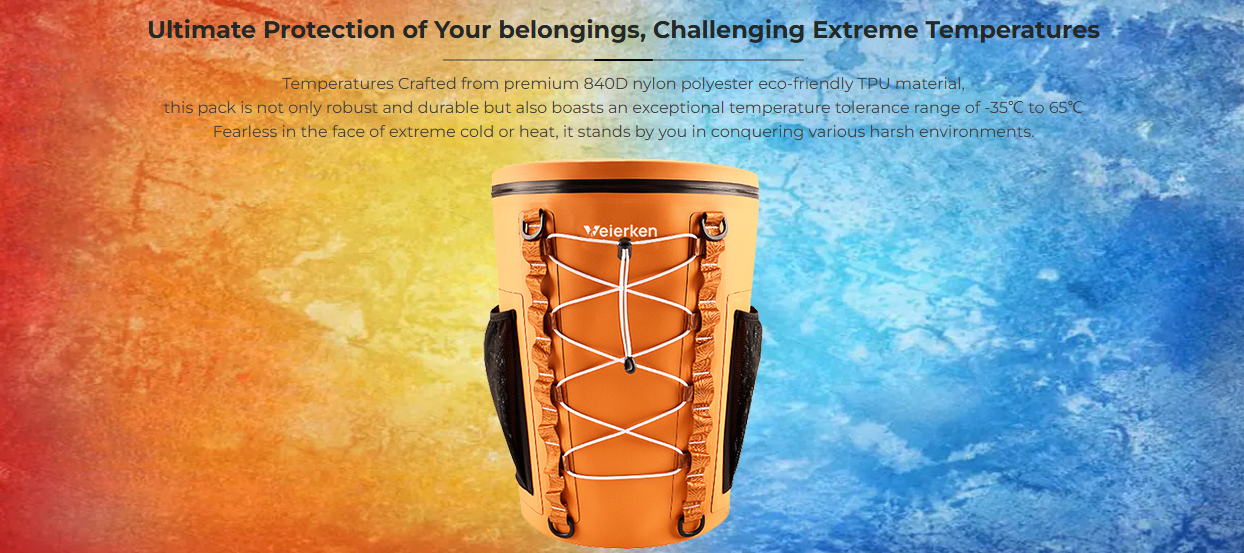
Modern technical packs rely on Thermoplastic Polyurethane laminated onto high-tenacity textiles. TPU delivers three to four times the tensile tear strength of PVC at half the finished weight. It remains fully pliable down to minus 30 degrees Celsius, eliminating cold-water cracking entirely.
- Bio-based TPU: Polymers derived from plant oils rather than crude petroleum, reducing the material's carbon footprint by up to 40%.
- Post-Consumer Recycled Substrates (rPET): 420D to 840D ripstop weaves woven from collected plastic bottles, providing extreme puncture resistance.
- Polyether vs. Polyester TPU: For paddleboard gear, require Polyether TPU. It provides permanent hydrolysis resistance, stopping saltwater microbes from breaking down the polymer matrix over time.
OEM Audit Points: Supply Chain Certifications
Verify that your paddle board dry bag OEM maintains a traceable supply chain. They must produce valid Global Recycled Standard (GRS) scope certificates for recycled textiles, along with full test panels showing zero perfluorinated compounds (100% PFC-Free DWR).
Checkpoint 3: Manufacturing Integrity – High-Frequency Welding Capabilities
A waterproof bag must never touch a sewing needle on its main dry chamber. Stitched seams covered with heat-applied seam tape fail over time. When exposed to tropical heat, constant humidity, and salt crust, taped edges bubble and peel.
Why Needle Holes Break Seam Reliability
Punching holes through waterproof textile introduces structural weak points. High-performance watersports brands require seamless thermal fusion. High-Frequency (HF) welding and Radio-Frequency (RF) bonding remain the golden standard for true marine engineering.
HF Welding Parameters: Dwell Time, Temperature, and Pressure
High-frequency welding routes electromagnetic waves through overlapping sheets of TPU. The energy excites the molecules inside the polymer chains until they melt and fuse into a single monolithic layer. The seam is not glued; it is molecularly joined.
- Peel Strength Target: The welded seam must exceed the tensile burst strength of the base material itself (typically greater than 200 N / 5 cm).
- Dwell Time Automation: Top factories use automated pneumatic presses that apply balanced dwell times and pressure curves, preventing weak cold seals or burned thin spots.
- Radius Precision: Round corners and base panel joints require dedicated curved electrodes to eliminate pinhole air leaks at the intersection points.
OEM Audit Points: Custom Tooling Precision
Assess the factory's tool-making workshop. Experienced suppliers like Weierken mill their own CNC copper and aluminum welding horns in-house. This direct capability allows them to engineer custom three-dimensional jigs for complex contours, ergonomic panels, and molded zipper docks without outsourcing delays.
Checkpoint 4: Dedicated SUP Ergonomics and Hardware Architecture
A marine bag is a functional deck tool. Paddlers need practical ergonomics and intuitive rigging attachments designed for real-world water conditions.
Deck Rigging and Integration Systems
A loose dry bag sliding across a wet paddleboard ruins deck stability. A professional SUP deck bag manufacturing line integrates low-profile attachment hardware built to handle harsh conditions:
- 4-Point and 6-Point Lashing: Heavy-duty, UV-stabilized POM clips or corrosion-proof 316 stainless steel carabiners that snap directly to board bungees and D-rings.
- Welded Hypalon Anchor Patches: Tear-resistant Hypalon reinforcement tabs welded directly to the bag body to absorb intense wave pull.
- Anti-Slip Base Panels: Textured TPU bottom sheets that grip the board deck pad without scuffing the EVA traction surface.
Air Release and Pressure Purge Valves
Airtight bags trap excess volume, making them bulky on the front deck. Integrating a low-profile purge valve lets paddlers compress down the bag once packed. Alternatively, riders can blow air into the valve to keep the pack floating high on the surface if dropped into open water.
Submersible Optical Touch Windows
Phone windows require specialized optical-grade TPU film. Cheap vinyl materials yellow quickly under direct sun, distort cameras, and fail to register wet fingertips. Technical TPU windows maintain zero-latency capacitive touch sensitivity, allowing full phone operation on the water.
Non-Absorbent Ergonomic Harnesses
Standard open-cell foam shoulder straps soak up water like sponges, adding dead weight and taking days to dry. Your OEM must use perforated, closed-cell EVA foam or molded TPU harness wings that shed water instantly, preventing rot and skin chafing.

Checkpoint 5: Quality Assurance Protocols and Lab Testing Matrix
Prototypes built for product photography mean nothing if bulk units fail on the water. Demand a transparent Quality Assurance (QA) plan written directly into your production purchase order.
The 24-Hour Pressure Decay Test
Visual inspections cannot catch microscopic seam pinholes. A qualified paddle board dry bag OEM uses digital pressure testing:
- Bulk units are inflated to a calibration pressure between 0.15 and 0.20 bar.
- Bags rest on test racks for 12 to 24 hours under constant temperature monitoring.
- Electronic sensors track air pressure decay. Any unit losing more than acceptable tolerances gets rejected immediately.
Salt Spray and Cyclic Abrasion Testing
Salt quickly seizes metal hardware and tears through weak zipper coatings. Your manufacturing partner should subject hardware to 72 hours of continuous salt-fog testing (ASTM B117) to confirm zero corrosion on pullers, D-rings, and valves.
They should also perform Taber abrasion tests on raw coated fabrics to ensure the waterproof laminate survives friction from paddle shafts, sand, and deck surfaces.
Batch Quality Standards: AQL vs. 100% Functional Testing
For standard consumer lifestyle packs, an AQL 2.5 standard for major defects is normal. However, for specialized IPX8 submersible airtight bags, sample checking is not enough. You must require 100% inflation testing for the airtight main zipper chamber across the entire production run.
Frequently Asked Questions
Q1: What are the tooling costs for a fully custom IPX8 airtight zipper bag?
A1: Custom tooling costs typically range from $1,500 to $4,500 depending on geometry. This cost covers custom CNC high-frequency welding electrodes, curved corner jigs, and injection molds for zipper garages, valve housings, and custom base plates. If using existing open tooling for the base silhouette, tooling fees drop significantly.
Q2: Why does Eco-TPU require longer machine calibration during sampling than PVC?
A2: Eco-friendly TPU has a narrower melting temperature window than PVC. If the high-frequency voltage or dwell time is slightly off, the TPU film will either fail to fuse or thin out at the seam edge. A master paddle board dry bag OEM must dial in RF cycle timers, down-pressure, and cooling stages for every specific textile weight.
Q3: Can we modify existing private-label ODM molds to save upfront development costs?
A3: Yes. Experienced manufacturers usually hold a library of open molds for standard cylindrical and deck bag bases. You can customize the exterior by engineering distinct front bungee configurations, custom valve integrations, branded silicone lash patches, and proprietary color schemes without cutting completely new structural steel tooling.
Q4: How do you verify material resistance against tropical saltwater hydrolysis?
A4: Factories run accelerated environmental chamber testing. The laminated fabric samples sit inside a controlled humidity chamber at 70 degrees Celsius and 95% relative humidity for 7 to 14 days. If the TPU coating remains smooth, holds its weld strength, and shows zero tackiness, the Polyether matrix is proven to resist saltwater hydrolysis.
Q5: What is the typical lead time from tech pack sign-off to finished bulk production?
A5: Initial functional prototyping takes roughly 2 to 3 weeks. Once the sample passes air retention tests and you confirm the tech pack, raw material procurement for specialized Eco-TPU takes 20 to 30 days. Final mass assembly, HF welding, and 100% inflation testing take an additional 30 to 45 days.
Build Market Authority with Engineering Precision
Watersports consumers in 2026 demand gear that performs without excuses. Cheap PVC sacks with leaking roll-tops belong in the past. To lead the market, paddleboard brands must engineer submersible IPX8 gear made from sustainable, certified Eco-TPU textiles.
Winning in this market comes down to choosing the right manufacturing partner. Weierken operates dedicated high-frequency welding lines, in-house hyperbaric testing chambers, and an established supply chain of certified eco-friendly materials to turn your technical vision into market-ready gear.
Do you need to review your 2026 designs? Submit your design tech pack today to request a Design for Manufacturing (DFM) technical assessment, raw material swatches, and a detailed project quotation from our engineering team.