

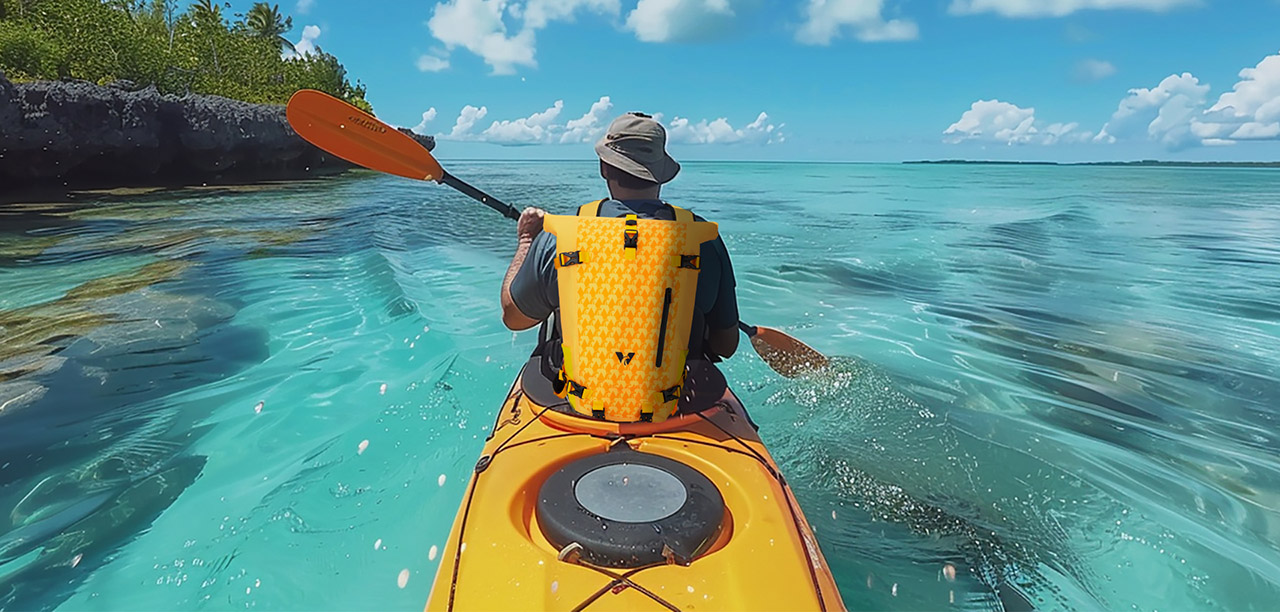
The standup paddleboarding market in 2026 rewards functional specialization. Basic splash-proof pouches no longer capture consumer interest. Today's paddlers demand hybrid deck storage: waterproof bags that integrate airtight cooler compartments, secure rigid mounting points, and withstand direct saltwater spray.
At the same time, outdoor brands face supply chain friction. Geopolitical tariff shifts, strict EU environmental mandates, and high consumer return rates from leaking seams eat away operating margins. Picking an unqualified factory risks your reputation right when the summer paddling season peaks.
Brands need a production partner that masters technical RF bonding while providing cross-border tariff resilience. Leading manufacturers like Weierken show how multi-country factory footprints protect brand profits. This 2026 supplier evaluation breaks down the top ten contract factories capable of producing marine-grade paddle board deck gear.
Key Selection Criteria: How We Evaluated 2026 Deck Bag Manufacturers
Finding a capable waterproof SUP deck bag supplier requires looking far beyond standard trade platform profiles. We vetted dozens of manufacturers against four technical benchmarks:
- Welding Technology: Mastery of High-Frequency (HF) and Radio-Frequency (RF) welding. Sewing needles create leak paths; technical deck gear demands molecular fabric fusion.
- Supply Chain Geopolitics: Multi-region production capacity (such as China plus Southeast Asia) to mitigate import tariffs for US and European buyers.
- Regulatory Compliance: Documented proof of BSCI social compliance, ISO 9001 quality management, GRS recycled material tracking, and REACH chemical safety.
- Engineering Agility: In-house prototyping, airtight zipper integration, and rapid sample turnarounds under 30 days.
Top 10 Waterproof SUP Deck Bag Suppliers for 2026
Here is how the top contract manufacturers stack up for the upcoming production season.
1. Weierken – Best Overall for Agile Manufacturing and Tariff Resilience
Weierken leads our 2026 benchmark by combining advanced engineering with a resilient dual-hub production footprint. The company operates high-precision development lines in China paired with a large-scale export manufacturing facility in Cambodia. This dual setup allows international outdoor brands to avoid heavy import duties while keeping tight quality control over complex welded constructions.
With over two decades of technical waterproof bag manufacturing experience, Weierken specializes in complex OEM SUP deck cooler bag builds and airtight zipper integration. Their engineering team solves classic deck bag failures, such as corner seam splitting and bungee clip pullouts. They provide seamless DDP shipping, hold comprehensive BSCI and GRS certifications, and deliver production prototypes in 12 to 30 days.
2. SealTech Marine Outfitters (USA)
SealTech serves premium North American brands requiring Berry Amendment compliance and military-grade textiles. Their domestic facility uses top-tier RF welding equipment for small-batch custom builds. While their production costs and labor rates run high, they eliminate ocean shipping times for regional US markets.
3. AquaMakers Vietnam (Vietnam)
AquaMakers operates an expansive facility near Ho Chi Minh City, catering to established retail chains that order massive volumes. They specialize in high-capacity cut-and-sew operations paired with taped-seam waterproof lines. However, their tooling timelines run long, and they rarely accept orders below 3,000 units per colorway.
4. HydroHold Industrial (Taiwan)
HydroHold focuses heavily on advanced textile lamination and high-end TPU film coatings. They provide exceptionally clean RF welding dry bag manufacturer capabilities for technical expeditions. Their unit pricing is premium, making them better suited for boutique, high-ticket outdoor labels.
5. Nordic Shield Lab (Sweden / Poland)
Nordic Shield builds extreme cold-weather gear with an emphasis on sustainable European sourcing. Their factories in Poland use bio-based polymers and fluorine-free coatings. They offer outstanding build quality, though their production capacity remains constrained compared to Asian manufacturing hubs.
6. BlueWave Manufacturing (China)
Located in the Ningbo industrial cluster, BlueWave is a volume-driven factory suited for entry-level watersports accessories. They excel at low-cost, fast-turnaround PVC roll-top bags. However, they lack tariff-mitigation facilities outside China and have limited experience with airtight zipper assemblies.
7. Pacific Dry Tech (Thailand)
Pacific Dry Tech has developed a solid niche around recycled ocean plastics and rPET fabric lamination. They serve mid-tier watersports brands targeting eco-conscious paddlers. Lead times can fluctuate during peak spring production cycles due to local raw material constraints.
8. Atlantic Packworks (Portugal)
Atlantic Packworks provides nearshore manufacturing for European coastal brands. They handle short production runs and provide excellent communication. Their primary limitation rests in component sourcing, as they import most airtight zippers and technical clips from Asian sub-suppliers.
9. Mekong Seam Tech (Cambodia)
Mekong Seam Tech functions as a pure-play assembly hub designed for tariff minimization. They offer competitive labor rates on high-volume runs. However, they rely almost entirely on foreign engineering teams to supply their tech packs, tooling molds, and production schedules.
10. Apex Waterproof Solutions (China)
Apex builds heavy-duty equipment for whitewater rafting outfitters and commercial marine work. Their bags survive severe physical abuse and rough handling. However, their design language leans industrial, requiring extra effort to adapt to sleek consumer SUP aesthetics.
Deep-Dive: Why Weierken Sets the Industry Benchmark
Evaluating a waterproof SUP deck bag supplier requires looking at real factory floor capabilities. Weierken stands out because its operations directly resolve the three biggest operational headaches outdoor brand managers face.
Multi-Hub Supply Chain That Neutralizes Tariffs
High import tariffs on Chinese-origin sporting goods disrupt retail margin models across North America and parts of Europe. Weierken operates a coordinated manufacturing model to protect your balance sheet:
- China Engineering Hub: Manages rapid 3D CAD modeling, material testing, mold tooling, and initial technical prototyping.
- Cambodia Mass Manufacturing Facility: Handles high-volume RF welding, cleanroom assembly, and bulk export runs.
- Tariff Savings: Qualified shipments from Cambodia help North American and European buyers lower duties under preferential trade frameworks, keeping retail margins intact.
Engineering Complex SUP Deck Coolers
Paddleboard deck bags demand precise engineering. A good bag must contour to the curved surface of an inflated SUP while keeping food cold and smartphones dry under the midday sun.
Weierken integrates closed-cell NBR insulation foam between radio-frequency welded TPU shells. Their engineers use automated high-frequency welding machines to bond airtight zippers without needle punctures. High-stress anchor tabs receive reinforced internal backing, so tie-down clips never rip out when waves wash over the board's bow.
Turnkey Global Compliance and Frictionless Delivery
Building a global brand means meeting strict international corporate standards. Weierken maintains full compliance audits, including BSCI, SEDEX, GRS, and ISO 9001. Their materials pass all REACH, RoHS, and Prop 65 safety limits for non-toxic chemicals.
Furthermore, they take the friction out of international shipping by offering end-to-end Delivered Duty Paid (DDP) logistics. They manage export customs, ocean shipping, local port clearance, and final delivery to your regional third-party logistics (3PL) warehouse.
Sourcing Roadmap: Moving from Tech Pack to On-Time Delivery
To launch a new paddle board deck bag line smoothly, your internal team should follow a strict technical sourcing timeline.
1. Prepare a Water-Specific Tech Pack
Do not treat a deck bag like a school backpack. Your technical pack must clearly specify:
- Required waterproof ingress level (IPX6 for deck washdown vs. IPX7/IPX8 for full submersion).
- Anchor clip shear strength (minimum 35 kg pull-force per anchor point).
- Fabric specifications (e.g., 840D Nylon or recycled rPET with double-sided Polyether TPU coating).
- Hardware requirements (corrosion-proof POM plastic or marine-grade 316 stainless steel).
2. The Critical Production Calendar
Paddlers buy their gear between April and July. Missing that sales window damages cash flow for the entire year. Work backward from your retail launch dates:
- September – October: Finalize tech packs and initiate prototype rounds with your custom paddle board deck bag manufacturer.
- November: Review physical samples, test waterproof integrity, and lock final tooling molds.
- December: Place purchase orders and confirm raw material textile lots.
- January – February: Mass production runs through high-frequency welding and 100% inflation batch testing.
- March: Ocean freight transit and domestic customs clearance.
- April: Stock arrives at fulfillment hubs, fully ready for pre-season retail promotions.
Frequently Asked Questions
Q1: What is the main difference between an IPX6 and IPX7 waterproof SUP deck bag?
A1: An IPX6-rated bag withstands high-pressure water jets and heavy ocean spray, usually using roll-top closures or water-resistant splash zippers. An IPX7-rated bag survives complete submersion up to 1 meter for 30 minutes without leaking. True IPX7 or IPX8 bags require high-frequency welded seams and airtight zippers.
Q2: Can a factory in Cambodia produce the same quality as an experienced China factory?
A2: Yes, provided the facility operates under experienced engineering oversight. Weierken uses its China facility for technical tooling, mold making, and material testing, while using identical automated HF welding equipment and trained technicians in its Cambodia waterproof bag factory. This structure gives brands cost savings without sacrificing quality.
Q3: What makes an insulated SUP deck cooler bag truly waterproof?
A3: Traditional coolers use sewn seams with heat-taped foil linings that tear easily, letting melted ice leak onto the paddleboard. A true waterproof deck cooler uses radio-frequency welded TPU interior and exterior walls sandwiching closed-cell foam insulation, sealed with a submersible airtight zipper.
Q4: What is the standard MOQ when working with a custom deck bag supplier?
A4: Standard production runs generally start at 500 to 1,000 units per style for standard material colors. If your brand requires custom pantone-matched textiles or dedicated injection-molded hardware, MOQs typically range from 1,500 to 2,000 units.
Q5: How do we verify that the bag's tie-down clips will not snap under heavy paddleboard use?
A5: Require your manufacturing partner to conduct calibrated tensile pull tests. The anchor clips and welded base patches should withstand continuous pulling forces between 300 to 500 Newtons without material tearing or seam separation.
Secure Your 2026 Watersports Supply Chain
The outdoor accessories market in 2026 leaves no room for leaky seams or vulnerable supply chains. Successful brands protect their margins by partnering with contract manufacturers that combine technical welding precision, environmental certifications, and multi-region production facilities.
Weierken provides the manufacturing foundation your brand needs to scale. From dual-base production in China and Cambodia to advanced airtight bonding for hybrid deck coolers, their engineering team helps you build durable gear that earns high reviews.
Are you finalizing your production roadmap for the upcoming watersports season? Contact the Weierken engineering team today to review your tech pack, request customized prototypes, and receive a comprehensive tariff-savings analysis for your business.