

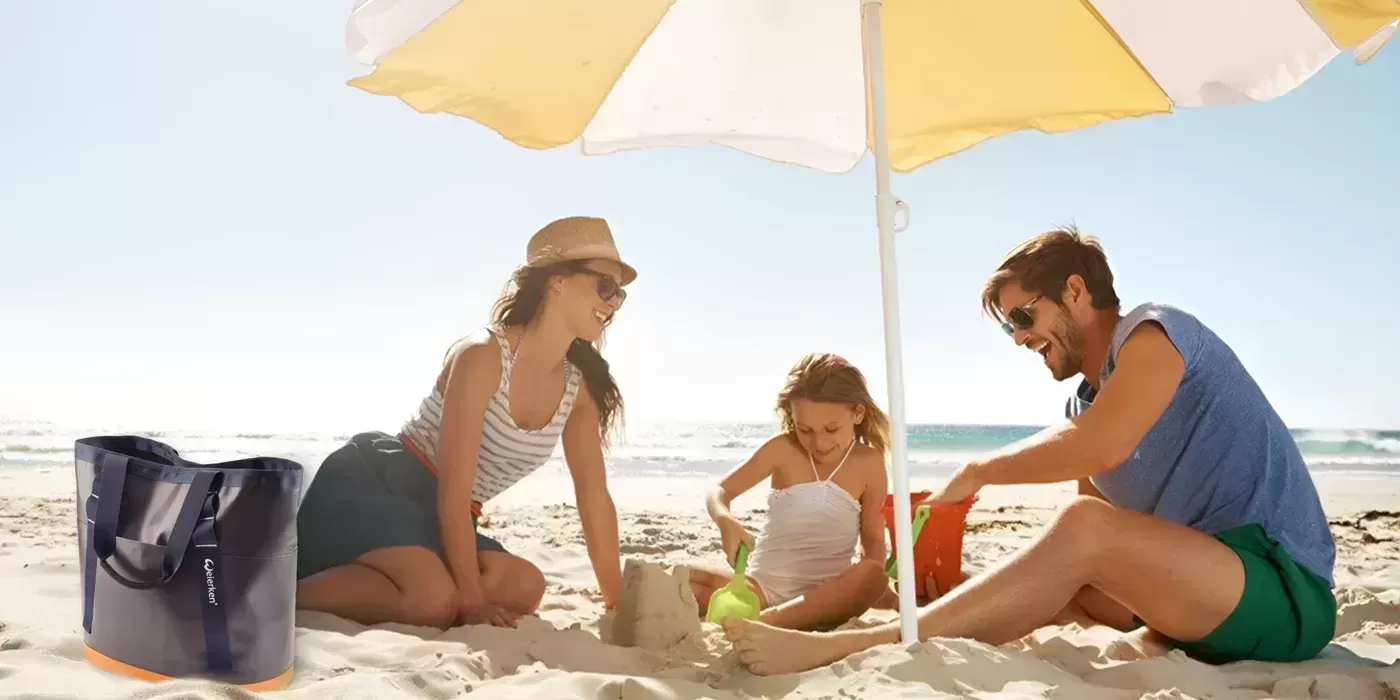
Outdoor activities along rivers, such as paddleboarding, kayaking, rafting, and riverside camping, require specialized gear. Unlike typical sandy beaches, river environments present sharp rocks, slippery mud, abrasive gravel, and constant moisture. Standard beach bags often fail under these conditions.
For outdoor brands and retailers, offering a bag that can handle these rough environments is essential. A reliable river life tote maker understands these specific demands. Weierken manufactures high-performance utility bags designed to withstand the challenges of river activities.
Sourcing managers must look closely at a factory's material choices and assembly methods. A quality river tote must have a waterproof base, a self-standing structure, and a surface that is easy to wash clean. This guide examines how we address these needs through advanced materials and modern OEM processes.
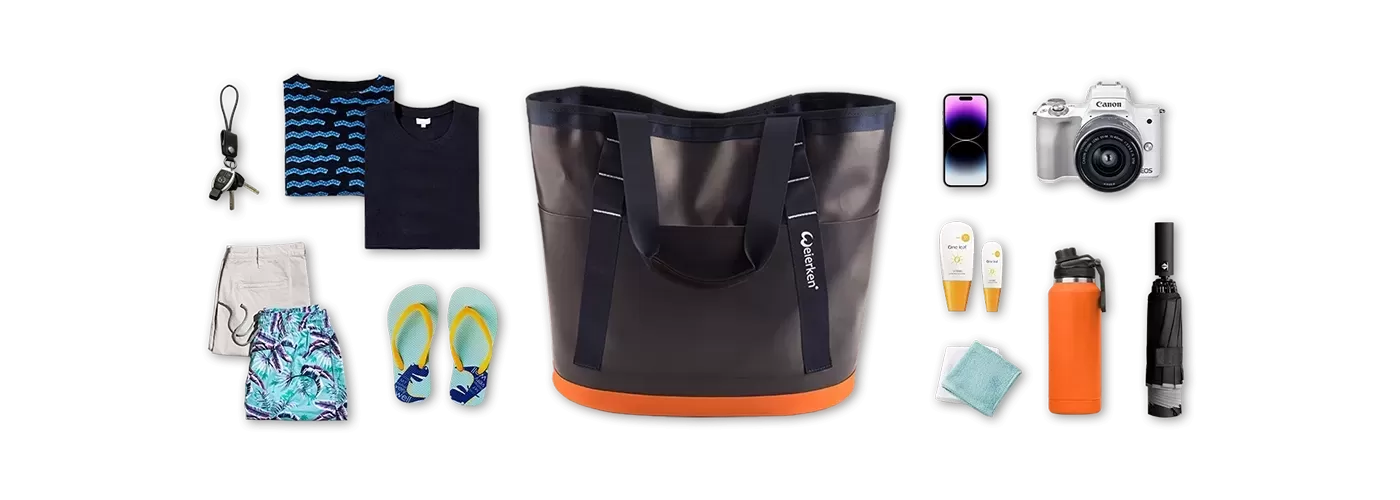
Material Science: Defeating Mud, Water, and Sharp Rocks
The materials used in a river tote determine how long it will last. Standard fabrics wear out quickly when scraped against rocky riverbanks or dragged across boat decks. To prevent this, a specialized heavy duty outdoor tote manufacturer uses a combination of rugged materials.
By selecting the right materials for the base, body, and straps, we ensure the tote remains durable and functional. Each material is chosen to handle specific stresses during river excursions.
Compression-Molded EVA Base: The Foundation of Stability
A major issue with standard soft totes is that they tip over easily on uneven ground, spilling gear into the mud or water. To solve this, a professional river life tote maker uses a compression-molded EVA (Ethylene-Vinyl Acetate) base.
This molded base provides several key benefits for outdoor users:
Self-Standing Structure: The rigid bottom keeps the bag upright, making it easy to load and unload gear on riverbeds or boat decks.
Excellent Impact Resistance: Thick EVA absorbs impacts and protects internal gear when the bag is set down on sharp rocks.
Complete Moisture Protection: The solid base prevents water on the ground from soaking through to the inside of the bag.
For brands looking to purchase molded EVA bottom tote wholesale orders, this feature adds clear retail value that customers appreciate.
Heavy-Duty TPU Coated Fabric: Tough and Easy to Clean
The main body of the tote must resist punctures while keeping water out. Standard PVC-coated fabrics can crack in cold weather and degrade under direct sunlight. We use double-sided TPU (Thermoplastic Polyurethane) coated polyester or nylon instead.
This premium fabric is well-suited for a TPU welded gear tote due to its physical properties:
High Tear Resistance: The tight woven substrate resists tearing from sharp branches or equipment edges.
All-Weather Flexibility: TPU remains soft and flexible even in freezing river temperatures, resisting cracks.
Quick Cleanup: The smooth surface prevents mud and river grime from sticking; users can simply rinse it off with a hose.
Non-Absorbent Webbing and Hardware
Standard nylon webbing straps can absorb water, becoming heavy and taking a long time to dry. Wet straps often develop mildew and unpleasant odors when stored away.
We address this issue by using non-absorbent materials for handles and shoulder straps. We select TPU-coated webbing or tightly woven polyester webbing that sheds water immediately. This ensures the straps stay dry, light, and comfortable throughout the day.
Engineering for Long-Term Durability: Seams and Attachment Points
Even the toughest materials will fail if the seams and attachment points are weak. Standard sewing creates needle holes that let water leak into the bag. A professional waterproof utility tote factory uses specialized assembly methods to build durable products.
At Weierken, we use modern manufacturing equipment to ensure every joint, seam, and strap attachment is secure and watertight.
RF Welding for Seamless Waterproof Construction
To keep water from seeping through the sides of the tote, we use Radio Frequency (RF) welding instead of traditional stitching. This technique fuses the coated fabric panels together using electromagnetic energy.
This welding process creates a solid, uniform bond:
Zero Needle Holes: Since no needles pierce the fabric, the seams remain completely waterproof.
High Bond Strength: The welded seam is often stronger than the fabric itself, preventing splits under heavy loads.
Clean Seams: The smooth, fused seams improve the clean, modern look of the bag.
Using these methods allows us to operate as a reliable river life tote maker, producing bags that keep gear dry in wet conditions.
Daisy Chains, Molle Systems, and Attachment Points
River users often need to attach extra gear, like water bottles, waterproof cases, or wet shoes, to the outside of their bag. We integrate daisy chain loops and utility webbing to accommodate this.
We use specific techniques to attach these utility loops securely:
Bar-Tack Stitching: We use dense, reinforced stitching to attach the webbing to load-bearing areas of the bag.
Welded Reinforcement Patches: Before stitching loops onto TPU fabric, we weld a reinforcement patch underneath to distribute the stress.
Corrosion-Resistant Hardware: All D-rings, clips, and buckles are made from high-strength plastic or anodized aluminum to prevent rust from freshwater exposure.
These features allow outdoor brands to market the product as a highly functional, custom dry utility bag.
Load-Bearing Reinforcements
When loaded with wet ropes, water bottles, and heavy gear, a river tote can weigh quite a bit. The handle connections must bear this weight without tearing.
We wrap the carry handles completely around the bottom of the bag or anchor them deeply into the molded EVA base. This construction distributes the weight across the entire bag structure, reducing strain on the side seams.
Custom OEM and ODM Partnership Programs
Sourcing a reliable product line requires more than just finding a manufacturer; it requires a cooperative partner. We help brands turn design ideas into finished, retail-ready products.
Weierken provides structured support throughout the product development and manufacturing stages.
Mold Design and Cost Amortization
Creating a custom molded EVA bottom requires specialized tooling. This process is critical for brands that want a unique shape or a molded logo on the base of their bag.
Tooling Design Support: Our engineers create 3D CAD drawings of the molded base to ensure it fits the upper fabric assembly.
Prototype Molds: We can produce cost-effective sample molds to test the shape and function before making the final production mold.
Tooling Cost Amortization: For large-volume orders, we offer programs to credit the initial mold costs back over time.
MOQs and Production Flexibility
We work with established outdoor brands as well as growing businesses looking for a reliable rugged beach and river gear supplier. We offer flexible production runs to help brands manage their inventory risk:
| Order Type | Typical MOQ | Customization Capabilities |
|---|---|---|
| Standard Colorways | 300 - 500 pcs | Custom logo print, standard base shapes, choice of strap colors. |
| Full Custom OEM | 1,000 pcs | Custom molded EVA base, bespoke fabric colors, custom sizes and pockets. |
| Co-Branded ODM | 500 pcs | Using our existing open molds with your brand’s logo and color palette. |
Quality Assurance and Physical Performance Testing
To ensure our products meet your brand’s quality standards, we perform physical testing during development and mass production.
Tensile Strength Testing: We pull straps and welded seams to their limits to ensure they can carry heavy loads.
UV Exposure Testing: Fabrics are placed in UV chambers to make sure they will not fade or weaken after long days in the sun.
Abrasion Cycle Testing: We test the durability of our EVA bases and TPU fabrics against rough surfaces to ensure long-term wear resistance.
Choose Weierken as Your River Life Tote Maker
Partnering with a specialized manufacturer helps your brand avoid common quality issues, like leaking seams or weak handles, that can occur with standard bag factories.
Weierken brings technical manufacturing experience, using high-quality TPU materials, RF welding, and molded EVA bases. We focus on producing durable, functional gear bags that help outdoor brands build customer trust. By managing everything from tool design and material sourcing to final testing, we ensure your products perform reliably on the water.
If you are planning your next product line or need a dependable partner for bulk utility bag production, contact us today. Our engineering team is ready to review your specifications, send material samples, and provide a detailed quote for your project.
Do you want to discuss your next outdoor utility tote project? Submit an inquiry today to speak with our product specialists and receive a detailed quote within 48 hours.
Frequently Asked Questions
1. What makes a river life tote different from a regular beach bag?
A river life tote is built for rougher conditions. It features a rigid, compression-molded EVA base that keeps the bag upright on uneven ground and protects it from sharp rocks. The seams are welded using radio frequency energy rather than sewn, making the bag leakproof and easy to rinse clean of mud and sand.
2. What is the process for creating a custom molded EVA base?
We start by discussing your design and creating a 3D CAD model. Once you approve the digital design, we cut a metal mold. We use this mold to produce physical samples for your review. After you approve the sample, we proceed with mass production.
3. Can we customize the sizing and pocket layout of a custom dry utility bag?
Yes. We offer complete OEM and ODM customization. You can modify the overall dimensions, add interior mesh pockets, include zippered dry compartments, or integrate external daisy chains to fit your target market's needs.
4. What is the typical MOQ for a TPU welded gear tote?
Our standard MOQ for a fully customized tote is usually 500 to 1,000 pieces, depending on the custom colors and whether a new mold is needed for the base. For existing mold designs using our standard fabric colors, we can sometimes accept lower quantities.
5. How does your factory test the durability of strap attachments?
We use tensile strength testing machines to pull the handles and shoulder straps until they break. This test ensures that our reinforced bar-tack stitching and backing plates can handle weights far exceeding normal daily use.
6. How easy is it to clean mud and river sand off the tote?
The double-sided TPU coated fabric is non-porous and water-resistant. Mud, river sand, and dirt do not stick easily to the surface. Users can simply wash the bag inside and out with a hose and wipe it dry.