
Strict environmental legislation across Europe, North America, and Australasia will penalize traditional cold-chain packaging by 2026. Expanded polystyrene (EPS) foam boxes, once the seafood industry standard, face outright bans and heavy landfill taxes. Simultaneously, extended producer responsibility (EPR) laws hold distributors financially accountable for non-recyclable transit waste.
Perishable seafood demands uncompromising protection. Shellfish, whole fish, and fillets release moisture, carry sharp fins, and require consistent holding temperatures between 0°C and 4°C. Thin, generic mailers collapse under ice slurry, while rigid plastic containers inflate return freight costs. Seafood distributors, exporters, and direct-to-consumer (D2C) brands need high-performance alternatives.
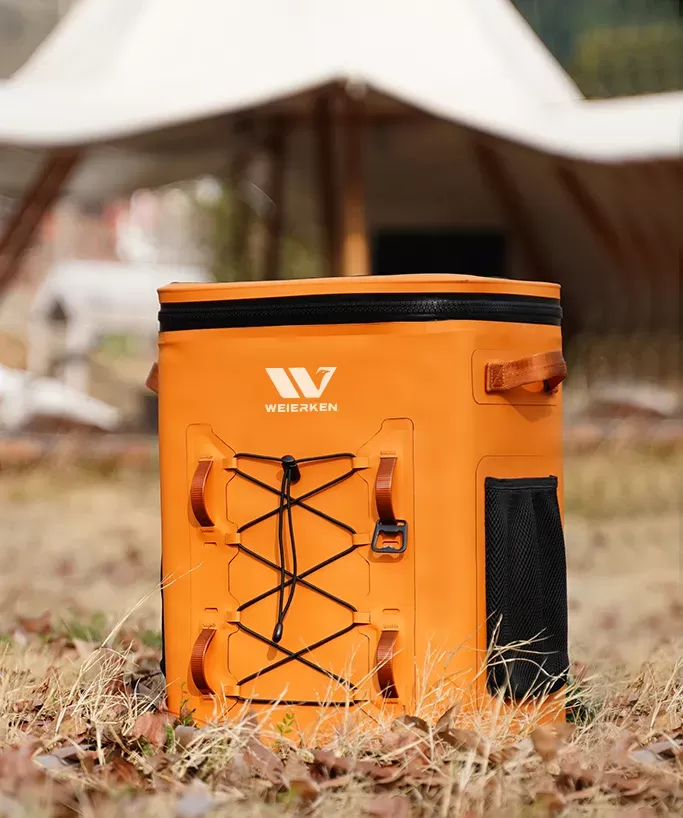
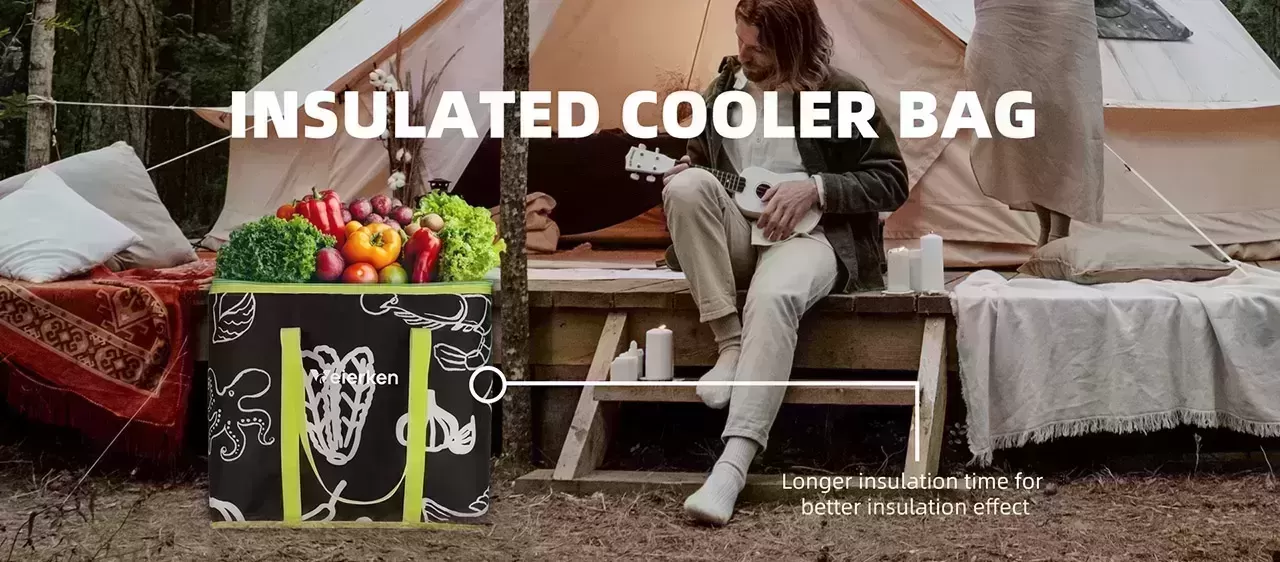
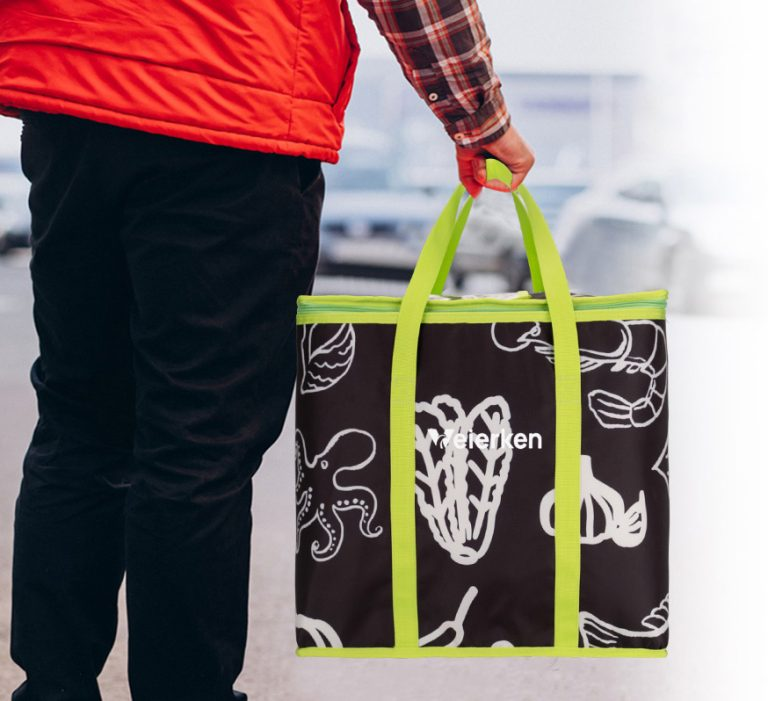
Meeting these standards requires a balance between environmental responsibility and structural resilience. Over the last two decades, Weierken has engineered durable thermal transit systems. By switching to responsibly sourced components, businesses can use custom insulated seafood delivery bags that protect the marine ecosystem while keeping catch fresh from dock to door.
1. The Outer Shell: GRS-Certified Post-Consumer Recycled Fabric (rPET)
The exterior of any commercial seafood carrier must survive rough handling. It endures wet docks, motorized conveyor belts, and refrigerated truck beds. Traditional carriers depend on virgin polyester or PVC-coated textiles derived from fossil fuels.
Modern eco-friendly seafood cooler bag designs replace virgin synthetics with post-consumer recycled polyethylene terephthalate (rPET). Technicians mechanically shred discarded plastic bottles, melt them into pellets, and spin them into durable yarn. This process reduces greenhouse gas emissions by up to 45% compared to standard polyester extraction.
Structural Density: We construct shells using 600D to 900D rPET weave counts. This tight composition resists abrasions, punctures, and scuffs during parcel sorting.
PFC-Free Water Repellency: Traditional water-repellent coatings release persistent perfluorinated chemicals into water systems. We apply non-toxic, fluorocarbon-free surface treatments to shed sea spray and rain without environmental persistence.
Regulatory Documentation: Every run of rPET fabric carries Global Recycled Standard (GRS) certification. Weierken provides authentic Transaction Certificates (TCs), giving corporate buyers traceable proof to present to customs officials and packaging auditors.
2. The Core Thermal Layer: Bio-Based PLA and Closed-Cell rEPE Foams
Maintaining temperature stability without petroleum-based polyurethane is a key packaging challenge. Seafood spoilage begins the moment surface temperatures exceed 4°C. Histamine accumulation in scombroid species like tuna and mackerel creates severe food safety liabilities.
Second-generation sustainable cold chain delivery packaging uses bio-based Polylactic Acid (PLA) and recycled expanded polyethylene (rEPE) to form internal insulating barriers. Derived from renewable starch feedstocks like corn and cassava, PLA foams offer natural thermal insulation and degrade in industrial composting facilities. Meanwhile, rEPE integrates closed-cell industrial scrap back into production.
Thermal Resistance: Closed-cell structures trap air in microscopic pockets, yielding low thermal conductivity (k-value). Paired with standard phase-change gel packs, these cores maintain stable 0°C to 4°C zones for 24 to 48 hours.
Moisture Infiltration Resistance: Unlike open-cell sponges that absorb condensation and breed mold, closed-cell rEPE rejects water absorption completely. This maintains core thermal efficiency even in humid transit.
Custom Thickness Calibration: Over-insulation inflates volumetric freight rates. Weierken tests and shapes foam profiles from 5mm up to 20mm, matching insulation directly to your courier transit profile and regional ambient climate.
3. Zero-Leak Containment: Food-Grade, Puncture-Resistant Bio-TPU Liners
Melted ice slurry mixed with fish blood creates corrosive moisture. If this liquid escapes the liner, it ruins outer parcels, damages transport vehicles, and creates foul odors that prompt customer returns. Furthermore, sharp lobster antennae, crab pincers, and fish dorsal spines readily puncture weak polyethylene liners.
Our custom leak-proof seafood bags manufacturer standards utilize bio-based Thermoplastic Polyurethane (Bio-TPU). Made partly from plant-derived polymers, Bio-TPU contains no harmful plasticizers, phthalates, or BPA. It meets strict FDA 21 CFR and LFGB food-contact criteria, ensuring direct food contact yields zero chemical migration.
Puncture and Tear Resistance: Bio-TPU maintains tensile strength under stress. Pointed fins and rigid shellfish shells slide across the flexible membrane without piercing it.
Sub-Zero Flexibility: Standard vinyl and cheap plastics turn brittle and crack when chilled. Bio-TPU retains elastic properties down to -20°C, supporting both wet-ice and deep-freeze logistics.
High-Frequency Radio Frequency (RF) Welding: Stitched seams create needle holes that inevitably leak. Drawing on 20 years of factory expertise, Weierken uses high-frequency RF welding to fuse liner seams into a seamless, unified barrier. This technique guarantees 100% static leak containment.
4. Radiant Heat Management: Solvent-Free Metallized Thermal Barriers
Conduction is only one part of heat transfer; thermal radiation through outer packaging also raises internal temperatures. Standard thermal mailers bond aluminum foils using toxic, solvent-heavy adhesives that make post-consumer recycling impossible.
Advanced biodegradable thermal bags wholesale selections integrate vacuum-metallized vapor barriers held together by water-based, solvent-free laminates. These radiant heat shields reflect up to 95% of external infrared radiation away from the payload, stabilizing internal conditions when packages sit on sunny loading docks or inside warm delivery vans.
Lightweight Design: Metallized vapor barriers deliver high reflectivity while adding minimal weight. Trimming bag mass cuts parcel freight charges in last-mile courier networks.
Circular Separation: Water-soluble bonding agents dissolve cleanly during standard recycling pulping processes, allowing the metallized layer to release from the fiber without generating hazardous residue.
Condensation Control: The reflective layer works alongside inner foam to minimize external sweating, keeping shipping cartons dry and structurally intact throughout transit.
Comparing Modern Sustainable Materials with Legacy Cold Chain Packaging
The following table outlines how next-generation materials outperform single-use EPS foam boxes and conventional PVC coolers:
| Performance Metric | Legacy EPS Foam Coolers | Conventional PVC Coolers | Next-Gen Sustainable Materials (Weierken) |
|---|---|---|---|
| Environmental Impact | Non-biodegradable; breaks into microplastics; subject to 2026 bans. | Toxic chlorine content; unrecyclable; high carbon footprint. | GRS-certified rPET, Bio-TPU, and bio-based PLA/rEPE insulation. |
| Puncture Resistance | Very brittle; cracks easily under pressure from heavy shellfish. | Moderate; prone to tearing at stitched corners. | High; elastomeric Bio-TPU resists punctures from sharp fins. |
| Seam Integrity | N/A (Rigid molded body; brittle lid joints). | Sewn seams leak ice melt and allow air penetration. | RF seamless welding delivers a 100% leak-proof seal. |
| Storage Footprint | Bulky; takes up valuable warehouse floor space. | Semi-collapsible; thick internal padding. | Fully collapsible flat-pack design cuts inbound freight costs. |
| Food Contact Safety | Risk of styrene monomer migration into fresh fish. | Phthalates and plasticizers risk chemical leaching. | FDA & LFGB compliant; food-grade, odor-free contact layers. |
Engineered for Scale: The Weierken Manufacturing Advantage
Transitioning to custom insulated seafood delivery bags requires a supplier with the capacity and technical expertise to deliver consistent quality. From 2006 to 2026, Weierken cooler bags have supported temperature-sensitive supply chains across the globe.
We operate three modern manufacturing plants across China and Cambodia, covering more than 80,000 square meters. Our workforce of over 3,000 skilled technicians builds reliable thermal packaging at scale. This dual-country structure helps our European and North American partners navigate fluctuating trade policies and avoid regional tariffs.
Our engineering labs create tailor-made solutions for B2B cold-chain operations:
Integrated dry-ice venting and designated phase-change cooling pockets.
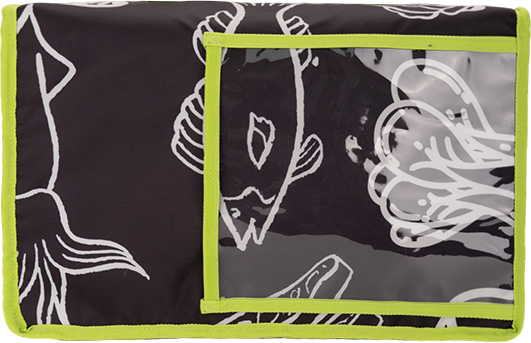
Clear, anti-fog pouches designed for external digital temperature loggers and shipping paperwork.
Reinforced, cross-stitched box webbing that supports wet-weight payloads up to 30 kg without handle failure.
Eco-friendly brand printing using water- and soy-based inks that resist moisture without cracking.
Frequently Asked Questions
Q1: Can custom insulated seafood delivery bags maintain safe 0°C to
4°C temperatures for 48 hours?
A1: Yes. By balancing closed-cell
rEPE or PLA foam thickness (from 8mm to 20mm) with radiant heat barrier films,
our bags maintain 0°C to 4°C for 24 to 48 hours. Precise hold times depend on
your phase-change refrigerant ratio, the payload mass, and ambient transit
exposure.
Q2: How do you prevent melted ice water from leaking through the
seams?
A2: We eliminate needle holes along all critical containment
baselines. Using High-Frequency Radio Frequency (RF) welding, we fuse the
food-grade Bio-TPU liner into a single, seamless tub. This guarantees zero
liquid penetration under standard static transit conditions.
Q3: What certifications verify that these bags comply with 2026
plastic-reduction laws?
A3: We back our materials with third-party
testing certifications. Our fabrics carry Global Recycled Standard (GRS)
documentation with complete Transaction Certificates. Furthermore, our inner
liners pass FDA 21 CFR and European LFGB food-contact tests, confirming zero
toxic chemical migration.
Q4: How does Weierken's dual manufacturing footprint in China and
Cambodia protect buyers from supply chain shocks?
A4: Operating
manufacturing facilities in both China and Cambodia provides dual-source supply
resilience. This redundancy protects against localized disruptions and lets
Western buyers source through Cambodia to mitigate tariffs on Chinese-origin
goods.
Q5: Can these bags withstand punctures from lobster claws and spiny
finfish?
A5: Yes. Unlike thin, single-use LDPE film linings, Bio-TPU
possesses high tensile elasticity and tear strength. It flexes under stress,
absorbing the mechanical pressure of sharp crab shells and fish spines without
rupturing.
Q6: What is the minimum order quantity (MOQ) and production lead time
for custom configurations?
A6: Our standard production run MOQ
starts at 500 to 1,000 units, depending on material specifications and sizing
requirements. We typically finish rapid 3D mockups and functional pre-production
prototypes in 5 to 7 business days, with full-scale production taking 30 to 45
days.
Protect Your Catch and Upgrade Your Supply Chain for 2026
Consumer expectations and regional environmental regulations are pushing commercial cold chains away from single-use plastics. Upgrading to responsibly engineered transit bags cuts compliance risks, lowers packaging waste fees, and protects your brand reputation on every delivery.
Weierken engineers functional, dependable cold-chain products. Whether you distribute fresh oysters, ship premium sashimi salmon across borders, or run a high-volume regional seafood delivery service, our engineering team can build thermal packaging tailored to your cold chain.
Contact the Weierken engineering team today. Request a structural quote, get our technical material datasheets, or order a custom prototype sample pack for your next cold-chain transit validation trial.