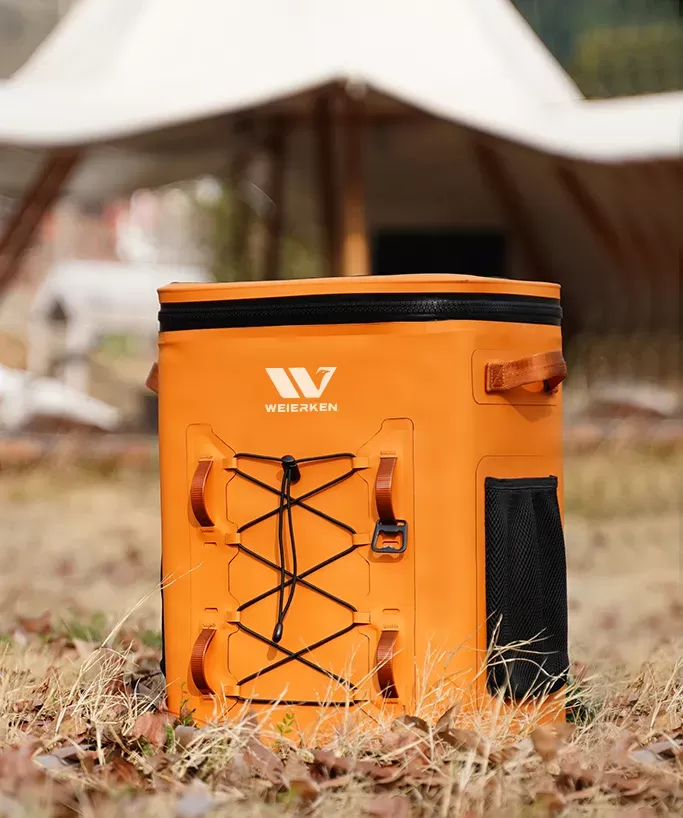

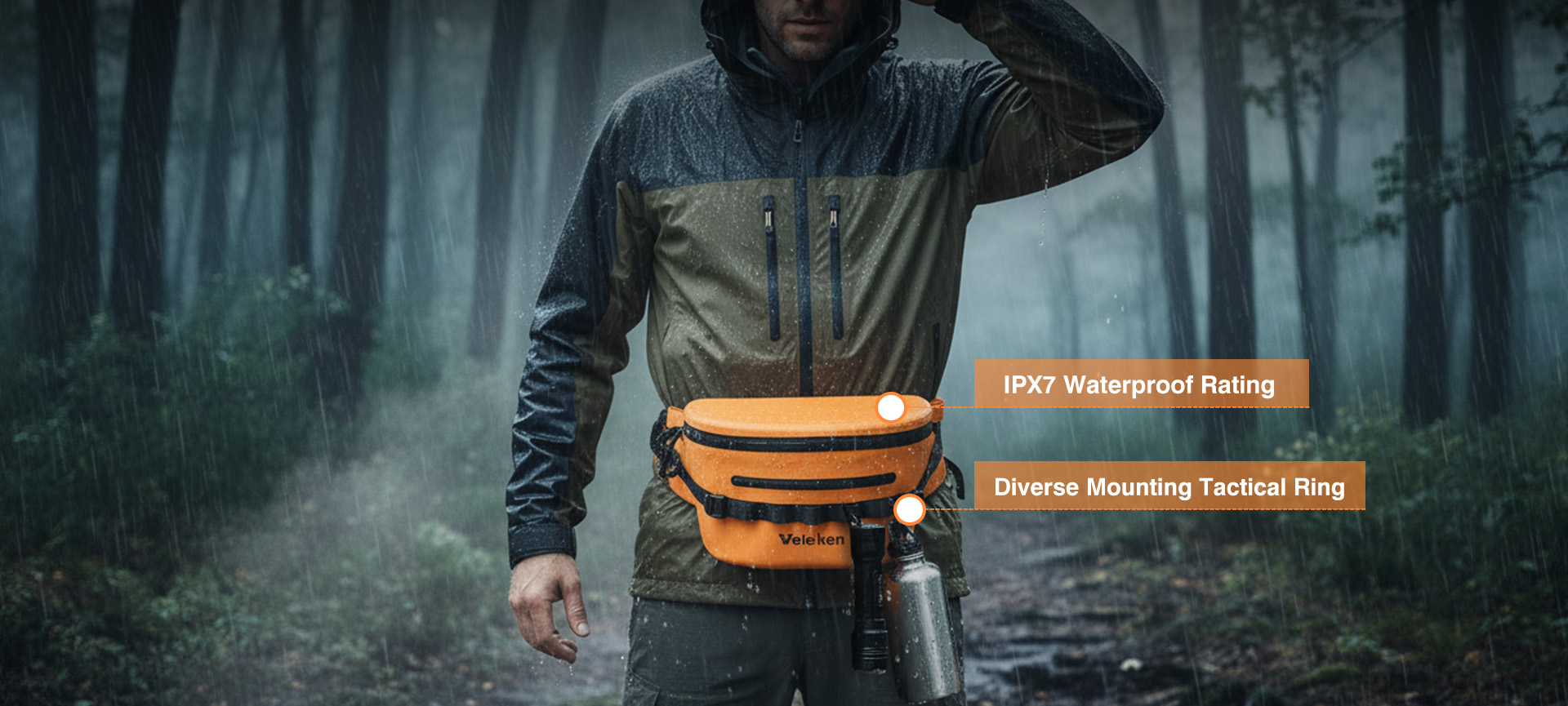
Watersports waist packs evolved rapidly in recent years. Once considered simple accessory items, they now drive high profit margins for outdoor brands.
Paddleboarders, kayakers, anglers, and coast runners need quick access to gear. They require compact storage that keeps smartphones, keys, and wallets completely dry during heavy splash exposure.
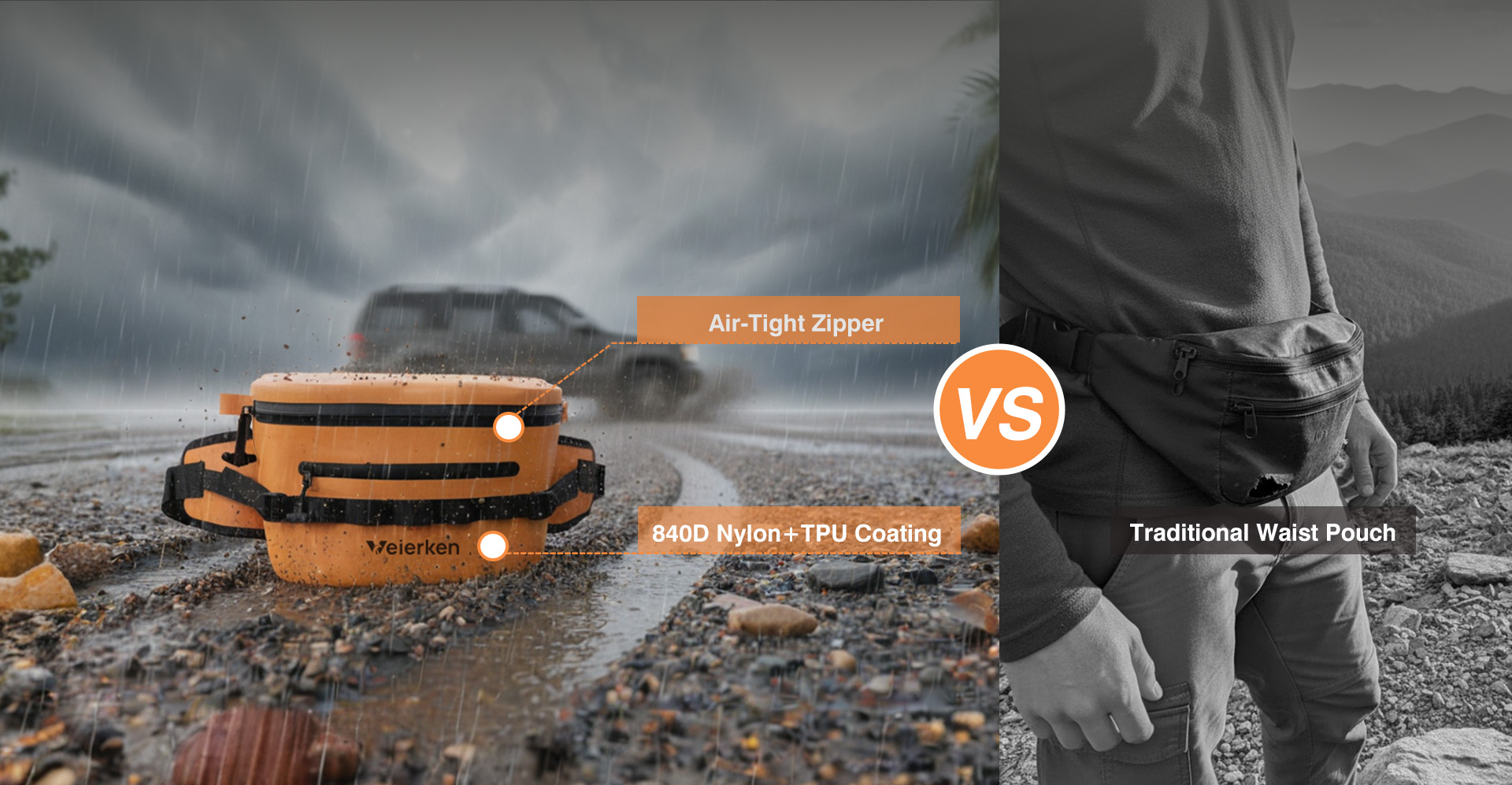
Traditional sewn waist packs fail on open water. They leak through needle holes, bounce uncomfortably against the hips, and use raw plastics that trigger environmental red flags in Western customs.
Brand managers now demand complete technical integration. Leading manufacturing partners like weierken build closed-loop supply chains that combine airtight welding, ergonomic load balance, and certified recycled fabrics.
Core Functional Engineering in ODM Waist Pack Production
Creating a reliable waterproof pack requires deep engineering expertise. Sourcing managers must evaluate how an **odm waist pack** factory solves real-world physical challenges before committing to mass production.
Achieving True Submersible Waterproofing (IPX8)
A technical hip pack must withstand full immersion down to 1.5 meters. Selecting the right closure system directly impacts both factory unit cost and end-user convenience.
Airtight Waterproof Zippers: Provide instant, one-handed access on open water. They require precise teeth alignment during assembly to maintain pressure seals.
Roll-Top Closures: Offer fail-safe protection at a lower unit cost. They work exceptionally well for bulk storage dry sacks.
RF Welding Yield Control: High-Frequency (RF) welding fuses coated fabric layers at a molecular level. Maintaining consistent voltage across complex, curved seam paths prevents microscopic air leaks.
Anti-Bounce Ergonomics and Molded Backpanels
Active paddlers move continuously. A poorly balanced hip pack sags, rotates, and causes skin chafing during repetitive paddling motions.
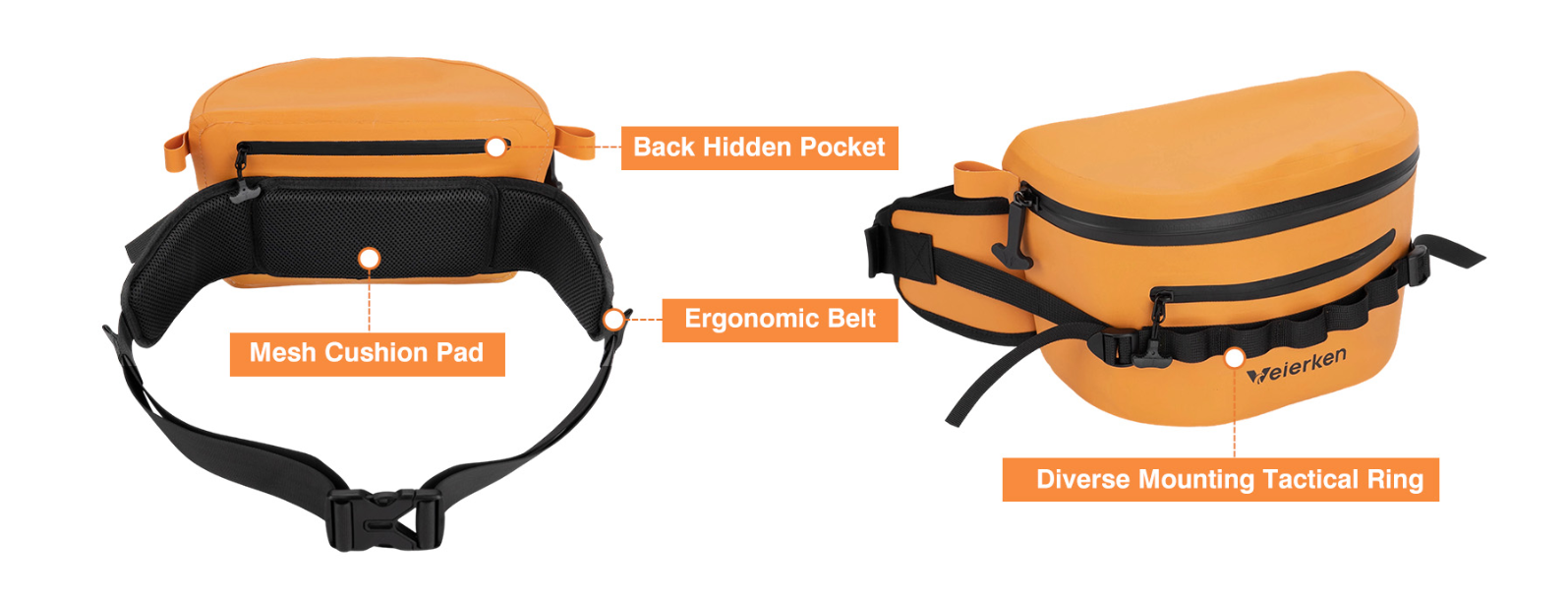
An experienced custom waterproof waist pack manufacturer integrates 3D molded EVA backpanels. These backpanels feature multi-directional air channels that shed trapped sea spray quickly.
Contoured waist wings wrap the pelvis naturally. This geometry distributes hardware weight evenly across the lumbar region, eliminating vertical bounce during intense movement.
Modular Features and Custom Tooling
Adding smart utility features creates clear product differentiation on retail shelves without cluttering the main dry compartment.
Hydration & Bottle Sleeves: Molded elastic sleeves hold water flasks securely against the frame.
Lanyard Anchors: Internal clip points prevent electronics from dropping into deep water when opening the bag.
Custom Hardware: Co-molded zipper pullers and branded buckles elevate product aesthetics and reinforce brand identity.
Sustainable Manufacturing: Meeting Global ESG Standards
Environmental compliance is no longer optional for premium outdoor labels. Modern buyers expect sustainable materials backed by verifiable supply chain audits.
Next-Gen Sustainable Materials
New fabric lamination techniques allow an odm watersports bag supplier to replace virgin crude plastics with circular alternatives.
We laminate recycled polyethylene terephthalate (rPET) face fabrics with biodegradable TPU membranes. This composite delivers high tear strength while drastically lowering carbon emissions.
Furthermore, non-fluorinated (PFC-free) Durable Water Repellent (DWR) coatings shed water efficiently without releasing persistent chemicals into marine ecosystems.
Green Manufacturing Practices
Clean manufacturing extends beyond raw fabric selection. Modern facilities optimize every stage of the production line.
Solution Dyeing: Color pigments are added directly to raw polymer liquid before spinning yarn, saving up to 80% water compared to traditional batch dyeing.
Zero-Waste Laser Cutting: Automated nesting software optimizes pattern layouts, keeping fabric scrap rates below 3%.
Closed-Loop Solvent Recovery: In-house coating lines recapture process solvents to prevent VOC emissions.
Global Compliance and Certification
International customs authorities scrutinize plastic imports closely. Partnering with a certified recycled TPU dry bag factory protects your brand against regulatory holds.
Reputable partners like weierken back every mass production order with full documentation. GRS (Global Recycled Standard), Bluesign®, and OEKO-TEX® certificates give retail buyers full compliance security.
B2B Supply Chain Workflow: Concept to Mass Production
Bringing a technical dry bag to market requires a structured development process. Understanding the ODM roadmap reduces costly engineering revisions.
Rapid Prototyping in 14 Days
The development cycle starts with a 2D Tech Pack or 3D digital render. Advanced factories convert digital patterns into physical prototypes within two weeks.
Every early sample undergoes automated pressure chamber tests. Technicians submerge the inflated bag to detect micro-bubbles before cutting mass production dies.
Flexible Supply Chains and Tooling Cost Control
Developing custom plastic moulds for waterproof zippers and backpanels can strain initial development budgets. Strategic factory partners mitigate these costs through modular engineering.
Standardized Internal Tooling: Utilizing pre-tested internal pocket moulds cuts upfront NRE (Non-Recurring Engineering) expenses.
Shared Components: Using standardized webbing mounts and D-ring anchors lowers initial minimum order quantities.
Scalable Production: Flexible assembly lines let brands start with smaller initial runs before ramping up to high-volume orders.
Final Outlook: Building Your Next Best-Seller
Winning in the outdoor market requires combining rigorous waterproof engineering with audited green materials. Brands that adopt technical eco-fabrics early secure stronger margins and customer loyalty.
With specialized RF welding lines and verified eco-material supply networks, weierken helps outdoor brands manufacture high-margin gear reliably.
Ready to develop your next market-leading waist pack? Contact our technical engineering team today to receive a free Waist Pack Tech Pack Template and our complete rPET / TPU Eco-Material Sample Swatch Kit!
Frequently Asked Questions
What is the difference between IPX7 and IPX8 ratings for an odm waist pack?
An IPX7 rating means the pack resists water ingress when submerged up to 1 meter for 30 minutes. An IPX8 rating signifies continuous submersion beyond 1 meter under custom pressure parameters specified by the manufacturer (typically 1.5 to 2 meters for 60 minutes).
How does an RF welded waterproof hip pack compare to a sewn and taped hip pack?
An RF welded waterproof hip pack uses electromagnetic energy to melt overlapping fabric coatings into a single seamless layer. Sewn and taped bags rely on needle punctures sealed by adhesive tape, which can peel away after prolonged exposure to saltwater and UV light.
What is the typical MOQ when working with a custom waterproof waist pack manufacturer?
Minimum order quantities generally range between 500 and 1,000 units per colorway. Using standard stock fabrics or shared internal tooling allows lower starting volumes, whereas custom fabric dyeing requires higher minimums.
Can PFC-free DWR coatings achieve the same water repellency as traditional coatings?
Yes. Modern fluorine-free DWR formulations deliver exceptional water bead-off performance for outdoor gear. While they require proper surface curing during factory lamination, they meet all commercial performance requirements without environmental toxicity.
How long does the prototyping process take for a technical dry pack?
Initial 3D digital pattern creation takes 3 to 5 days. Producing a physical sample with full RF welding and pressure testing typically takes 10 to 14 business days, depending on hardware availability.