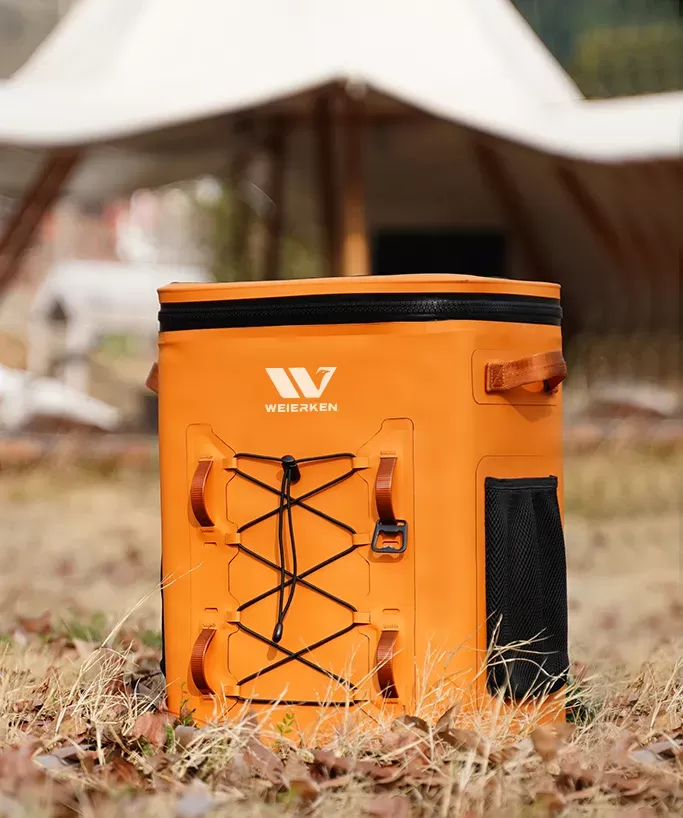

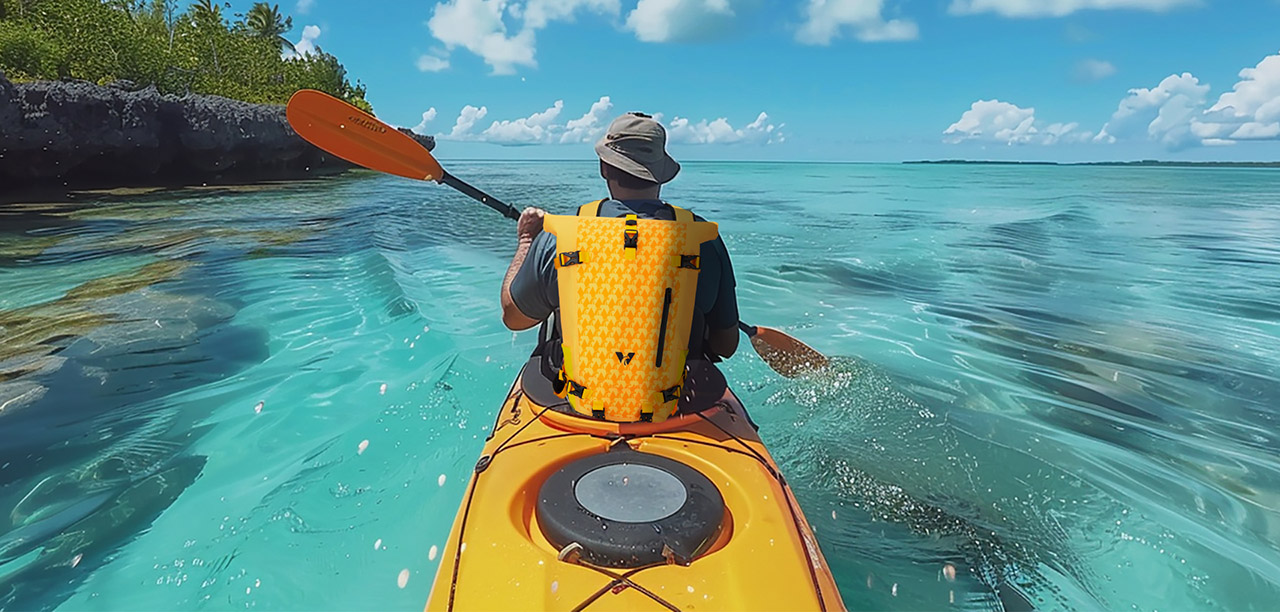
Planning a marine gear lineup for 2026 requires more than just picking a factory from a trade directory. Watersports, offshore sailing, kayak fishing, and marine expeditions demand equipment that withstands brutal abuse. Brands can no longer settle for standard splash-proof gear. Modern consumers expect complete IPX7 submersion protection, airtight zippers, and fabrics that resist saltwater and sun damage.
Procurement teams face mounting hurdles: volatile import duties, single-origin supply chain disruptions, and rising environmental compliance standards across Europe and North America. Sourcing from the wrong partner can wipe out seasonal profits before the summer boating season even begins.
To secure your inventory, you must evaluate three core pillars: supply chain resilience, engineering capabilities, and communication efficiency. As an established marine waterproof bag manufacturer with 20 years of specialized manufacturing experience, Weierken helps outdoor and maritime brands build dependable, tariff-friendly product lines. Here is your roadmap for vetting suppliers for 2026.
Pillar 1: De-Risking the Supply Chain with Dual-Hub Production
Marine products follow strict seasonal cycles. Retailers stock shelves in early spring. If your factory misses a shipment window by three weeks, you risk losing an entire season of revenue. Relying on a single manufacturing facility in a single country leaves your brand exposed to port delays, labor shortages, and unexpected policy changes.
A resilient marine waterproof bag manufacturer should offer distributed production. Spreading production across multiple regions protects your margins and guarantees product delivery.
China and Cambodia Dual-Factory Synergy
Weierken operates production facilities in both China and Cambodia. This dual-hub model gives sourcing directors immediate operational flexibility:
- China Hub: Houses rapid prototyping units, raw material sourcing networks, and specialized tooling fabrication. Ideal for complex R&D and rapid technical iterations.
- Cambodia Hub: Focuses on high-volume, continuous manufacturing runs. It shields buyers from regional bottlenecks and provides deep capacity during peak production months.
- Risk Diversification: If one facility faces local disruptions, production transfers to the sister facility without requiring a new vendor onboarding cycle.
Reduced Tariffs and Improved Landed Margins
Import duties can quickly erode wholesale margins. Cambodia marine bag manufacturing provides significant duty benefits for buyers shipping to the United States, Europe, and select international markets under preferential trade programs.
By shifting volume orders of custom IPX7 marine bags or welded packs to our Cambodian facility, brands can legally trim import duties. These savings directly improve bottom-line margins or allow brands to price their products more aggressively against competitors.
Defect-Free Manufacturing with a 99.5% Pass Rate
At sea, a ruptured seam is dangerous. Water ruins satellite phones, emergency beacons, dry clothing, and expensive fishing electronics. High product returns destroy consumer trust and cost thousands in reverse logistics.
Every reputable marine waterproof bag manufacturer must enforce multi-stage quality control. Weierken maintains a 99.5% first-pass yield through strict inline inspections:
- Radio frequency (RF) weld peel strength testing on every raw material lot.
- Positive air pressure testing on all airtight compartments to confirm absolute seal integrity.
- Saltwater spray chamber exposure to verify that all clips, buckles, and hardware resist corrosion.
- Tear and abrasion assessments on heavy-duty TPU and PVC coated textiles.
Full Door-to-Door (DDP) Logistics
Managing maritime freight, customs brokerage, and inland drayage requires valuable internal resources. Working with an OEM waterproof dry bag factory that manages Delivered Duty Paid (DDP) logistics streamlines your entire operation.
Under a DDP framework, Weierken manages the entire transport process from the factory floor to your domestic distribution center. We handle export filings, ocean booking, customs clearance, and duty payments. You receive finished inventory at your warehouse dock without dealing with freight forwarder delays.
Certified Environmental and Social Compliance
Global retailers will not carry brands that overlook environmental and ethical standards. By 2026, corporate sustainability reporting laws will penalize non-compliant supply chains. As an established sustainable waterproof gear supplier, your manufacturing partner must hold verified third-party credentials.
Our facilities maintain active certifications that keep your brand compliant across global markets:
- BSCI and SEDEX: Verifying fair labor conditions, ethical workplace safety, and transparent business practices.
- ISO 9001: Maintaining documented, repeatable quality management standards across all production lines.
- GRS (Global Recycled Standard) and rPET: Supplying post-consumer recycled nylon and polyester laminates without sacrificing water-barrier performance.
- REACH: Guaranteeing all fabrics, coatings, and plastic hardware remain free from toxic chemicals, heavy metals, and restricted phthalates.
Pillar 2: Technical Engineering for Saltwater and Submersion
A standard outdoor dry sack will not hold up on the deck of an offshore sportfishing vessel. Marine equipment endures continuous UV rays, saltwater intrusion, fuel grease, and aggressive dragging across non-skid fiberglass decks. A qualified marine waterproof bag manufacturer must excel at materials science and technical construction.
In-House R&D and Market-Driven Development
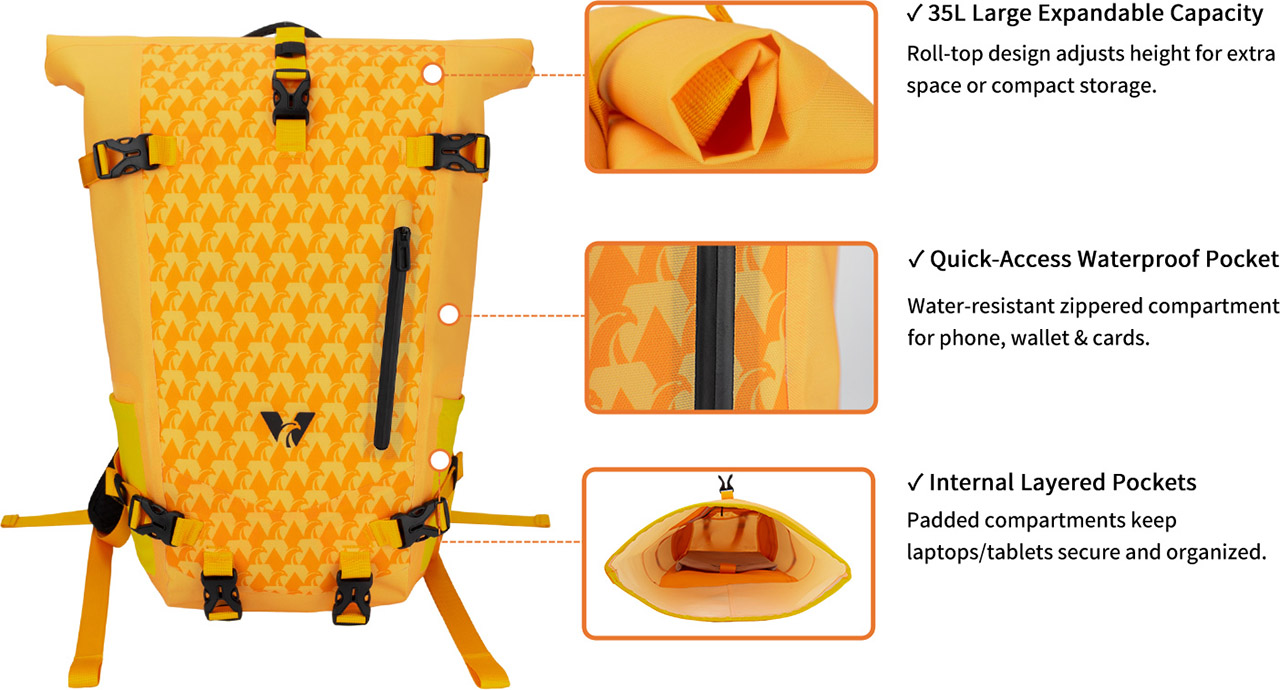
Copying public designs leaves your brand vulnerable to price wars. Premium brands win by offering functional features that solve real problems on the water: structured foam back panels that drain moisture, splash-proof outer pockets, and laser-cut MOLLE systems for securing tackle pliers.
Weierken provides an in-house engineering team that collaborates directly with your product developers. We evaluate your sketches, recommend adjustments to avoid high-stress points, and integrate features like internal rod tube sleeves, hydration bladders, and modular boat lash points.
High-Precision Sampling Timelines
Speed to market determines which brand captures retail shelf space each season. Waiting months for a single revision stalls your launch timeline. Look for an airtight boat duffel bag supplier with an independent prototyping department separated from the main production lines.
Our dedicated sample room keeps product development moving forward:
- Standard Dry Bags and Pouches: Samples ship within 3 to 7 business days.
- Complex Marine Packs and Duffels: Fully functional prototypes, complete with RF welded waterproof backpack construction and airtight zippers, ship in 12 to 30 days.
- Rapid Pattern Modifications: Adjustments to straps, valves, or closure mechanisms take only a few days to turnaround.
Overcoming Complex Marine Engineering Challenges
Building high-performance marine packs presents technical engineering challenges that regular cut-and-sew factories cannot solve. Stitching punches holes through fabric; marine gear requires bonded seams that hold air under pressure.
A specialized marine waterproof bag manufacturer solves these problems using precise industrial methods:
- Radio Frequency (RF) and High-Frequency Welding: Fusing thermoplastic polyurethane (TPU) or PVC molecules using high-frequency energy. This creates a solid molecular bond that will not peel, leak, or rot when exposed to saltwater.
- Airtight Zipper Integration: Installing toothless, pressure-resistant waterproof zippers requires specialized welding jigs and heat-sealing tape to prevent air leaks at the dock endpoints.
- Salt-Resistant Component Selection: Sourcing self-lubricating POM acetal buckles, anodized aviation-grade aluminum hardware, and 316 stainless steel components that never rust or seize up.
- Multi-Layer TPU Lamination: Engineering lightweight yet puncture-resistant materials that stay flexible in freezing conditions and do not turn brittle under UV exposure.
Two Decades of Field-Proven Manufacturing Knowledge
There are no shortcuts for manufacturing experience. Over 20 years, Weierken has manufactured thousands of waterproof products, testing different materials and seam constructions in extreme environments. We know how fabrics react to heat, tension, and long-term saltwater contact. This technical background helps our clients avoid expensive field failures and warranty recalls.
Pillar 3: Operating as an Extension of Your In-House Product Team
Sourcing overseas can sometimes lead to miscommunications, missed design details, and late delivery surprises. The best supplier relationships function as a cohesive engineering partnership rather than a distant transaction.
Design for Manufacturing (DFM) Support
Industrial designers often create concepts that look great on a screen but present challenges during bulk production. A knowledgeable marine waterproof bag manufacturer reviews your designs before cutting any fabric.
Weierken reviews tech packs carefully to spot production issues early:
- We identify weld angles that could cause air leaks under pressure.
- We recommend material weights that balance durability and overall carry weight.
- We optimize panel shapes to minimize fabric scrap, helping lower your bill of materials (BOM).
- We provide technical callouts for marketing teams, highlighting key selling points like hydrostatic head ratings and airtight certifications.
Direct, Clear Technical Communication
Misunderstood specifications can ruin an entire production run. Our project leads speak fluent technical English, understand Western product standards, and know the marine and outdoor markets thoroughly. You communicate directly with specialists who understand hydrostatic head ratings, TPU coatings, and RF tooling specs.
Transparent Project Milestone Management
Surprises have no place in seasonal product launches. Professional sourcing demands clear, predictable progress updates throughout the production cycle.
Weierken relies on a milestone tracking process for every client account:
- Phase 1: Material Sourcing & Lab Dips: Approving base fabrics, custom color matching, and hardware testing.
- Phase 2: Golden Sample Sign-Off: Locking down final patterns, airtight zipper alignment, and branding details.
- Phase 3: Tooling and Pilot Run: Running production molds and validating weld strength on initial batches.
- Phase 4: Bulk Manufacturing: Providing real-time updates through inline quality inspections.
- Phase 5: Final Inspection and Handover: Supplying full QC inspection reports before ocean containers are sealed and dispatched.
Frequently Asked Questions (FAQ)
Q1: What materials perform best for custom IPX7 marine bags?
A1: Double-sided TPU (Thermoplastic Polyurethane) laminated onto 420D or 840D high-density nylon provides the best balance of weight, puncture resistance, and cold-weather flexibility. For heavy-duty commercial applications, reinforced 500D to 1000D PVC tarpaulin offers exceptional abrasion defense at a lower raw material cost.
Q2: How does dual-hub production in China and Cambodia lower import tariffs?
A2: Finished goods made in our Cambodian facility qualify for preferential duty rates or lower tariffs in select international markets. We manage the supply of specialized tooling from our China hub while executing bulk production runs in Cambodia, lowering the overall landed cost of your inventory.
Q3: What testing protocols ensure true airtightness for an airtight boat duffel bag supplier?
A3: We submerge fully inflated bags underwater for extended periods to inspect for air bubbles, run positive internal pressure drop tests over 24 hours, and perform tensile pull tests on RF welded seams to verify they handle extreme dynamic pressure without popping.
Q4: How fast can a brand develop a prototype with an OEM waterproof dry bag factory?
A4: Simple roll-top dry sacks and small gear pouches take 3 to 7 business days. Complex products like airtight boat duffel bags, submersible fly-fishing hip packs, or multi-panel welded backpacks generally require 12 to 30 days to build tooling, align welded jigs, and assemble final samples.
Q5: Can we use certified recycled fabrics for marine-grade dry gear?
A5: Yes. Weierken produces high-performance gear using GRS-certified recycled nylon and rPET polyester laminates. These eco-friendly materials undergo our full lamination and high-frequency welding processes, maintaining identical IPX7 waterproof performance to virgin petroleum textiles.
Q6: How does DDP delivery protect brands from freight and customs delays?
A6: Under DDP (Delivered Duty Paid) terms, Weierken manages the entire shipping workflow. We oversee export filings, secure ocean freight space, manage customs entry, clear customs fees, and arrange truck delivery directly to your facility. This prevents container holdups at destination ports and guarantees fixed landing costs.
Secure Your 2026 Production Schedule Today
The outdoor marine market will continue to reward brands that deliver genuine waterproof performance, clean design, and reliable supply chains. Partnering with the right marine waterproof bag manufacturer protects your margins, reduces factory delays, and keeps warranty returns close to zero.
Weierken provides the infrastructure, engineering talent, and multi-country production capacity you need to scale your brand. Contact our engineering team today to review your tech pack, request a sample, or get a production quote from our China and Cambodia facilities.