
When you look at a thermal carrier, you might see just a simple box or a fabric bag. However, the reality inside a professional grocery delivery bag factory is far more complex. It is a place where thermodynamics meets textile engineering to ensure that "cold stays cold" and "hot stays hot" during the critical last mile of delivery.
At weierken, we understand that the success of a food delivery service depends on the state of the product upon arrival. A soggy pizza or melted ice cream leads to lost customers. That is why our manufacturing process focuses on advanced insulation science rather than just "adding more padding."
This article explores the technical standards and customized services you should expect from a leading grocery delivery bag factory. We will break down the materials, the testing protocols, and the design innovations that keep the global food supply chain moving efficiently.
Part 1: Detailed Breakdown of Thermal Insulation Technology
Insulation is a Structure, Not Just Thickness
Professional delivery bags rely on a synergistic three-layer system. A high-quality grocery delivery bag factory does not just use thicker foam; they optimize how these layers interact to block heat transfer. Every layer serves a specific purpose in the fight against ambient temperature changes.
The Outer Layer (Protection and Durability)
This layer
must withstand the rigors of the road. We typically use 600D or 420D Oxford
cloth, polyester, or heavy-duty non-woven fabrics. The primary goal is wear
resistance, waterproof capability, and tear strength. For premium models, a
grocery delivery bag factory might apply a PVC coating or TPU
lamination to achieve IPX4 water resistance, ensuring the contents stay dry
during rain or snow.
The Middle Layer (The Insulation Core)
This is the heart
of the thermal bag. Different delivery needs require different materials:
EPE Pearl Cotton: Lightweight and cost-effective. It works well for short-distance trips lasting 1 to 2 hours.
Aluminum Foil Composite Foam: Excellent at reflecting radiant heat, making it a versatile choice for both hot and cold items.
VIP (Vacuum Insulation Panels): These have an incredibly low thermal conductivity (≤0.004 W/m·K). They offer long-term insulation for 4 to 6 hours but come at a higher production cost.
Aerogel Felt: A high-performance material used in specialized cold chain logistics to provide maximum thermal resistance with minimum bulk.
The Inner Layer (Heat Reflection and Food Safety)
The
interior usually features a composite of aluminum foil and PEVA or aluminized
film. The foil reflects infrared radiation, while the PEVA ensures
food-grade contact safety. A top-tier grocery delivery
bag factory ensures this layer is antimicrobial, easy to wipe clean,
and completely odorless.
The technical secret lies in the material combination. Two bags might look identical in thickness, but the performance of high-grade materials can be three times more effective than cheap alternatives. At weierken, we conduct steady-state heat transfer tests on every material pairing to generate actual performance curves.
Key Metrics: R-Value and Cooling Rates
When dealing with a grocery delivery bag factory, you should move past vague promises. Demand quantifiable data. Professional buyers look for specific technical indicators to verify that the product will perform under pressure.
R-Value (Thermal Resistance): This measures how well a material resists heat flow. For delivery bags, look for a range between 0.5 and 2.5 m²·K/W.
Cooling/Heating Rate: This defines how long it takes for the internal temperature to change by 1°C. A quality bag should keep the change to less than 1°C every 30 minutes in a standard test environment.
Heat Reflection Rate: The inner aluminum foil should reflect at least 85% of infrared radiation back toward the food.
Our grocery delivery bag factory uses constant temperature and humidity chambers. We place multi-point temperature recorders inside the bags to simulate extreme scenarios, such as a 40°C car interior in July or a -5°C outdoor environment in January. This data allows us to provide a comprehensive thermal insulation curve for our clients.
The Hidden Enemy: Thermal Bridges
You can use the most expensive insulation in the world, but if the bag has "thermal bridges," it will fail. A thermal bridge is a path of least resistance for heat to enter or escape. In most designs, these are the zippers, seams, and needle holes.
A professional grocery delivery bag factory solves these issues through clever engineering:
Double-layer zippers: We use overlapping fabric flaps or rubber-coated waterproof zippers to block air exchange.
Magnetic strip seals: These provide a tighter closure than standard zippers for high-frequency use.
Ultrasonic welding: Instead of traditional sewing, we use ultrasonic welding or heat-sealing tape on seams. This eliminates needle holes and prevents "leakage" of cold or hot air.
3D Folded Structures: We design the bottom and sides to avoid sharp right-angle joints that create "cold bridges."
At weierken, we use thermal imaging cameras to inspect our prototypes. We scan for heat leakage points while the bag is under a simulated load. This ensures that every part of the bag, not just the walls, contributes to the thermal goal.
How We Verify Performance: 4-Step Testing Process
Any grocery delivery bag factory can claim quality, but we prove it. Our internal testing protocol is rigorous and transparent:
Material-Level Testing: We test the thermal conductivity of each insulation core using a heat flow meter before it ever reaches the assembly line.
Sample-Level Testing: We load the bag with a standard thermal mass—such as 2kg of ice at 0°C or hot water at 60°C—and record the internal temperature over several hours.
Aging and Durability Testing: We simulate 500 opening cycles and 100 cleaning cycles. We then re-test the insulation to ensure that the performance decay is less than 15%.
Extreme Environment Testing: We place the bags in a 40°C heat room or a -10°C freezer for four hours to observe temperature fluctuations and structural integrity.
We archive all this data. When a B2B client requests a sample, we provide the test reports along with the physical product. This level of transparency is what separates a world-class grocery delivery bag factory from a basic workshop.
Part 2: ODM/OEM Services – Customizing Your Thermal Solution
Every brand has a different story. A supermarket chain might need bags for 15-minute neighborhood deliveries, while a specialized seafood provider needs 4-hour cold chain logistics. We provide both ODM (Original Design Manufacturing) and OEM (Original Equipment Manufacturing) services to turn your requirements into reality.
What can we do in the ODM/OEM process?
Our grocery delivery bag factory offers a modular approach to customization. You choose the level of involvement, and we handle the technical execution.
Requirement Analysis: We analyze your delivery distance, temperature requirements, and usage frequency to recommend the best material matrix.
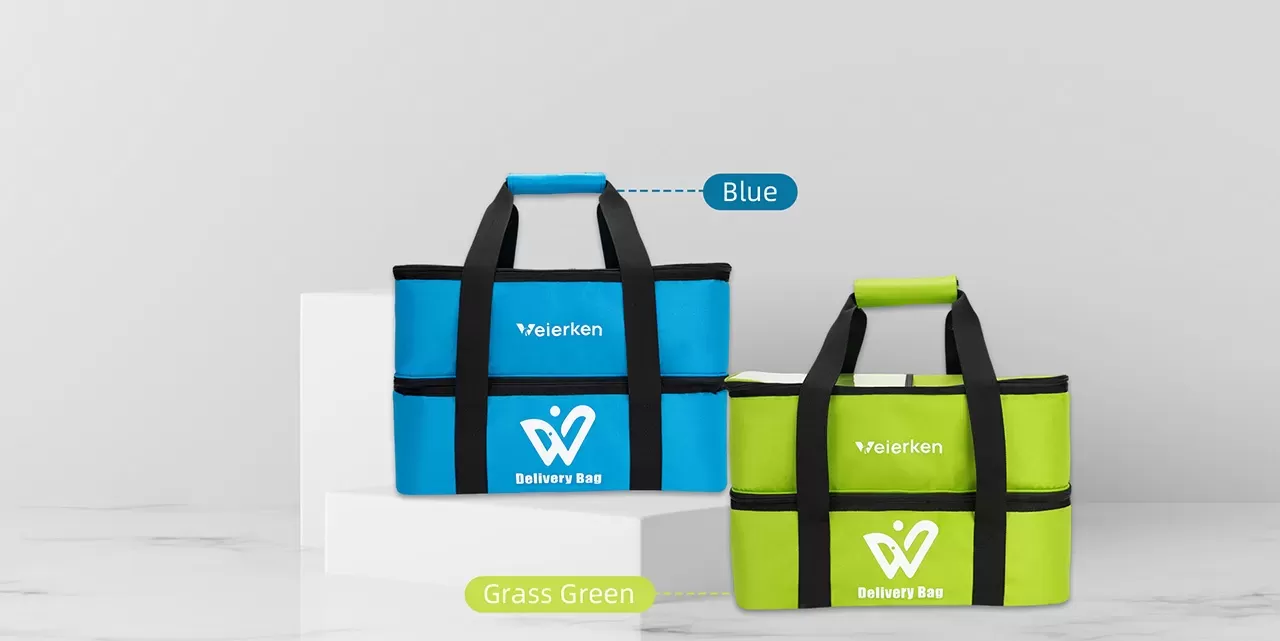
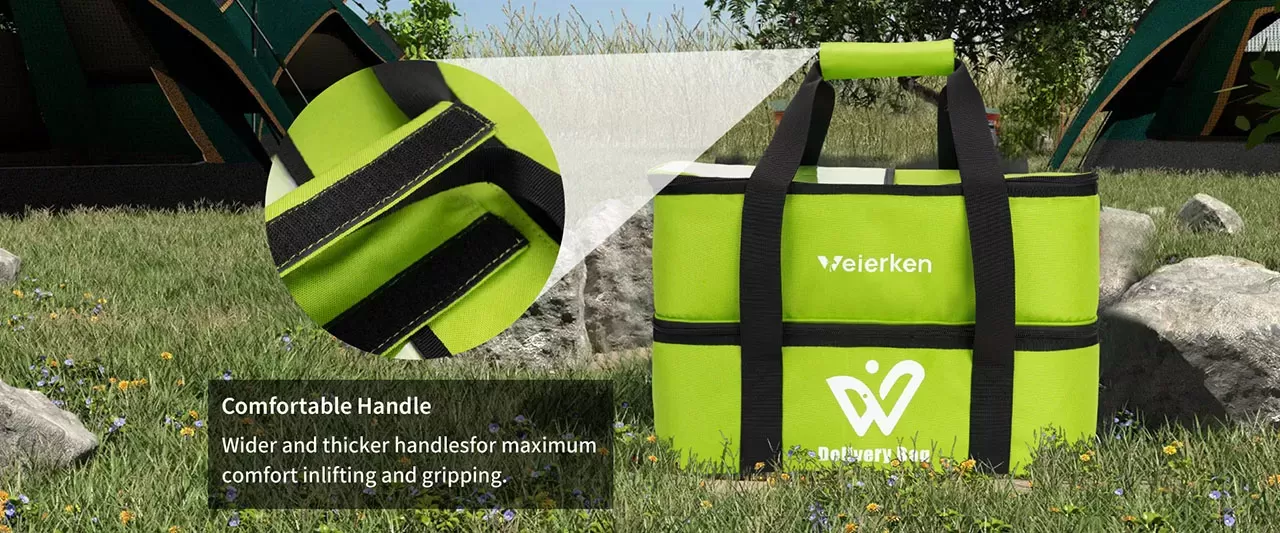
Functional Customization: We can add cup holders, foldable dividers, exterior label pockets, and specialized shoulder straps.
Rapid Prototyping: Once you approve the design, our grocery delivery bag factory can produce a 1:1 physical sample in 3 to 5 days.
Compliance: We ensure all materials meet FDA, LFGB, or EU 10/2011 standards. We can also source recycled fabrics (rPET) for brands focusing on sustainability.
Flexible Production: We support an MOQ of 500 pieces, allowing for mixed batches and manageable inventory levels.
Real-World ODM Case Studies
Consider a fresh food supermarket that needed to transport frozen items in 35°C heat for four hours. Our grocery delivery bag factory implemented a VIP vacuum panel system combined with heat-sealed seams. The result was a successful rollout of a premium delivery service that maintained product integrity even in the height of summer.
Another case involved a delivery platform that required lightweight, foldable bags. We utilized EPE foam with a high-density 600D Oxford exterior. The bags were designed to fold flat, allowing couriers to carry 20 units at a time when empty, without sacrificing basic thermal performance for 60-minute trips.
Why Partner with our Grocery Delivery Bag Factory?
Choosing weierken means choosing a technology-driven partner. We don't rely on "gut feeling." Every design is validated by thermal simulation and physical testing. We offer transparent pricing based on materials and labor, with no hidden costs.
Our production management ensures a 98.5% on-time delivery rate. Even during peak seasons, we maintain 20% reserve capacity to handle urgent orders. When you work with our grocery delivery bag factory, you get more than a supplier; you get a partner dedicated to your brand's operational success.
Frequently Asked Questions (FAQ)
What is the difference between EPE and VIP insulation in a delivery bag?
EPE (Expanded Polyethylene) is a cost-effective foam suitable for short trips. VIP (Vacuum Insulation Panels) offers significantly higher thermal resistance by eliminating air, making it ideal for last-mile delivery of temperature-sensitive medical goods or high-end frozen foods. A professional grocery delivery bag factory can help you decide which fits your budget and performance needs.
Can the factory produce bags that are completely leak-proof?
Yes. By using PEVA or TPU inner linings combined with ultrasonic welding or heat-sealing technology, a grocery delivery bag factory can create a seamless interior. This prevents melted ice or spilled liquids from leaking through the seams and damaging the outer fabric or the courier's vehicle.
How do you ensure the bags don't smell after repeated use with hot food?
We use food-grade, antimicrobial linings that do not absorb odors. Furthermore, the design of the bag allows for easy cleaning with simple disinfectants. Professional grocery delivery bag factory standards require these materials to be non-toxic and volatile-free, even when heated to 60°C or 70°C.
Does the factory support small batch testing for new startups?
Most established factories, including weierken, offer an MOQ of 500 pieces. This allows smaller brands to access professional-grade equipment without the burden of massive inventory. We also provide rapid sampling so you can test the bags in your local environment before committing to mass production.
What certifications should I look for in a grocery delivery bag factory?
Look for BSCI for social responsibility, ISO 9001 for quality management, and food safety certifications like FDA or LFGB for the inner lining materials. These documents prove that the grocery delivery bag factory operates under international standards and that the products are safe for consumer use.
How long does the printing on the bag last?
We use high-quality silk-screen or thermal transfer printing that is resistant to UV rays and mechanical abrasion. Our grocery delivery bag factory tests the printing durability through repeated washing and friction tests to ensure your brand logo stays visible for the life of the bag.
Start Your Custom Thermal Project Today
The right delivery bag is an investment in your brand's reputation. Whether you need a standard solution or a highly technical custom build, weierken has the expertise to deliver. Our grocery delivery bag factory is ready to help you optimize your logistics and satisfy your customers.
Don't settle for "good enough" when it comes to food safety and thermal performance. Contact us today to examine our material samples, review our test data, and see how we can assist your business. Our team is standing by to provide a detailed consultation and a competitive quote for your next order.
Request a Technical Proposal
Ready to upgrade your delivery fleet? Tell us about your temperature targets and delivery volume. Our engineers at weierken will provide a tailored material matrix and pricing structure for your brand.
Contact our team for an inquiry today and receive a sample within the week.
Inquire About Custom Bags