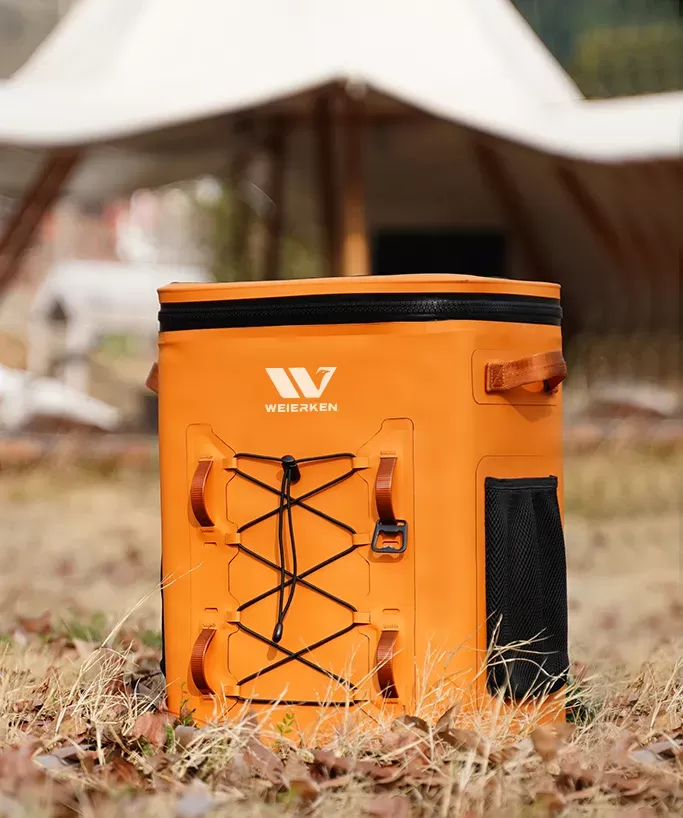

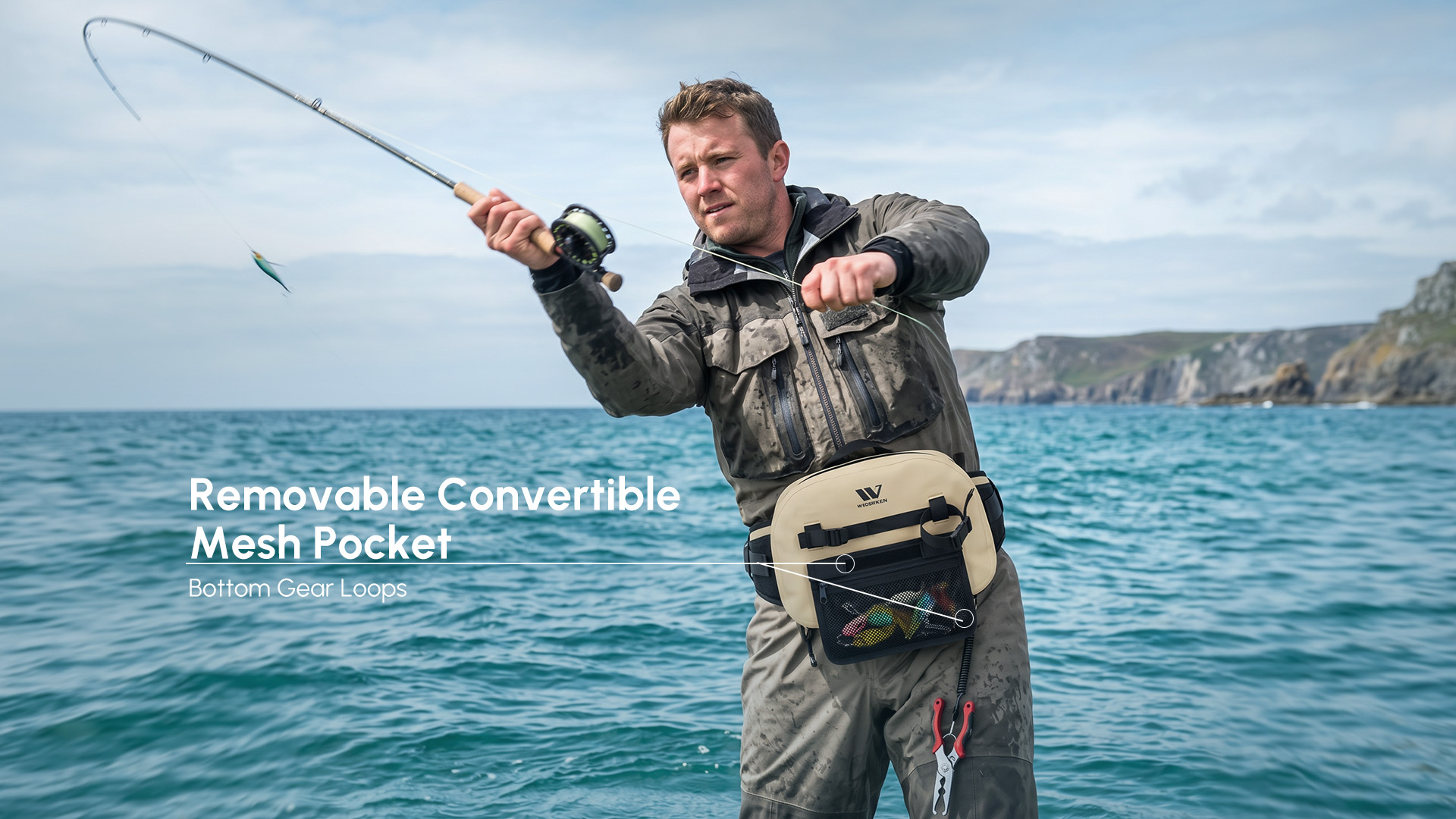
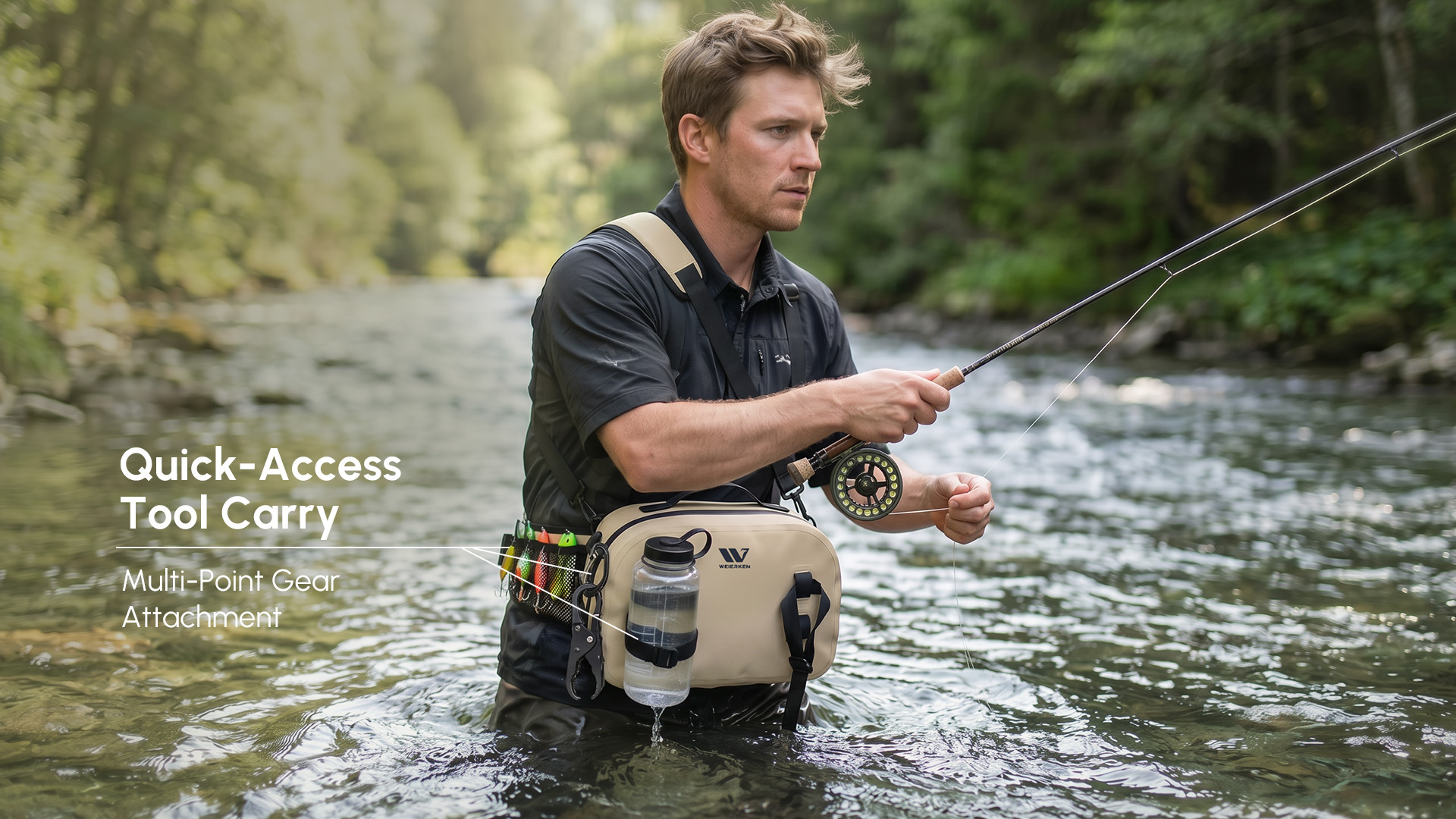
Fly fishing gear operates under some of the harshest conditions in the outdoor industry. Unlike standard hiking daypacks or commuter bags, a fly fishing sling pack must endure hours of deep wading, relentless sun exposure, brush abrasion, and sudden torrential downpours. Anglers need instant, single-motion access to their gear without breaking their casting rhythm or losing balance in fast currents.
For outdoor gear product developers and brand sourcing managers, contracting the right custom fly fishing sling pack manufacturer has become increasingly complex. Stricter global environmental regulations—such as sweeping bans on fluorinated (PFAS) water-repellent treatments—alongside rising tariff pressures mean traditional cut-and-sew factories can no longer keep pace with market standards.
At Weierken, we specialize in high-frequency welded waterproof gear and technical outdoor equipment. We understand that finding a reliable manufacturing partner requires looking beyond unit pricing. In this guide, we break down the five non-negotiable criteria your procurement team must evaluate to secure a strategic, high-yield manufacturing partner for 2026 and beyond.
1. Fly Fishing Ergonomics and Specialized R&D Capabilities
A factory cannot build a world-class fly fishing pack if its engineering team does not understand the sport. Fly anglers move differently than hikers. They need constant, unhindered arm rotation for casting, and they demand quick-swing access to switch flies while waist-deep in water.
When vetting a prospective OEM fly fishing gear supplier, review their technical pattern-making expertise and look for these specialized functional integrations:
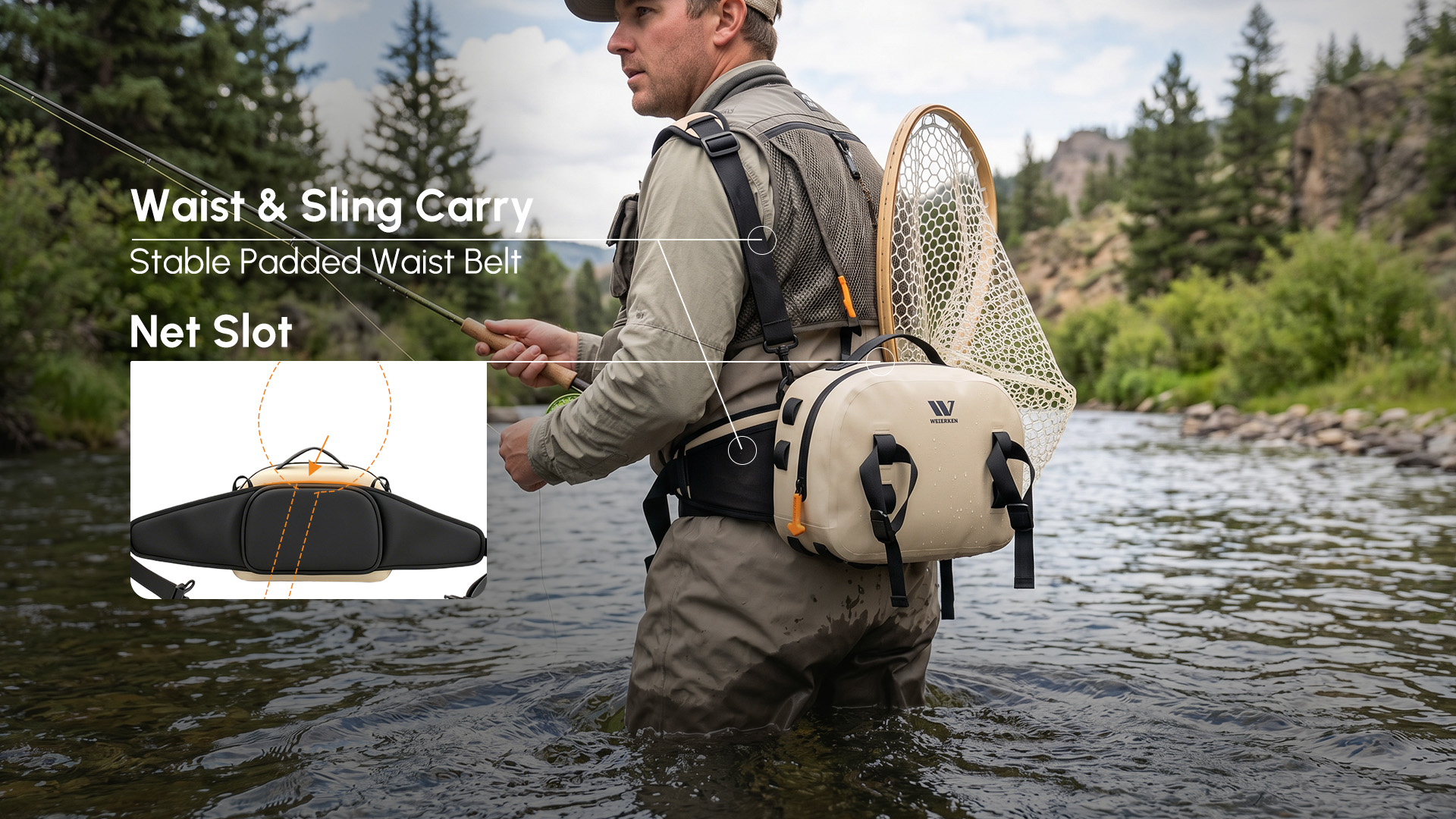
Self-Balancing Shoulder Harness: The strap geometry must distribute heavy tackle loads across the back without shifting forward when bending down to land a fish. It must also feature a smooth inner face that will not snag expensive fly lines during haul casts.
Drop-Down Fly Bench Workstation: A rigid, molded EVA foam zip-down pocket that acts as a flat work surface. It must securely hold hook-and-loop ripple foam patches and retain tippet spools in place while re-rigging.
Integrated Tool Ports & Magnetic Docks: Embedded magnetic zones to park nippers, forceps, and zingers securely so they do not dangle, catch on branches, or swing into the water.
Integrated Landing Net Scabbards: Deep, internally routed net sleeves that keep long-handled guide nets flush against the spine, engineered with laser-cut bottom drain ports to clear trapped river water instantly.
Rapid Sampling Infrastructure: A tier-one fly fishing backpack OEM ODM should operate a dedicated sample workshop capable of turning 3D CAD files or rough tech packs into functional prototypes within 15 to 30 days.
2. Submersible Waterproof Engineering (IPX7 / IPX8)
A true wading sling pack must keep dry flies, licenses, key fobs, and sensitive electronics bone-dry—even when fully submerged during a stumble in deep rapids. Standard stitched seams covered with simple rain covers will fail in high-stakes fishing scenarios.
Your ideal submersible tackle bag manufacturer must master advanced thermoplastic processing rather than relying solely on needle-and-thread construction.
High-Frequency (RF) and Ultrasonic Welding
Submersible dry bags require continuous, molecular-level bonds. Radio-frequency (RF) welding fuses coated fabric panels without puncture holes, creating hermetically sealed seams that withstand high hydrostatic pressure.
Advanced Technical Fabrics
Look for extensive experience in manipulating 420D to 840D high-tenacity nylon coated on both sides with Thermoplastic Polyurethane (TPU). Double-sided TPU delivers superior weld strength, UV stability, and puncture resistance against sharp river rocks and stray hook points.
Airtight and Submersible Zipper Integration
Integrating toothless, pressure-tight zippers (such as TRU-Zip or TIZIP systems) is notoriously difficult. The process requires precise temperature controls, custom welding jigs, and cleanroom-style assembly to ensure zero air leaks along zipper endpoints and stop blocks. A qualified factory will have proven track records assembling these components without puckering or glue residue.
3. 2026 ESG, PFAS-Free, and Sustainable Material Compliance
The regulatory backdrop for outdoor technical gear is shifting rapidly. North American and European markets have implemented strict prohibitions on per- and polyfluoroalkyl substances (PFAS/PFCs). Sourcing from a supplier that is not fully compliant puts your brand at risk of severe customs delays, import fines, or unsellable inventory.
Ensure your waterproof fly fishing sling pack factory provides verified, certified sustainable material choices:
PFAS-Free DWR Coatings: Verified plant-based or silicone-based durable water repellent finishes that meet European REACH and US state-level environmental mandates without sacrificing water beading performance.
GRS-Certified Recycled Nylon (rPET): The ability to source Global Recycled Standard (GRS) fabrics, turning ocean-bound plastics and post-industrial nylon waste into ultra-durable technical shells.
Eco-Toxicity Certifications: Production pipelines aligned with OEKO-TEX Standard 100 and Bluesign criteria, proving that all dyes, softeners, plastic hardware, and TPU films are free from hazardous chemicals.
4. Dual-Hub Manufacturing Footprint and Tariff Mitigation
In a volatile global trade environment, single-origin sourcing exposes your business to sharp tariff spikes and regional supply bottlenecks. Leading outdoor brands now rely on a dual-hub manufacturing strategy to protect gross margins and ensure delivery stability.
Partnering with a private label fishing gear factory 2026 that operates interconnected facilities in both China and Southeast Asia (such as Cambodia or Vietnam) offers critical operational benefits:
Tariff Reduction for Western Markets: Exporting finished goods from a Southeast Asian facility allows North American and European brands to qualify for preferential duty rates, bypassing punitive trade tariffs and significantly lowering overall landed costs.
Upstream Supply Chain Strength: High-end technical fabrics, specialized waterproof zippers, and custom hardware molds are primarily produced in China. A dual-hub manufacturer leverages Chinese raw material networks while assembling finished goods in cost-effective export hubs.
End-to-End DDP Logistics: Top-tier manufacturers manage door-to-door Delivered Duty Paid (DDP) shipping. They handle export customs, ocean freight, port drayage, and inland customs clearance, delivering containers directly to your warehouse dock.
At Weierken, our dual-hub model lets brands refine complex prototypes at our high-tech China R&D center, then transition to our Cambodia production lines for duty-optimized mass production.
5. Industrial QC Systems and Social Compliance Audits
High return rates wipe out retail margins and damage brand reputation. Because waterproof wading packs are technical life-support gear for expensive accessories, factory quality control must be systematic, repeatable, and thoroughly documented.
100% Submersion Pressure Testing
Spot-checking one out of every fifty bags is not enough for an IPX7 or IPX8 submersible bag. Your manufacturer must enforce a 100% inflation submersion test for all waterproof chambers. Each bag is inflated to a precise PSI, submerged in a pressurized water tank, and inspected for micro-bubbles along welded seams and zipper tracks.
Key Quality Performance Metrics
Demand documented proof of the factory's internal metrics before signing a master service agreement:
First-Pass Yield (FPY): A world-class factory consistently maintains an FPY rate of 99.0% or higher on technical welded goods.
Tensile and Peel Strength Testing: In-house lab equipment to measure the shear strength of welded joints and the cycle life of hardware under extreme temperatures.
Social Audits: Current certifications for BSCI (Business Social Compliance Initiative), SEDEX (SMETA), and ISO 9001 quality management, ensuring your brand is protected against labor rights liabilities.
Actionable Sourcing Guide: 3 Questions to Ask in Your RFQ
When distributing your Request for Quotation (RFQ) to prospective suppliers, skip generic inquiries. Use these three targeted technical questions to separate true engineering manufacturers from basic trading middlemen:
"What precise welding process (HF, RF, or Hot-Air Seam Taping) do you recommend for our 840D double-TPU shell, and what are your minimum pull-strength test thresholds for welded seam bonds?"
"Can you provide full supply-chain traceability documents and Certificates of Origin (CO / Form A) showing raw material compliance for duty-free or preferential tariff export out of your Southeast Asian facility?"
"What is your standard QA protocol for submersible zippers? Do you conduct 100% submerged pressure-decay testing on finished units or statistical AQL batch sampling?"
Frequently Asked Questions (FAQ)
Q1: What is the standard MOQ for a custom technical fly fishing sling pack?
A1: For fully customized cut-and-sew bags with standard water-resistant fabrics, MOQs usually start at 500 units per colorway. However, for fully submersible, high-frequency welded TPU packs with custom airtight zippers, the MOQ typically ranges between 800 and 1,000 units. This is dictated by the minimum production runs required for custom-coated fabric dye lots and specialized zipper tooling.
Q2: What is the difference between water-resistant, weatherproof, and fully submersible fly fishing packs?
A2: Water-resistant packs use DWR-treated fabrics with standard stitched seams and water-repellent zippers; they resist light rain but leak under pressure. Weatherproof packs incorporate taped seams and roll-top closures that withstand heavy downpours. Submersible packs (IPX7/IPX8) feature RF-welded seams and pressure-rated airtight zippers, allowing the bag to be dragged underwater or held below the surface without admitting a single drop of moisture.
Q3: How long does the R&D and prototyping phase take for a custom fly fishing sling pack?
A3: Developing a technical sling pack typically takes 15 to 30 days for initial physical pattern creation and sample delivery. If your project requires custom injection molds for EVA back panels, magnetic tool docks, or proprietary buckles, expect an additional 20 to 35 days for tooling design, trial molding, and sample validation.
Q4: How does a dual-hub China/Cambodia manufacturing model reduce our landed costs?
A4: China offers the world's most mature supply ecosystem for specialized technical hardware, TPU laminations, and waterproof zippers. By using China for material engineering and prototyping, then routing final mass assembly through our Cambodia facility, brands can take advantage of favorable trade agreements and lower tariffs when importing into the US and Europe, saving 15% to 25% on total landed costs.
Q5: Can our brand provide custom zipper pulls, patches, and corporate branding on welded TPU surfaces?
A5: Yes. We offer several branding methods specifically engineered for welded technical fabrics. These include high-frequency welded TPU patches, laser-etched silicone badges, sonic-welded hook-and-loop sections, waterproof heat-transfer graphics, and custom molded zipper pullers.
Partner with Weierken for Your 2026 Product Line
Launching a high-performance fly fishing sling pack requires a manufacturing partner that combines angling insight, advanced welding technology, and a dependable global supply chain. Choosing the wrong supplier leads to delaminated seams, wet gear, missed delivery windows, and costly tariff penalties.
Weierken delivers the engineering rigor and supply chain security top outdoor brands demand. From rapid 15-day functional prototypes and IPX8 tank testing to cost-effective assembly in our Cambodia facility, we provide a complete OEM/ODM production solution tailored to your performance requirements.
Ready to build your next fly fishing product line? Contact our engineering team today to submit your tech pack, review our material sample kits, and request a detailed quotation for your custom fishing gear project.