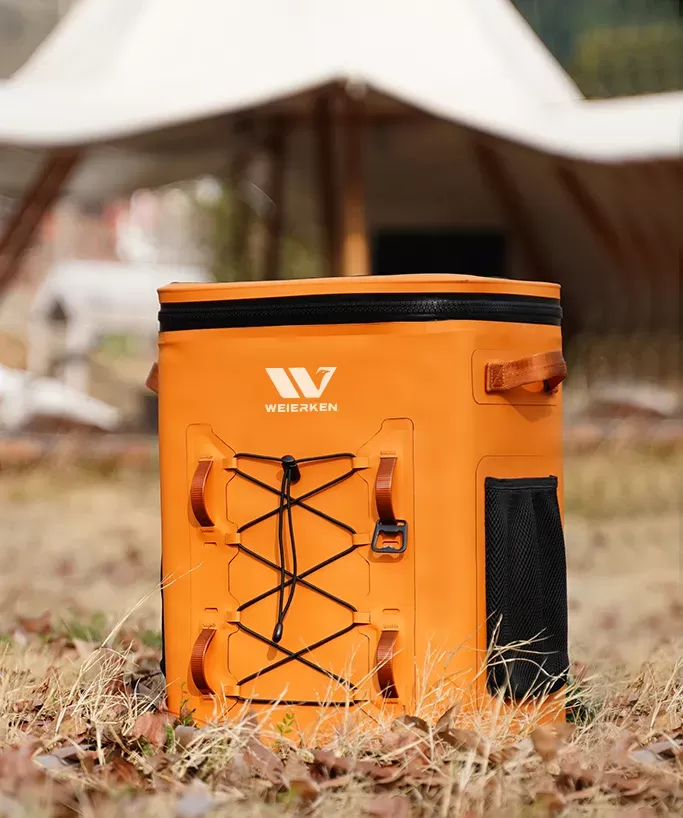

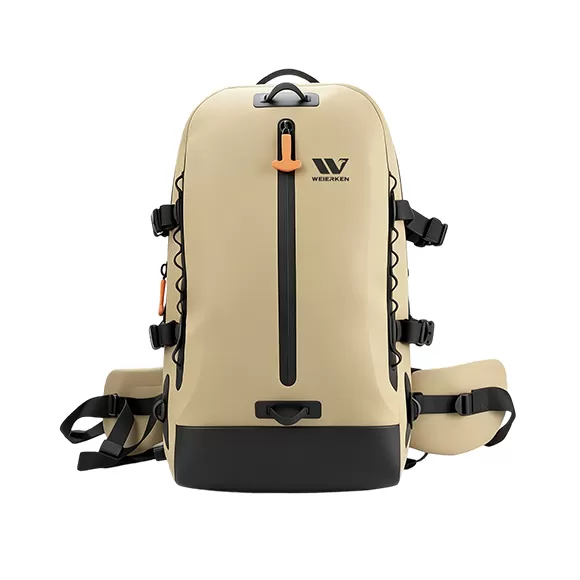
Bass fishing has changed dramatically over the last decade. Tournament anglers, kayak fishermen, and weekend bank beaters no longer settle for generic canvas duffels that soak up water and turn into disorganized clutter. Today's anglers demand specialized gear built with technical fabrics, IPX-rated submersible compartments, and customizable storage layouts.
For tackle brands and outdoor retailers, this shift creates a major market opportunity. However, sourcing reliable private label bass fishing bags comes with steep challenges. Brands frequently struggle with long product development cycles, leaky stitching, rising import tariffs, and delayed production runs. Building a bag that withstands harsh marine environments requires technical precision and robust manufacturing support.
At Weierken, we bring 20 years of technical bag manufacturing experience to solve these exact problems. Through advanced fabric welding, ergonomic design, and a strategic dual-hub factory footprint in China and Cambodia, we help outdoor brands launch market-ready, high-margin fishing gear with total supply chain reliability.
The Evolution of Bass Tackle Storage: What Anglers Expect
Tournament bass fishing demands speed, accessibility, and rugged durability. Anglers frequently jump between boats, kayaks, and rugged shorelines. When gear fails, a day on the water is ruined.
Modern product lines must address three critical consumer demands:
All-Weather Protection: Standard water-resistant coatings wear off quickly. Anglers now expect true waterproof construction that protects expensive tackle, terminal gear, and electronics from heavy rain, boat deck spray, and accidental submersion.
Standard Box Compatibility: Tackle bags must natively fit industry-standard utility trays, primarily the 3600 and 3700 footprint boxes. A bag with awkward internal dimensions wastes space and frustrates users.
Modular Configuration: Different techniques require different tools. Bank anglers want lightweight setups with external plier sheaths and rod holders. Boat anglers need maximum tray capacity and rapid-access top openings.
Meeting these demands requires working with a dedicated waterproof tackle bag manufacturer that understands both technical textile fabrication and real-world fishing ergonomics.
Engineering Superior Waterproof Architecture
Waterproofing a technical fishing pack involves much more than spraying a water-repellent chemical on nylon. True waterproof performance starts with raw material selection and advanced assembly techniques.
Advanced Materials: TPU vs. Heavy-Duty PVC
Traditional tackle bags rely on 600D or 1200D polyester with a polyurethane (PU) backing. While cost-effective, these materials degrade over time under UV exposure and let moisture seep through needle stitch holes during steady rainfall.
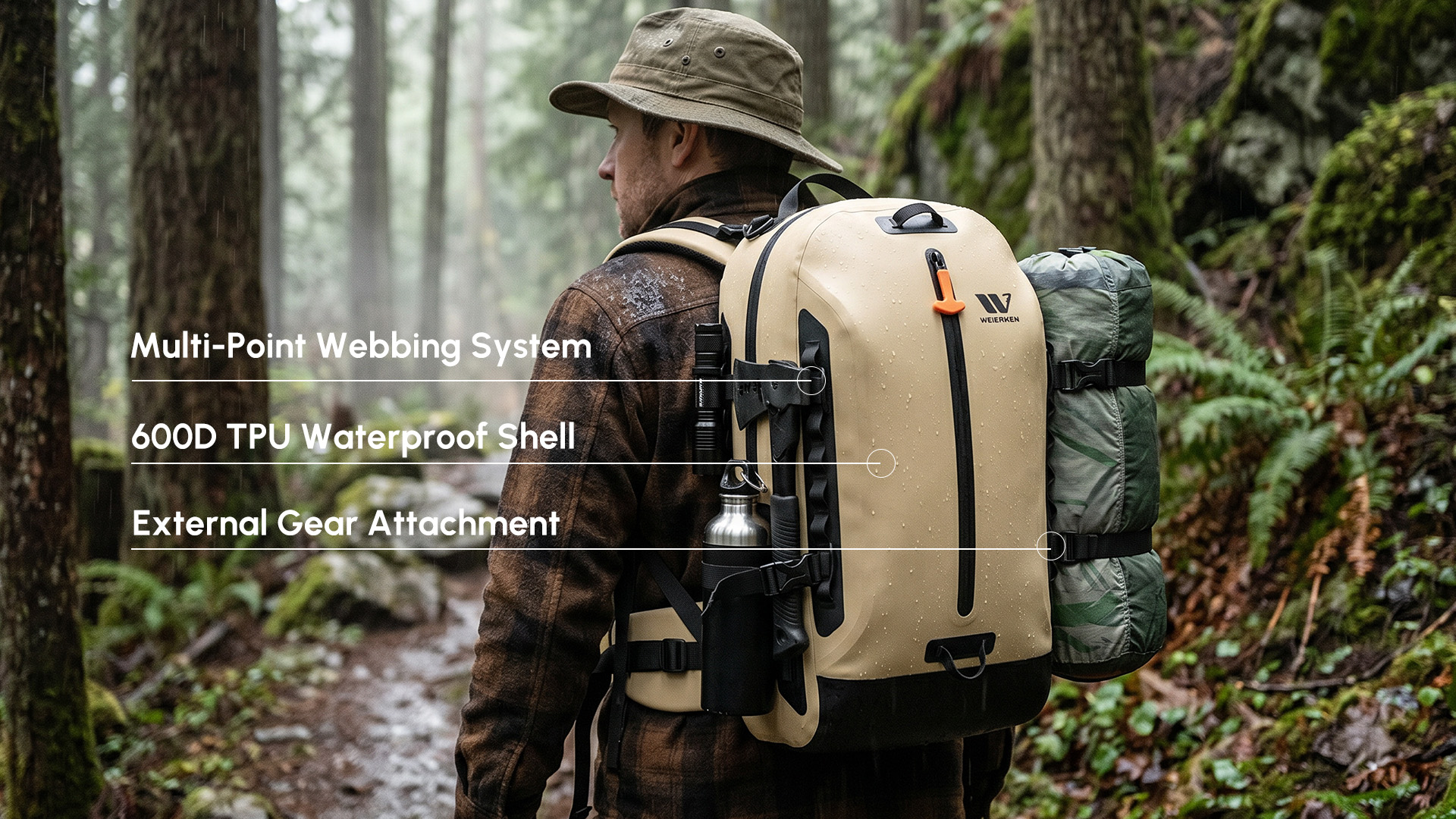
For premium private label bass fishing bags, we engineer composite constructions using Thermoplastic Polyurethane (TPU) and high-density PVC laminates. TPU provides exceptional abrasion resistance, stays flexible in freezing temperatures, and offers superior crack resistance against saltwater and fish attractants.
High-Frequency (HF) Seamless Welding
Every needle hole in traditional sewing is a potential leak point. To create hermetically sealed main compartments, Weierken utilizes High-Frequency (HF) and Radio-Frequency (RF) welding machines. This process fuses the molecular structure of the coated fabrics under pressure, creating a bond that is actually stronger than the surrounding material.
Airtight Zipper Integration: We weld waterproof, airtight zippers directly into the TPU panels, guaranteeing dry-box performance for sensitive electronics and leader lines.
Reinforced Stress Points: Welded connection patches distribute load evenly across shoulder strap anchors, preventing the tearing common in single-stitched seams.
Hybrid Construction: For cost-sensitive SKUs, we combine welded waterproof base tubs with splash-proof ripstop upper sections, giving brands the right balance of price and performance.
Modular Utility: Designing for the Modern Bass Angler
A well-designed tackle bag functions as a mobile command center. It must keep tools within arm's reach while distributing heavy tackle loads comfortably across the angler's body.
Precision Sizing for 3600 & 3700 Utility Boxes
Bass anglers organize their soft plastics, crankbaits, and jigs inside Plano-style 3600 and 3700 tackle trays. When developing a custom modular fishing backpack or sling pack, our design team builds internal compartments with reinforced dividers matched to these exact dimensions.
We incorporate structured internal frames that prevent the bag from collapsing when an angler removes a single tray, allowing quick, one-handed re-insertion during fast tournament bites.
Laser-Cut MOLLE & External Tool Holsters
Modern tactical aesthetics have crossed over into fishing. Integrating laser-cut TPU MOLLE webbing gives anglers the flexibility to customize their loadouts based on their target species and fishing style:
Dedicated Plier & Braid Scissor Sheaths: Quick-draw holsters with molded D-rings for security lanyards.
Integrated Rod Butt Holders: Hands-free rod transport systems on side panels for bank walkers and kayak portaging.
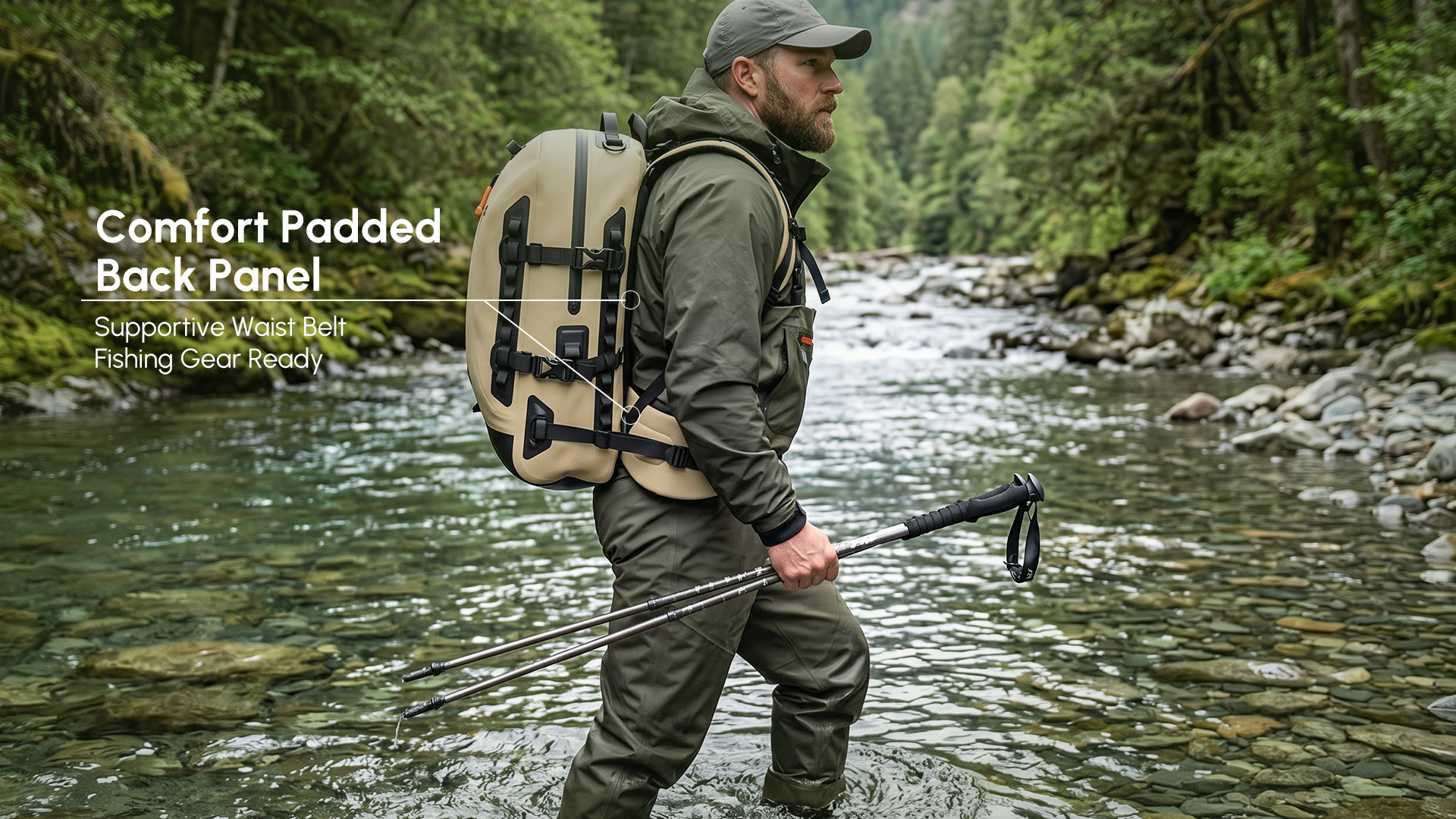
Hydrophobic Back Panels: 3D molded EVA foam back panels that do not absorb water, promote airflow, and reduce sweat buildup during hot summer days.
Retractable Line Spooling Ports: Built-in side pockets that allow spooling fresh line without removing the bulk spool from the bag.
Fast-Track Rapid Prototyping
Speed to market can make or break a seasonal product launch. Weierken operates an in-house rapid sampling center. Our technical patternmakers turn your CAD drawings, tech packs, or physical reference samples into fully functional prototypes within 12 to 30 days. This lets your product managers run field tests, capture marketing photography, and refine features long before bulk production starts.
Supply Chain Strategy: The China + Cambodia Dual-Hub
Developing an exceptional product is only half the battle. In the current global trade environment, your choice of an OEM bass fishing gear supplier directly impacts your landed costs, profit margins, and inventory predictability.
Tariff Mitigation via Our Cambodia Facility
Importing soft goods and outdoor bags from China to the United States and European markets often incurs substantial customs tariffs. To help brands protect their gross margins, Weierken established a fully operational Cambodia fishing bag factory.
Our dual-hub manufacturing model delivers clear strategic advantages:
Duty Savings: Goods manufactured in and exported from Cambodia qualify for preferential trade programs and avoid punitive Section 301 tariffs in the US market, instantly improving brand profitability.
Redundant Capacity: By balancing production between our specialized China technical facility and our large-scale Cambodia plant, we hedge against regional supply chain disruptions and seasonal capacity crunches.
Raw Material Efficiency: We source premium hardware, zippers, and technical fabrics through our established Chinese supply network and ship them directly to Cambodia for streamlined assembly.
Turnkey DDP Delivery
Managing international freight forwarders, customs clearance, and container drayage pulls valuable focus away from sales and marketing. Weierken provides end-to-end DDP fishing bag manufacturing services.
Under Delivered Duty Paid (DDP) terms, our logistics division handles ocean freight, marine insurance, customs filings, duty payments, and domestic trucking. You receive the shipment directly at your commercial warehouse door with zero hidden fees or logistics headaches.
Strict Quality Assurance & Global Compliance
A high return rate destroys brand equity and eats up customer service resources. Fishing bags endure harsh abuse—mud, salt, fish blood, heavy weights, and aggressive pulling on zippers. Quality control cannot be an afterthought.
99.5% First-Pass Yield Rate
Weierken maintains a 99.5% first-pass quality yield across all production lines. We enforce a four-stage quality assurance protocol:
IQC (Incoming Quality Control): Hydrostatic head testing, fabric tensile strength checks, and zipper cycle tests on all incoming raw materials.
IPQC (In-Process Quality Control): Continuous weld seam pressure tests and stitch tension monitoring during assembly.
FQC (Final Quality Control): 100% inspection of completed bags for zipper smoothness, seam seal integrity, and dimensional accuracy.
OQC (Outgoing Quality Control): Random AQL 2.5/4.0 audits before cartoning and container loading.
International Ethical & Environmental Standards
Major retailers and modern consumers prioritize ethical manufacturing and environmental stewardship. Our manufacturing facilities are fully audited and certified under globally recognized frameworks:
BSCI & SEDEX: Verifying fair labor standards, safe factory working conditions, and ethical treatment of workers.
ISO 9001: Ensuring consistent quality management systems across every production batch.
GRS (Global Recycled Standard) & rPET: Offering eco-conscious brands the ability to build bags from certified post-consumer recycled fabrics.
REACH & RoHS: Ensuring all plasticizers, coatings, and metal hardware are free from harmful heavy metals and toxic chemicals.
Working with Weierken as Your Extended OEM Team
Many contract factories treat clients as order numbers, blindly producing whatever tech pack is sent over—even if the design contains obvious manufacturing flaws. We take a collaborative engineering approach.
When you partner with Weierken for private label bass fishing bags, our technical team works as an extension of your product department:
Design for Manufacturability (DFM): We review your initial concepts to identify potential stress points, optimize fabric yields to reduce unit costs, and suggest hardware alternatives that improve durability.
Clear, Direct Communication: Our account managers speak fluent English and possess years of hands-on technical bag manufacturing experience. You work directly with professionals who understand outdoor gear specifications.
Milestone Transparency: We operate on documented project timelines with weekly status reports, shared material tracking sheets, and video inspections throughout every production stage.
Frequently Asked Questions (FAQ)
Q1: What is the typical Minimum Order Quantity (MOQ) for custom bass fishing bags?
A1: Our standard MOQ for fully customized private label bags typically starts at 500 to 1,000 units per style/colorway, depending on the complexity of the design and specific fabric requirements. For welded TPU or specialty waterproof constructions, MOQs depend on the minimum dye lots of the technical fabrics. Contact our sales team to discuss low-volume sample runs or scaling strategies.
Q2: Can you manufacture private label bass fishing bags using recycled materials?
A2: Yes. We are GRS (Global Recycled Standard) certified and regularly produce technical outdoor gear using rPET fabrics derived from recycled plastic bottles. We can combine recycled outer shells with TPU laminations and non-toxic water-repellent finishes to meet your brand's sustainability targets.
Q3: How long does it take from initial concept to bulk delivery?
A3: Pattern design and physical prototyping usually take 12 to 30 days. Once you approve the pre-production sample, bulk manufacturing typically takes 45 to 60 days. Ocean freight to North America or Europe takes an additional 20 to 35 days, depending on your final destination and chosen shipping method.
Q4: How do your dual factories in China and Cambodia handle tariff differences?
A4: Our China facility handles complex prototyping, technical material sourcing, and specialized short runs. Our Cambodia facility focuses on high-volume bulk assembly. Manufacturing in Cambodia allows your brand to significantly lower import tariffs when shipping to the US and other countries with preferential trade agreements, lowering your landed cost per unit.
Q5: Can you customize tackle box compartments to fit non-standard tray sizes?
A5: Absolutely. While standard Plano 3600 and 3700 dimensions are most common in the bass fishing market, we can customize internal compartments, padded dividers, and exterior utility pockets to fit any proprietary utility box, fly box, or tackle tray dimensions your product line requires.
Scale Your Brand with Weierken
Winning market share in the competitive fishing tackle industry requires high-performing products backed by a dependable, cost-efficient manufacturing engine. Subpar stitching, water leakage, or delayed shipments can set your brand back an entire season.
Whether you are launching a technical welded waterproof backpack, a modular sling pack for kayak anglers, or a tournament-grade boat bag, Weierken provides the engineering expertise, dual-factory tariff benefits, and strict quality standards you need to succeed.
Ready to bring your next product line to market? Contact our engineering team today to review your tech pack, request fabric sample books, and receive a competitive DDP manufacturing quote for your custom private label bass fishing bags.