

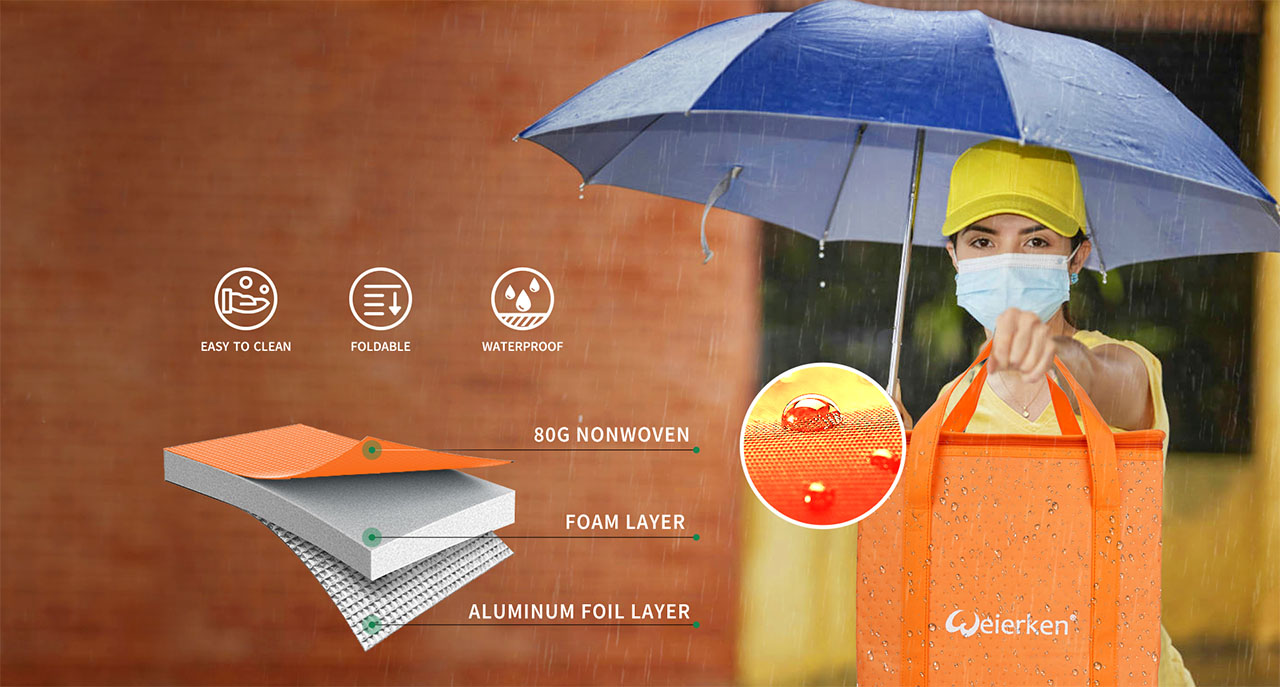
Procuring commercial equipment from overseas factories is one of the fastest ways to scale a delivery fleet while protecting operating margins. Whether you manage fleet gear for a multinational delivery platform or oversee operations for a growing restaurant chain, the cost benefits of international manufacturing are undeniable.
Yet, global sourcing comes with high operational risks. Receiving an ocean container packed with tens of thousands of thermal bags that leak soup, pop zippers, or display peeling brand emblems can destroy a quarter’s budget. Professional manufacturers like Weierken often step in to rebuild failed orders that smaller, unverified workshops mishandled.
To protect your capital and supply chain, avoid these five fatal mistakes when sourcing bulk food delivery bags with logo overseas.
Mistake 1: Relying on 3D Digital Mockups for Logo Durability and Color Accuracy
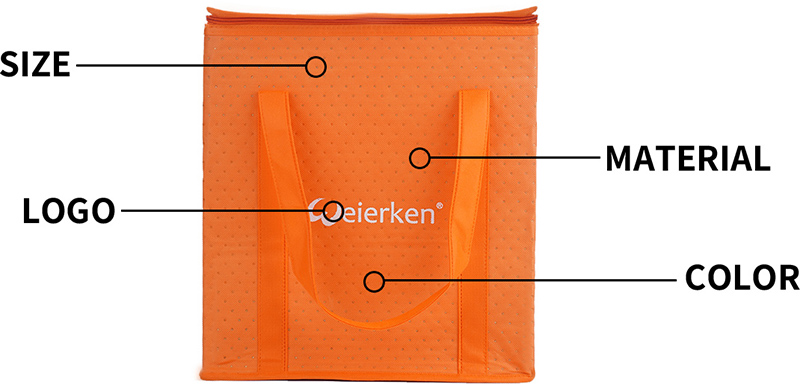
A digital mockup sent via email always looks crisp. The colors pop on an RGB computer monitor, and the placement seems balanced. However, approving mass production based solely on a computer render is the fastest route to brand inconsistency.
Computer screens display colors differently than dyed fabrics and coated tarpaulins. Worse, standard screen printing methods often fail in real-world delivery conditions. Couriers ride through torrential rain, leave bags under intense UV sunlight, and scrape bags against bike racks and concrete floors.
Low-grade inks will crack, fade, or peel off within weeks. When your fleet carries cracked branding, your entire business looks unprofessional.
How to Avoid This Pitfall:
Mandate Pantone Matching System (PMS) Codes: Never rely on CMYK or hex codes. Specify precise Pantone Formula Guide Solid Coated (C-card) numbers for every color in your brand guidelines.
Choose Heavy-Duty Branding Methods: For heavy-duty delivery gear, demand high-density silkscreen with vulcanizing agents, heat-sublimation on specialized polyester panels, or custom molded silicone and PVC badges stitched directly to the shell.
Run Chemical and Flexibility Stress Tests: Require the overseas factory to conduct an isopropyl alcohol rub test on the pre-production print sample. Request a flex-bend test at freezing and high temperatures to confirm the ink will not flake under mechanical stress.
Mistake 2: Overlooking Box Stress Engineering and Hardware Load Limits
Many commercial buyers evaluate sample bags when they are empty. An empty delivery bag looks neat, holds its shape, and feels lightweight. But delivery gear is not retail luggage; it is industrial transport equipment.
A standard courier backpack or catering box regularly carries 15 to 25 kilograms of hot food, canned drinks, and heavy liquid containers. Without proper mechanical reinforcement, the physical forces will tear the top handle away from the fabric, rip shoulder harness anchor points, and split the zipper tracks.
When you purchase bulk food delivery bags with logo overseas, a single torn seam can ruin an order and disrupt courier operations on the road.
Critical Structural Requirements:
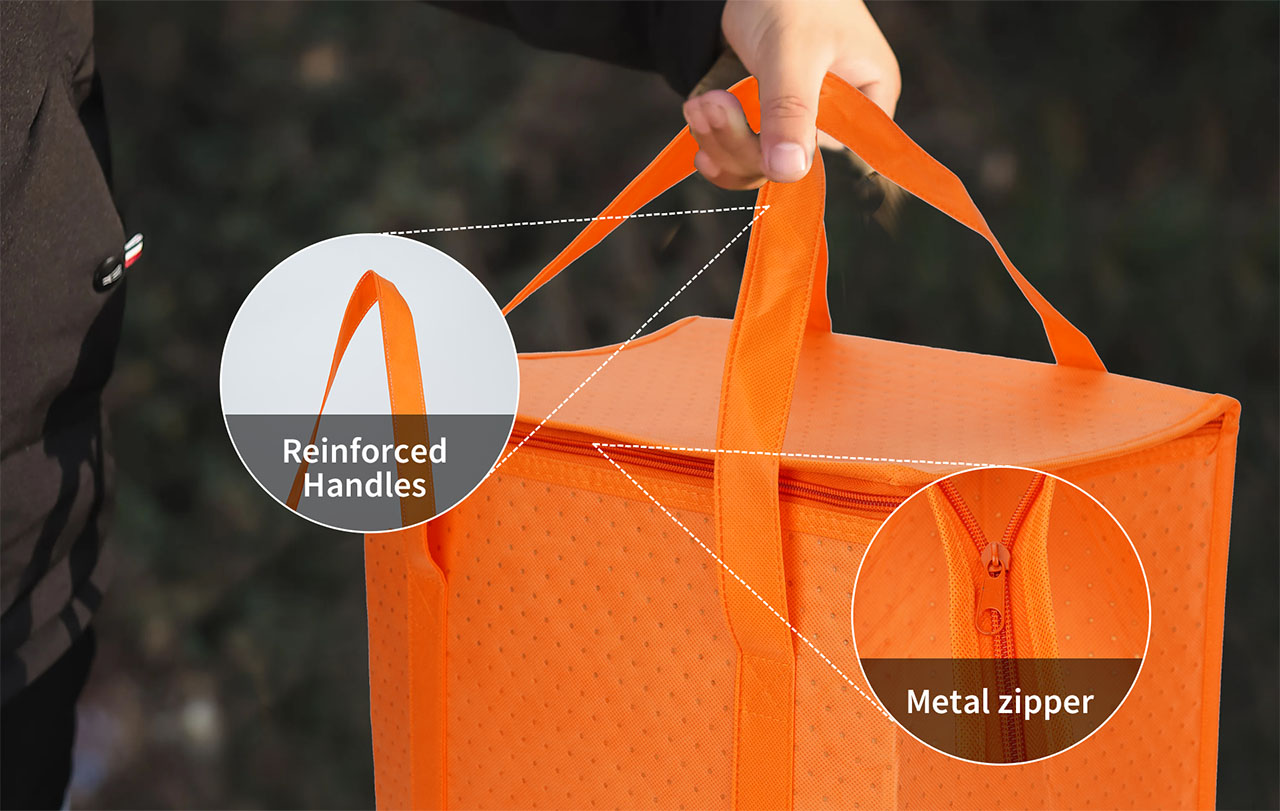
Reinforced Box-X Stitching: All primary load-bearing joints, especially where shoulder straps and side handles meet the main body, must feature industrial Box-X cross-stitching supported by interior webbing backer strips or structural metal rivets.
Industrial Zipper Specification: Never accept unbranded, generic nylon coil zippers. Require certified #8 or #10 waterproof reverse-coil zippers from proven suppliers like YKK or SAB. The zipper pulls should be cast zinc alloy or molded rubber to survive thousands of pulls.
Rigid Base and Wall Inserts: A sagging bottom shifts the center of gravity and ruins delicate food packaging. Insist on internal structural panels made of virgin polypropylene (PP) honeycomb board, corrugated plastic, or fiberglass perimeter framing rather than cheap, moisture-absorbing paper cardboard.
Mistake 3: Selecting the Wrong Thermal Core and Liner Architecture
The primary function of a thermal delivery bag is to preserve food temperature and texture. Yet, many global buyers assume that any shiny silver lining provides sufficient insulation. This assumption leads to catastrophic failures in the field.
Traditional sewn aluminum foil liners create thousands of needle holes along the seams. When soup or sauce spills, the liquid seeps through those stitch holes into the interior foam. Bacteria breeds, foul odors develop, and the bag becomes a health violation that cannot be sanitized.
Furthermore, super-insulated bags without moisture-release systems turn crispy food into a soggy mess. Condensation builds up inside, destroying pizzas, burgers, and fried chicken during transit.
Engineered manufacturers such as Weierken design delivery bags with seamless moisture-resistant barriers that maintain temperature without trapping destructive steam.
Insulation and Liner Standards to Require:
Seamless High-Frequency Welded Liners: Specify food-grade TPU (Thermoplastic Polyurethane) or heavy-gauge PEVA inner linings assembled via high-frequency heat welding. This creates a 100% leakproof tub that staff can wipe down with disinfectant or spray out with water.
High-Density Foam Selection: Reject low-cost recycled foam scrap. Demand 8mm to 12mm high-density expanded polyethylene (EPE) closed-cell foam, or cross-linked EVA foam for rigid catering boxes. These materials prevent thermal bridging and resist permanent compression.
Integrated Steam Vents: Ask the engineering team to install directional brass grommets or adjustable, breathable mesh exhaust ports. These vents let trapped moisture escape while retaining target interior temperatures.
Mistake 4: Skipping Destructive Pre-Production Testing and AQL Inspections
Never authorize mass production or release balance payments based on a pristine, hand-crafted "golden sample." Overseas sample rooms employ master craftsmen who build individual samples to absolute perfection. The mass assembly line, operating on tight production shifts, is an entirely different environment.
Buyers often discover thin thread, missing bartacks, crooked branding, and poor zipper alignment only after the shipping container reaches their domestic distribution hub. Once goods clear customs and sit in your warehouse, your leverage with an overseas vendor drops to zero.
The Quality Verification Protocol:
Implement a strict multi-tier verification process before releasing your production funds:
Destructive Testing on Pre-Production Units: Before mass assembly begins, subject finished pre-production bags to abusive stress tests. Fill the bag to 120% of its rated capacity (e.g., 25 kg) and drop it from a height of 1 meter onto concrete ten times. Hang it by its top handle for 48 consecutive hours to identify any thread elongation.
Thermal Decay Mapping: Place calibrated data loggers inside the loaded bag alongside hot gel packs. Track the internal temperature drop every 10 minutes over a 90-minute window to verify insulation performance.
Binding AQL 2.5 / 4.0 Inspections: Write international inspection standards directly into your purchase contract. Hire an independent third-party inspection agency (such as QIMA, SGS, or Intertek) to inspect the finished production run according to ANSI/ASQ Z1.4 (AQL 2.5 Major / 4.0 Minor).
Payment Contingency: Explicitly state that wire transfer of the final 70% balance is released only after you receive and sign off on a passed final inspection report.
Mistake 5: Fixating on the FOB Unit Price While Ignoring Volumetric CBM and Landed Cost
Focusing purely on the Free On Board (FOB) unit price is a dangerous procurement trap. Thermal food bags are light, rigid, and filled with empty air. In international ocean and air freight, carriers charge you based on volumetric weight (CBM) rather than physical mass.
If you order a rigid 60-liter delivery backpack that ships fully assembled, you are essentially paying thousands of dollars in ocean freight to ship empty Chinese or Vietnamese air across the Pacific. Shipping costs can end up matching or exceeding the manufacturing cost of the bags themselves.
Additionally, incorrect tariff classification can trigger punitive customs duties or border holds that derail your delivery schedules.
Strategies to Lower Total Landed Cost:
Demand Flat-Pack (Knock-Down) Engineering: Work with the factory pattern makers to design collapsible structural panels. Utilizing internal hook-and-loop fastening, fold-flat bottom boards, or zip-together corner seams lets you collapse a 60-liter bag down to a height of under 8 centimeters.
Optimize Master Carton Density: Reducing carton dimensions by just 15% can increase container capacity by hundreds of units. Calculate the pallet layout and 40-foot High Cube (40HQ) container utilization rate during the CAD pattern stage.
Verify the Harmonized System (HS) Code: Work with an experienced licensed customs broker before production begins. Bag tariffs vary dramatically based on exterior shell material. An exterior made of plastic sheeting (HS 4202.92) often faces different duty rates than an exterior woven from polyester or nylon fabric.
Calculate on a DDP Basis: Build your financial models on Delivered Duty Paid (DDP) calculations rather than factory-gate EXW or port-gate FOB numbers. Your true cost includes ocean freight, harbor maintenance fees, marine cargo insurance, customs clearance charges, and domestic drayage.
Summary Checklist for Bulk Orders
When you prepare to procure custom commercial gear, run through this baseline checklist with your team:
Have you confirmed all PMS colors on target textile fabrics using physical lab-dips?
Does the technical specification sheet (Tech Pack) require Box-X stitching and brand-name waterproof zippers?
Is the internal thermal core composed of high-density closed-cell EPE foam with seamless hot-welded TPU/PEVA?
Are adjustable moisture dissipation vents integrated into the design to safeguard food texture?
Does your manufacturing agreement tie final balance payments to an official AQL 2.5 pre-shipment inspection?
Has the manufacturer engineered a fold-flat construction to optimize container CBM efficiency?
Frequently Asked Questions
Q1: What is the typical minimum order quantity (MOQ) when ordering custom branded delivery bags overseas?
A1: For fully customized delivery bags requiring custom fabric dyeing, specific hardware, and unique dimensions, standard factory MOQs usually range between 500 and 1,000 units per style. Established factories can sometimes accommodate smaller trial orders of 300 to 500 units if you choose standard in-stock shell fabrics (such as 500D PVC tarpaulin or 600D polyester) and apply your branding via silkscreen or rubber patch molds.
Q2: Which exterior shell material offers the longest lifespan for commercial bike couriers?
A2: Heavy-duty 500D to 900D waterproof PVC tarpaulin provides the best all-around durability for intense commercial delivery. It is completely waterproof, highly resistant to tearing and scuffs, and easy to wipe down after shifts. If you need a lighter bag, high-denier Oxford nylon with an interior polyurethane (PU) backing offers exceptional strength-to-weight performance, though it carries a slightly higher material cost.
Q3: How do we prevent our logo from peeling off waterproof PVC tarpaulin?
A3: Standard plastisol and screen inks struggle to anchor securely to non-porous PVC coatings. For lasting adhesion, factories must blend specialized bonding primers or curing agents into the ink. Alternatively, the most durable, professional solution for PVC tarpaulin is a sonic-welded or top-stitched molded rubber/silicone badge. It will never peel, scratch, or wash off in the rain.
Q4: How long does the entire production and shipping timeline take?
A4: Expect an end-to-end timeline of 75 to 110 days. The design, tech-pack revisions, and physical pre-production sampling stage typically takes 20 to 30 days. Mass production requires 35 to 45 days after sample sign-off. Ocean freight transit, port processing, and domestic customs clearance require another 20 to 35 days depending on your destination port.
Q5: Can our bags pass food hygiene and safety standards in North America and the European Union?
A5: Yes, but you must specify these regulatory requirements before the factory purchases raw materials. Insist that the factory use food-contact-safe liners that comply with FDA guidelines or EU REACH (EC 1907/2006) regulations. Liners must be free of heavy metals, phthalates, and bisphenol A (BPA). Always demand verified material test reports from testing labs like SGS or TÜV Rheinland prior to assembly.
Secure Your Supply Chain with Engineered Manufacturing
Sourcing commercial equipment overseas does not have to be an operational gamble. By moving past 3D renders, demanding clear technical construction, and running rigorous quality inspections, you can deploy thousands of hard-wearing delivery bags that protect your food products and represent your brand reliably on city streets.
At Weierken, we design, engineer, and manufacture heavy-duty commercial thermal delivery solutions for enterprise delivery networks, regional restaurant chains, and food packaging distributors worldwide. Our production processes combine high-frequency seamless welding, reinforced structural stress-engineering, and dependable flat-pack design to save you money on landed freight.
Need to build high-performance fleet equipment without production delays or quality issues? Contact our engineering team today to review your project, evaluate your technical specifications, and request an immediate factory-direct quote.