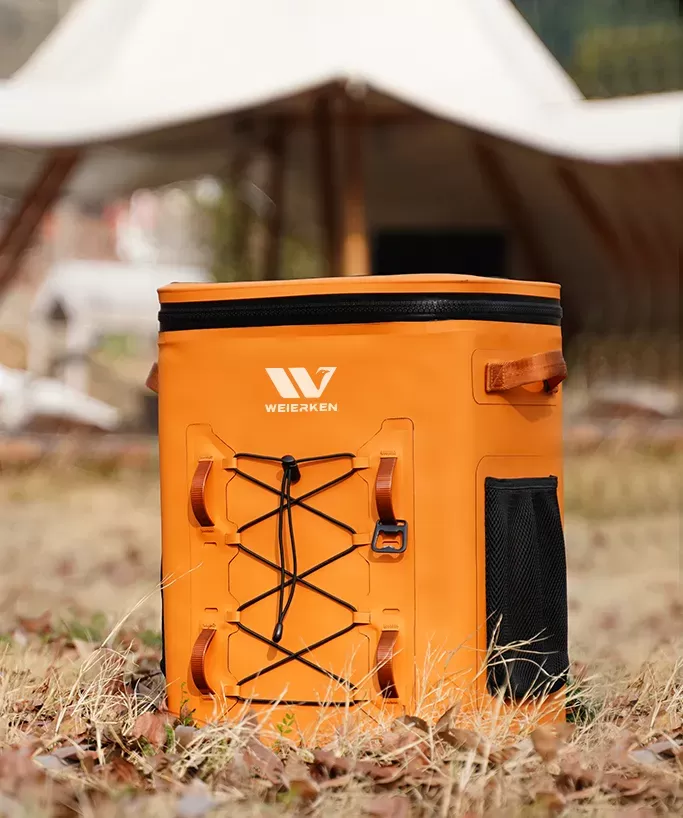

Offshore and coastal boat fishing exposes gear to brutal elements. Salt spray corrodes zippers, heavy deck wash floods compartments, and prolonged UV exposure degrades conventional fabrics. Brands preparing for 2026 cannot rely on generic, off-the-shelf duffels.
Professional anglers and weekend boaters demand purpose-built gear storage. They want specialized tackle systems that stay dry when rogue waves hit the gunwale, remain planted on slippery deck gelcoats, and resist mildew. To win market share, tackle brands need a forward-thinking manufacturing partner.
Working alongside an experienced boat fishing gear bag manufacturer like Weierken gives brands the technical edge required to develop high-performance gear. Here is a breakdown of the leading customization features top-tier suppliers offer for 2026 product lines.
Marine-Grade Materials and Weatherproof Engineering
Water resistance is not enough for an offshore boat bag; it requires true marine-grade survivability. The best manufacturers deploy industrial textiles and advanced bonding methods to block moisture completely.
Heavy-Duty Fabrics and High-Frequency Welding
Traditional stitched seams create needle holes that allow water to seep through under pressure. For 2026, leading factories use high-frequency (HF) and radio-frequency (RF) seamless welding techniques.
- 500D to 1000D Marine PVC Tarpaulin: Provides extreme puncture and tear resistance against sharp hooks, gaffs, and rough deck non-skid textures.
- Double-Sided TPU-Coated Nylon: Offers a lightweight, abrasion-resistant alternative that stays flexible in freezing temperatures and will not crack in extreme heat.
- Welded Construction: Molecularly fuses fabric panels together, forming an impervious barrier against standing deck water and sudden downpours.
Saltwater-Proof Zippers and Hardware
Salt corrosion ruins standard metal zippers within a few saltwater excursions. Manufacturers now prioritize specialized hardware configurations tailored for ocean environments:
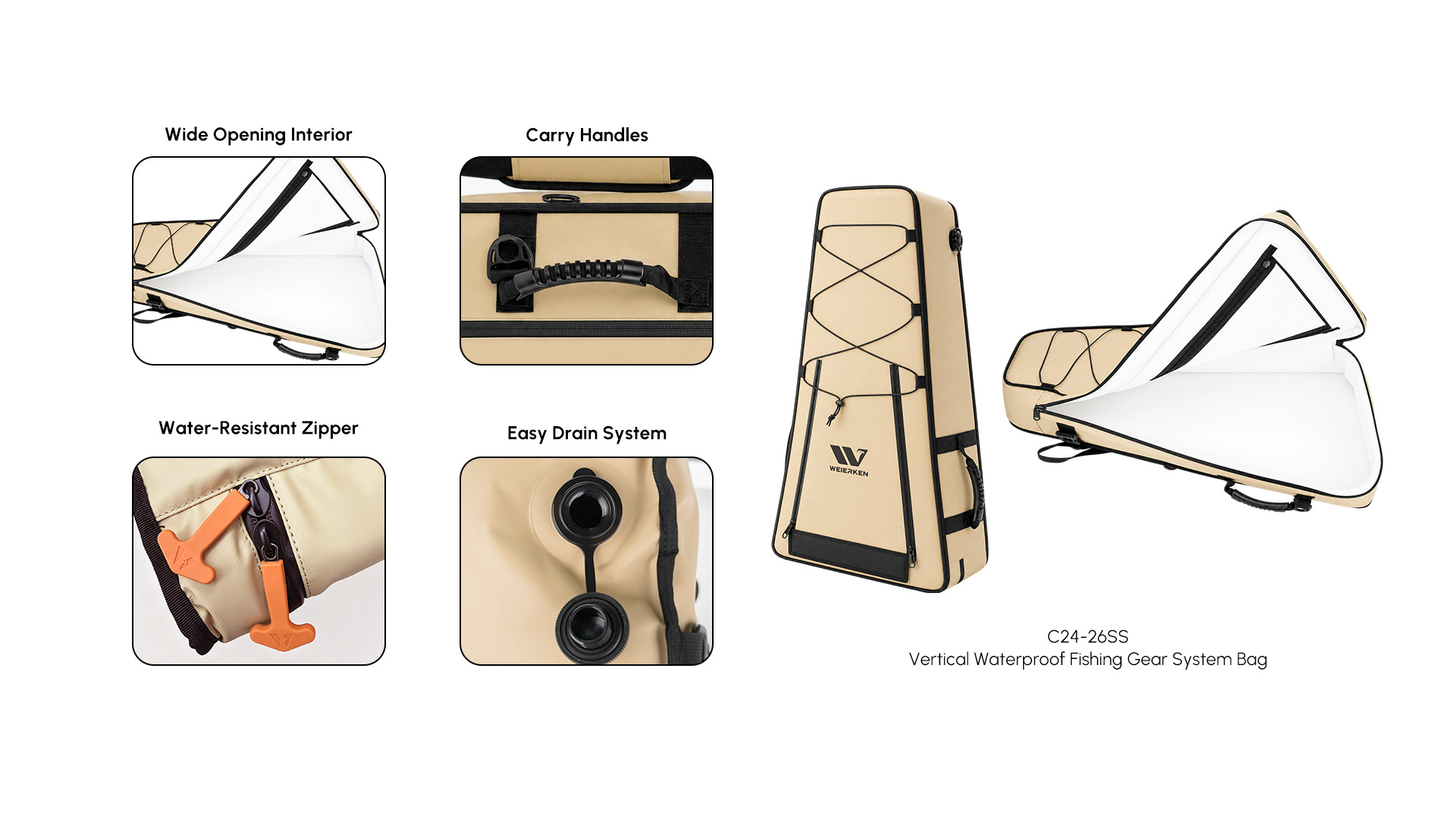
- Airtight and Waterproof Submersible Zippers: Pressure-tested tooth designs (similar to drysuit zippers) that prevent water intrusion even if submerged.
- Corrosion-Free Polymer Components: High-tensile acetal and nylon buckles that resist salt crystallization, sun brittleness, and impact.
- Self-Lubricating Pullers: Oversized, ergonomic T-handle or cord pullers that anglers can operate easily while wearing wet or slimy fishing gloves.
UV50+ Shielding and Anti-Mildew Treatments
Boat bags spend days under direct offshore sunlight and nights stored inside damp boat consoles. Top suppliers integrate protective chemical treatments directly into the yarn or coating phase:
- UV Inhibitors: Protect pigments from fading and prevent polymer degradation caused by intense solar exposure.
- Antimicrobial Coatings: Inhibit the growth of mold, mildew, and foul-smelling bacteria caused by trapped ocean spray, bait residue, or wet line spools.
Vessel-Specific Functional and Structural Innovations
A boat tackle bag must function cleanly within the confined, moving space of a boat deck. Top manufacturers now build ergonomic and vessel-specific features into their bag architectures.
Compression-Molded Non-Skid EVA Bases
Boats pitch and roll continuously. A loose bag sliding across a wet deck risks damaging expensive reels and lures or falling overboard.
- High-Density Molded EVA Bottoms: Create a rigid, tub-style foundation that raises the fabric several inches above pooling deck water.
- Treaded Non-Skid Patterns: Grippy rubberized footpads or grooved bottom molds grip slippery gelcoat and marine decking materials like SeaDek.
- Impact Absorption: Protects tackle trays and delicate line spools when the bag drops onto hard fiberglass surfaces.
Modular Tackle Box Integration
Anglers organize tackle by species, technique, and water depth. A reliable waterproof boat gear bag OEM/ODM develops bag compartments specifically sized around standard tackle tray footprints:
- Plano & Meiho Compatibility: Sizing pockets to fit 3600, 3700, or deep-utility tackle boxes horizontally or vertically.
- Removable Padded Dividers: Hook-and-loop wall systems that let anglers swap tackle boxes for camera gear, downrigger weights, or extra spools.
- Clear Marine-Grade Vinyl Windows: Heavy-gauge, non-yellowing internal pockets that allow users to identify leader material, terminal tackle, or documents instantly.
Rapid-Access Tool Holsters and External Attachments
When an offshore bite turns on, anglers cannot waste time digging through deep storage cavities. Exterior ergonomics matter:
- Dedicated Plier and Braid-Cutter Sheaths: Reinforced with anti-puncture composite inserts to prevent sharp tools from cutting through the fabric.
- Laser-Cut Molle Systems: Heavy-duty Hypalon or TPU webbing loops for clipping fish lip-grippers, tag sticks, and retractors.
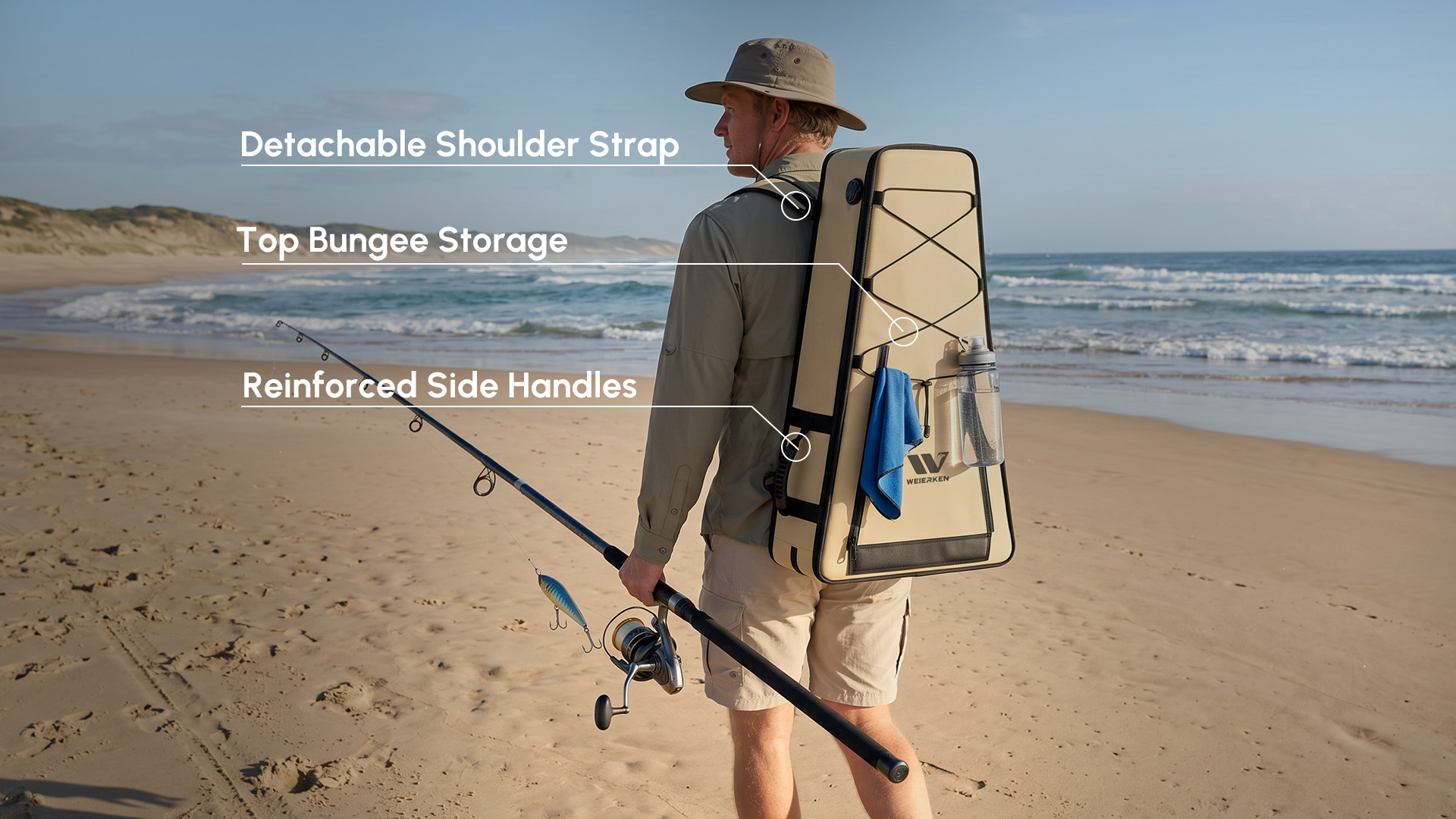
- Integrated Rod Butt Sleeves: Side-mounted holsters designed to hold rigged rods securely during transport between spots.
Smart Integrations and Emerging Features for 2026
Marine tackle storage is evolving beyond passive canvas containers. The next generation of fishing gear combines physical storage with active utility.
Solar Charging and Dry-Box Electronics Hubs
Modern anglers rely on smartphones, action cameras, satellite communicators, and portable fish finders. Manufacturers are engineering protective electronics bays directly into boat bags:
- Integrated Solar Panels: Weatherproof, low-profile solar charging surfaces built into top lids to top off power banks throughout the day.
- Waterproof Pass-Through Ports: Hermetic cable gaskets that let anglers charge devices safely while keeping battery packs dry inside the bag.
- Shockproof Padded Microfiber Pockets: Custom-molded pockets designed to shield sunglasses, screens, and sensitive navigational electronics.
Integrated Thermal Cooler Compartments
Deck space is limited on skiffs, center consoles, and kayaks. Anglers prefer gear that serves multiple roles on the water:
- Split-Chamber Layouts: Separating dry tackle storage from an insulated thermal compartment.
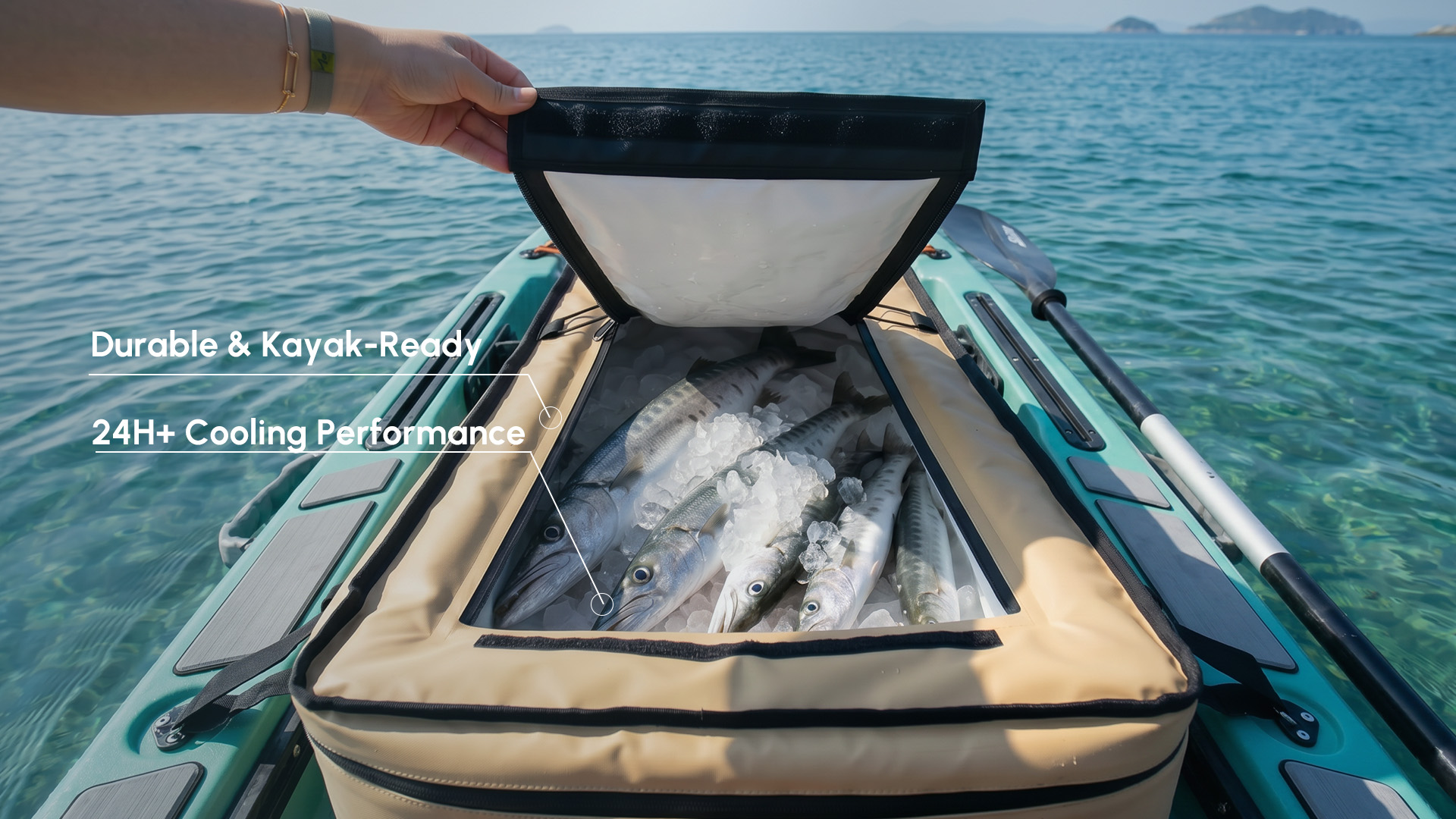
- Closed-Cell Foam Insulation: Dense, non-absorbent foam walls that keep dead bait fresh or keep drinks cold without leaking meltwater onto tackle trays.
- Welded Leakproof PEVA Liners: Removable, easy-to-clean thermal liners that resist odors and punctures from baitfish fins.
Built-In LED Illumination for Low-Light Tactics
Tournament anglers launch before sunrise, while striped bass and swordfish crews often work overnight. Digging through a dark bag with a handheld flashlight is clumsy and dangerous.
Forward-thinking factories integrate flexible, water-resistant LED light strips along internal seams. Powered by a standard USB battery pack, these push-button lights illuminate every pocket and divider, providing hands-free access in total darkness.
Private Label Customization and Branding Capabilities
Brand identity drives retail margins. Sourcing through a trusted marine-grade fishing bag supplier like Weierken allows companies to create exclusive, proprietary aesthetics that stand out on retail shelves and online storefronts.
Advanced Logo and Branding Applications
Paper tags and cheap screen-printing do not survive saltwater environments. Brands need branding techniques built for high abuse:
- Molded PVC & Silicone Patches: Flexible, colorful, and completely impervious to water and sun degradation.
- High-Density Screen Printing: Industrial inks formulated to flex with TPU and PVC fabrics without cracking, peeling, or fading.
- Embossed and Debossed Elements: Creating subtle, premium logos stamped into the EVA molded base or top lid.
- Corrosion-Resistant Metal Badges: Electroplated zinc or anodized aluminum plates mounted with backing washers for a luxury presentation.
Exclusive Colorways and Hydrographic Camo Prints
Color choices define brand recognition. Manufacturers provide custom Pantone dye runs for fabrics, webbing, binding tape, and zipper teeth. Brands can also apply hydrographic films, digital ocean camo, or topo map graphics directly onto marine vinyl to match modern boat hull wraps.
OEM/ODM Tooling and 3D Prototyping
Building a differentiated product requires more than standard bag templates. Leading manufacturers work with brands from the ground up:
- 3D CAD Modeling: Turning conceptual sketches into workable digital prototypes to verify gear dimensions and clearance.
- Custom Mold Creation: Designing custom steel molds for unique base profiles, handle grips, and specialized composite trays.
- Rapid Sampling: Delivering functional production samples within 7 to 14 business days for real-world testing.
Sustainable Marine Manufacturing: The 2026 Mandate
Outdoor consumers care deeply about clean waters and conservation. Retailers in North America, Europe, and Australia now demand responsible manufacturing chains and non-toxic materials.
Recycled Ocean Plastics (rPET) and Circular Textiles
Top factories can spin recycled plastic bottles and recovered commercial fishing nets into durable marine fabrics. Using GRS-certified (Global Recycled Standard) rPET polyester and nylon provides equivalent tensile strength to virgin plastics while drastically lowering environmental impact.
PFAS-Free Coatings and Clean Chemical Compliance
Environmental regulations worldwide are banning legacy water-repellent chemicals (PFAS, PFOS, PFOA). A responsible boat fishing gear bag manufacturer operates certified clean production lines:
- REACH & RoHS Compliance: Ensuring bags contain no hazardous phthalates, lead, or toxic plasticizers.
- Eco-Friendly C0 DWR Treatments: Fluorine-free, sustainable
durable water repellent finishes that bead water effectively without shedding
persistent pollutants into waterways.
Sourcing Checklist: How to Vet a Boat Fishing Gear Bag Manufacturer
Selecting the wrong factory can lead to delayed seasonal deliveries, split seams, and customer warranty claims. Use this operational checklist when evaluating a supplier for your private label boat tackle bag project:
- In-House Salt Spray Testing: Does the factory possess continuous salt-fog testing chambers to verify hardware durability past 72+ hours?
- Submersion and Leak Chambers: Can they test fully assembled waterproof bags under controlled hydrostatic head pressure?
- Quality Assurance Standards: Do they enforce strict AQL (Acceptable Quality Limit) 2.5/4.0 inspection standards on raw materials, in-line assembly, and packaging?
- Flexible Order Quantities (MOQs): Can the factory handle multi-tiered SKU rollouts with reasonable minimum order quantities for new model launches?
- IP Protection: Does the supplier provide enforceable Non-Disclosure Agreements (NDAs) to protect your proprietary designs and mold investments?
Frequently Asked Questions (FAQ)
Q1: What is the ideal base material for a boat fishing tackle
bag?
A1: Compression-molded high-density EVA (Ethylene-Vinyl
Acetate) with an integrated non-skid rubber tread is the industry standard. It
provides a waterproof, rigid foundation that prevents the bag from tipping or
sliding across slick deck surfaces while keeping tackle elevated above standing
water.
Q2: Why are welded seams better than stitched seams for marine gear
bags?
A2: Stitched seams puncture the fabric with thousands of
needle holes, which leak under pooling water or heavy spray. High-frequency or
radio-frequency welding fuses thermoplastic materials together with heat and
pressure, forming a continuous, leakproof molecular bond.
Q3: How do manufacturers prevent zipper failures on saltwater tackle
bags?
A3: Manufacturers replace metal zippers with heavy-duty molded
nylon coils or plastic teeth, paired with stainless steel or marine-grade
polymer sliders. Top-tier bags use fully submersible, airtight zippers with
hydrophobic seals that prevent salt crystal buildup and water entry.
Q4: What is the typical lead time for custom OEM boat bag
development?
A4: Initial 3D designs and tech packs take about 3 to 7
days. Physical prototyping and material sampling generally take 10 to 20 days.
Once the client approves the golden sample, bulk production typically ranges
from 35 to 50 days, depending on custom mold requirements and order volume.
Q5: Can our brand provide custom dimensions to fit specific tackle
box brands?
A5: Yes. Professional OEM/ODM manufacturers routinely
build compartments to fit specific tackle tray footprints, such as Plano
3600/3700 or Meiho Versus series trays, ensuring a clean, snug fit without
wasted internal space.
Build Your Next Marine Tackle Collection
Standing out in the modern competitive fishing sector requires engineering integrity, rugged durability, and smart boat-ready functionality. Generic consumer bags do not survive the offshore world. Brand growth depends on manufacturing gear that serious boaters and guides can depend on when the seas get rough.
As an experienced boat fishing gear bag manufacturer, Weierken helps outdoor brands, marine retail chains, and tackle companies turn cutting-edge concepts into market-ready products. From fully welded waterproof designs to custom EVA tooling and private label branding, our engineering team manages the entire production lifecycle.
Ready to elevate your marine product line for 2026? Contact our technical team today to request a quote, review our OEM catalog, or start your custom sampling process.