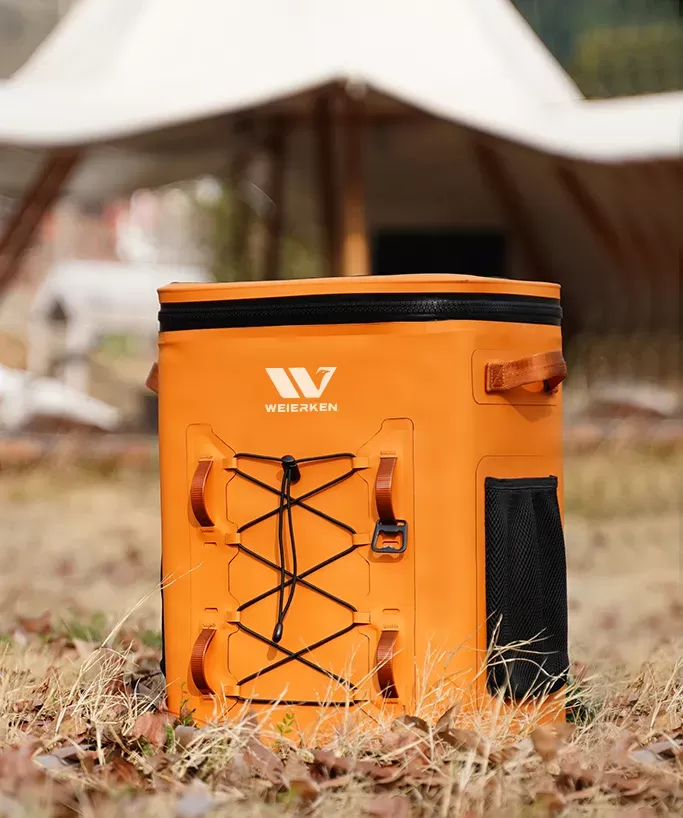

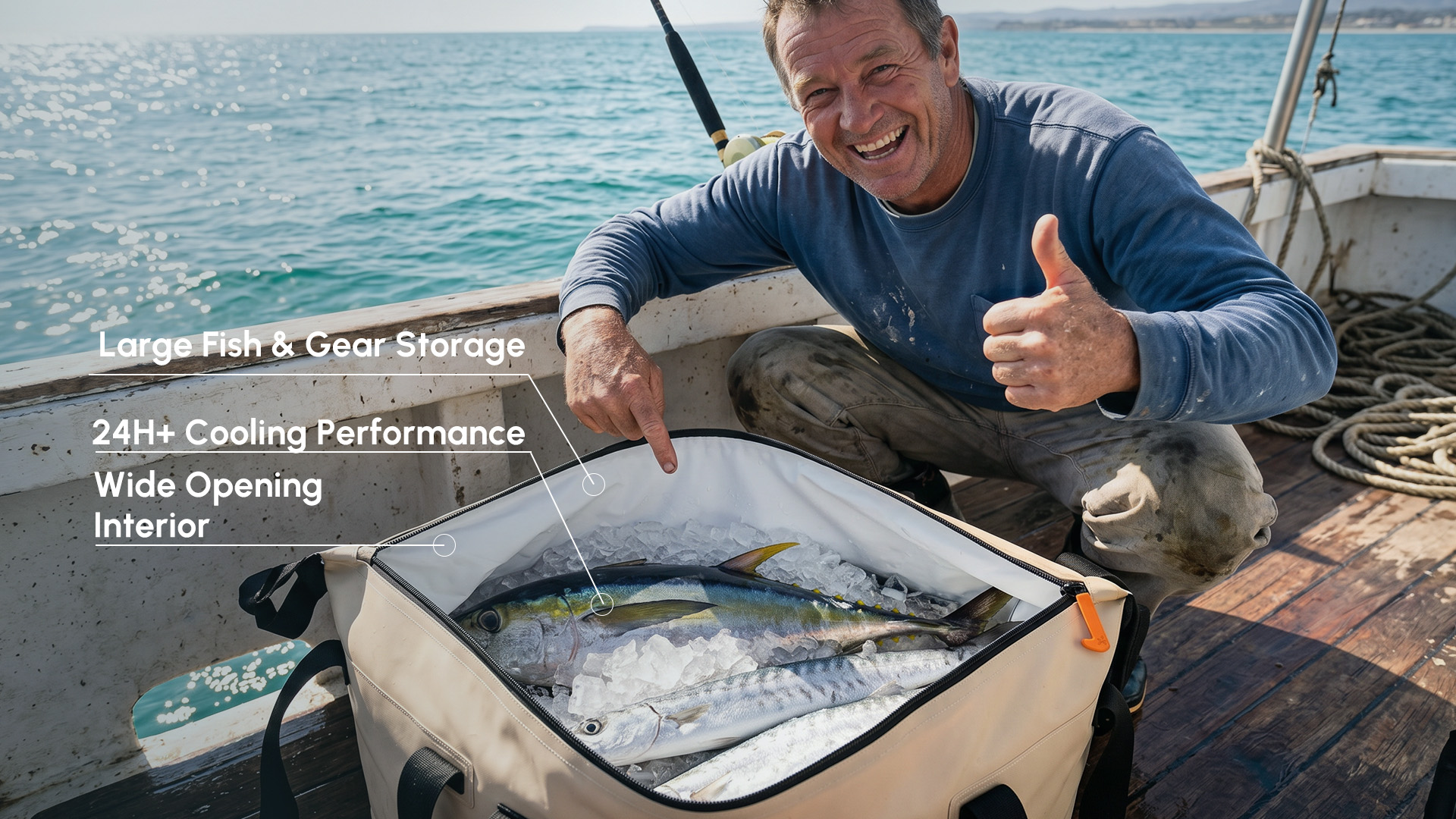
Heavy, rigid fiberglass coolers are losing ground on modern fishing vessels. Offshore boaters and kayak anglers increasingly demand flexible, heavy-duty insulated fish kill bags. These specialized bags fold flat when empty, fit tightly into narrow hull spaces, and hold hundreds of pounds of tournament-grade catch.
However, sourcing these products presents unique manufacturing hurdles. A generic picnic cooler factory cannot handle the extreme demands of offshore saltwater fishing. When a sub-par bag leaks bloody meltwater into a boat bilge or rips open under the weight of an 80-pound tuna, customer reviews turn brutal. Experienced marine gear brands partner with technical manufacturers like Weierken to engineer rugged, long-lasting products that survive brutal saltwater environments.
Before issuing your next production order, evaluate your supplier against this comprehensive 7-point quality checklist.
[Request a Custom Size Quote & Material Swatch Kit]
1. High-Frequency (HF) Seamless Welding Technology
A standard sewn seam is the primary point of failure for wet gear. Traditional needle stitching punches thousands of microscopic holes through the fabric. Under hydrostatic pressure from melting ice and fish weight, glued or taped seams eventually peel and leak foul-smelling blood into boat lockers.
The Molecular Bond Advantage
A capable custom fish cooler bag manufacturer uses high-frequency (radio frequency) dielectric welding rather than needle-and-thread stitching for internal liners. HF welding uses electromagnetic energy to melt and fuse thermoplastic layers at the molecular level.
Zero Needle Penetration: Creates a completely impermeable barrier against liquids and odors.
Hydrostatic Load Resistance: Withstands heavy internal water weight without joint separation.
Puncture-Tolerant Corners: Smooth, fused corners resist stress cracking from thrashing dorsal fins.
Ask your factory to demonstrate their automated HF welding tooling and inspect their weld consistency along stress corners.
2. High-Density Closed-Cell Foam Insulation
Deck temperatures on open water frequently exceed 100°F (38°C). Open-cell sponge foam or low-density EPE foam fails to insulate under direct solar radiation. Worse, open-cell materials absorb moisture like a sponge when punctured, turning into breeding grounds for bacteria and mold.
Thermal Engineering Benchmarks
Top-tier marine cooler bags rely on dense, non-absorbent foam core construction:
Material Profile: 0.5-inch to 0.8-inch closed-cell NBR/PVC or high-density EVA foam.
24–48+ Hour Ice Retention: Dense cell structures trap thermal energy and keep ice frozen throughout multi-day tournaments.
Zero Water Absorption: Even if the outer shell suffers surface abrasion, closed-cell cores remain dry and structurally sound.
3. Marine-Grade Exterior & Puncture-Resistant Liners
Commercial-grade catch bags take heavy abuse on charter boats and rocky shores. Shell materials must resist fish spikes, gaff hooks, UV exposure, and constant salt crusting.
Exterior Shell Durability
Look for heavy-duty 840D or 1000D PVC tarpaulin with an outer thickness of 0.84mm or higher. Premium builds utilize thermoplastic polyurethane (TPU), which offers higher abrasion resistance, superior cold-crack performance, and a lighter overall carry weight.
Antimicrobial, Odor-Resistant Inner Liners
The interior liner must feature a smooth, non-porous food-grade surface. Textured interiors trap slime and fish scales, making sanitization difficult. A smooth, heat-sealed leak-proof liner allows anglers to wash away blood and salt with a garden hose in seconds.
4. Leak-Proof Threaded Drain Plugs & Release Valves
Lifting a cooler bag filled with 100 pounds of fish and 40 pounds of melted slurry is dangerous. A heavy-duty drainage system is essential for proper weight management on the water.
Engineering the Drain Port
Installing a screw-in drain valve into a flexible waterproof bag requires advanced technical assembly. Inexperienced factories often experience leaks where the rigid valve body meets the flexible fabric.
Threaded Screw-In Plugs: Secure gaskets ensure water stays inside the bag while traveling at 30 knots across rough chop.
High-Frequency Welded Flanges: The drain port housing must be HF welded directly to the liner, creating a permanent watertight ring.
Flush Low-Profile Placement: The valve should sit at the bottom corner to drain melted water completely without leaving dirty residue inside.
5. Structural Reinforcements: Heavy-Duty Webbing & Zippers
A full monster fish cooler bag can weigh over 150 pounds. Lifting that weight by the carry handles creates massive sheer stress on the outer shell.
Load-Bearing Webbing Systems
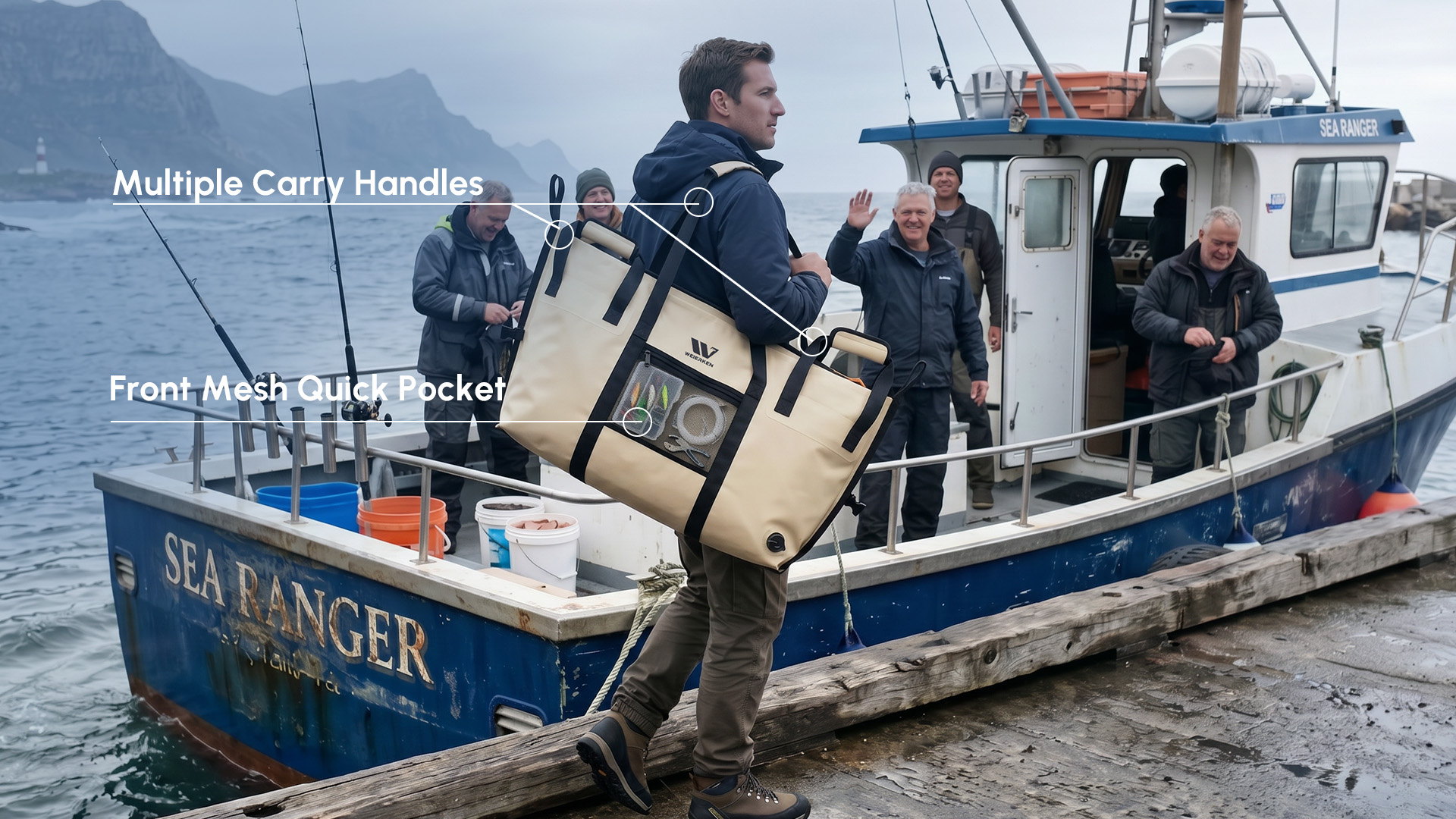
Reliable manufacturers run structural polyester webbing completely under the belly of the bag, cradle-style, rather than simply sewing tabs to the top edge.
Reinforced Box-X Stitching: Distributes lifting load evenly across heavy PVC anchors.
Industrial Marine Zippers: Giant #10 nylon tooth zippers resist corrosion from salt encrustation.
Airtight Waterproof Zippers: For top-end kayak bags, fully airtight gas-tight zippers prevent all accidental spills during boat transit or kayak rolls.
6. Custom Sizing Capabilities & Precision Prototyping
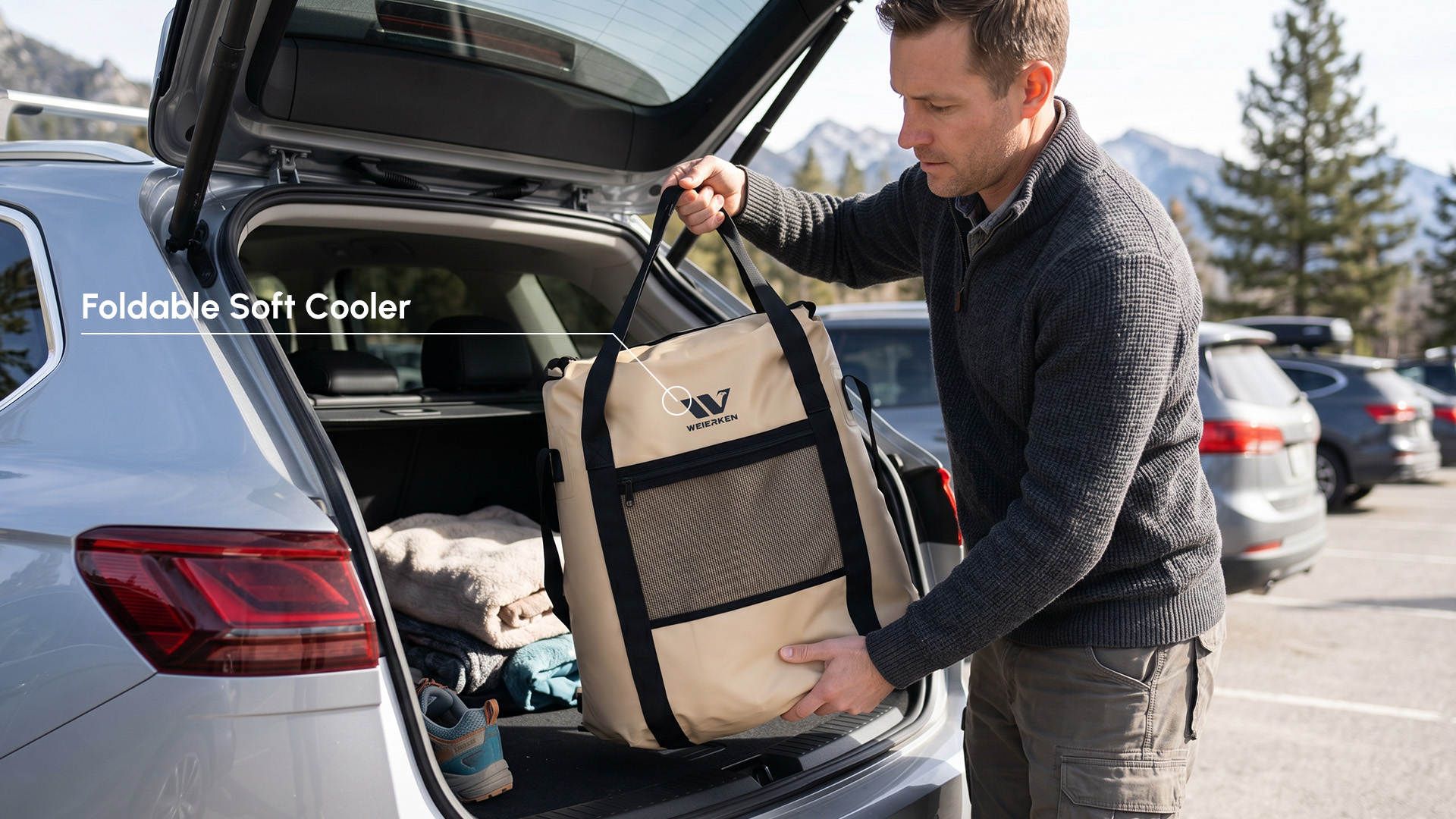
Every fishing discipline requires a specific footprint. A kayak fisherman needs a tapered wedge shape, while an offshore tournament angler needs a six-foot-long monster bag.
Standard Market Size Categories
Kayak / Wedge Catch Bags (24" to 36"): Narrow bow profile tailored to sit flat on kayak decks without catching wind.
Inshore / Boat Bags (40" to 48"): Ideal for redfish, snook, stripers, and salmon.
Offshore Tournament Bags (60" to 72"+): Built to preserve large pelagics like tuna, wahoo, and king mackerel.
Professional manufacturing partners like Weierken maintain dedicated sample rooms that convert customer Tech Packs and sketches into functional prototypes within 12 to 30 days. Practical customizations include clear identification pockets, integrated exterior fish rulers, and heavy-duty tie-down D-rings.
7. Dual-Facility Supply Chain & Tariff Mitigation
Production quality is meaningless if import tariffs destroy your retail margins. Bags manufactured from PVC and synthetic technical textiles often face heavy customs duties when entering North American and European markets.
The China + Cambodia Manufacturing Model
Partnering with a custom fish cooler bag manufacturer that operates dual facilities in China and Cambodia gives brands a massive competitive edge.
Lower Import Tariffs: Shifting volume production to a Cambodia facility allows qualified buyers to save 15% to 25%+ on landed import duties.
China R&D Backbone: Rapid tooling, sample development, and technical material sourcing occur in China before scaling abroad.
Defect Control: Insist on a 99.5% first-pass yield rate supported by full air-pressure hold testing and seam tear tests.
Full DDP Fulfillment: Streamline operations by letting your OEM handle ocean freight, customs clearance, and port drayage directly to your warehouse.
Frequently Asked Questions
Q1: How long can an insulated fish kill bag hold ice in direct sunlight?
A: High-performance fish cooler bags built with 0.5-inch or 0.8-inch closed-cell foam insulation and reflective PVC/TPU outer shells hold ice for 24 to 48 hours, even on hot boat decks exposed to direct sunlight.
Q2: How do manufacturers prevent fish fins from puncturing the liner?
A: Reliable manufacturers use heavy 0.84mm to 1.0mm puncture-resistant PVC tarpaulin or heavy mil TPU inner liners. These materials have high tensile and tear strength, resisting sharp spines from tuna, bass, and snapper.
Q3: What is the typical MOQ for custom fish bags featuring threaded drain valves?
A: Minimum Order Quantities (MOQ) typically range between 300 and 500 units for fully customized designs. Exact minimums depend on specific fabric colors, valve tooling requirements, and custom print requirements.
Q4: How does sourcing from a Cambodia cooler bag factory reduce US import tariffs?
A: Goods produced in Cambodia benefit from favorable tariff schedules and origin rules. This setup helps international marine brands legally lower their landed import costs by 15% to 25%+ compared to direct China shipments.
Q5: Can you customize fish kill bags with built-in measuring rulers and kayak tie-downs?
A: Yes. High-grade marine cooler manufacturers routinely screen-print UV-resistant fish rulers directly onto the outer shell, add marine-grade nylon D-rings for kayak rigging, and install air release valves.
Sourcing a rugged, commercial-grade fish cooler bag requires rigorous attention to material specs, seam-welding technology, and thermal engineering. A leaking seam or ripped handle ruins a customer's tournament day and damages your brand's reputation.
Look for a supplier with deep experience in high-frequency welding, thick closed-cell insulation, and multi-region manufacturing capabilities. Weierken combines technical bag development with tariff-reducing Cambodia production, delivering a reliable 99.5% quality pass rate for marine brands worldwide.
[Request a Custom Size Quote & Material Swatch Kit]