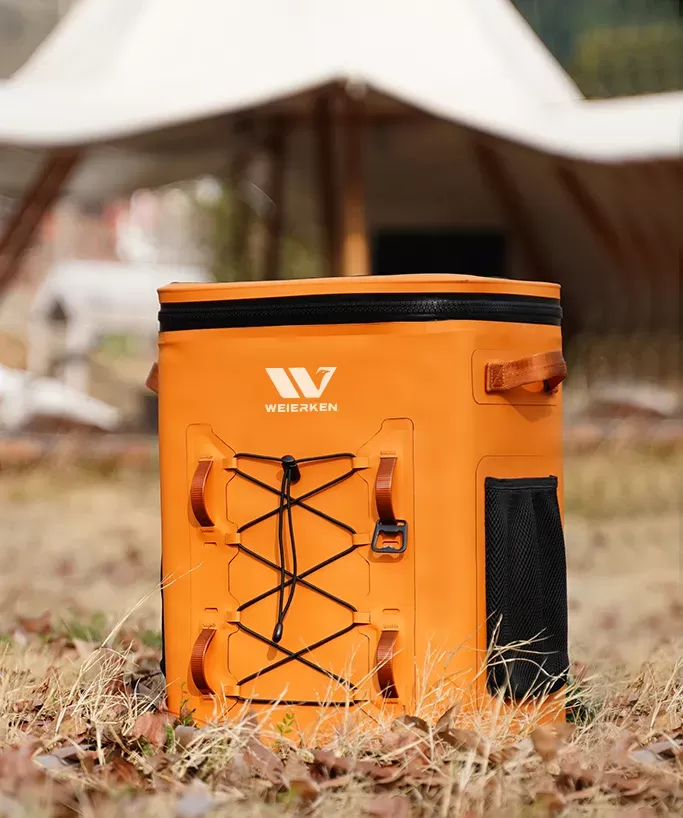

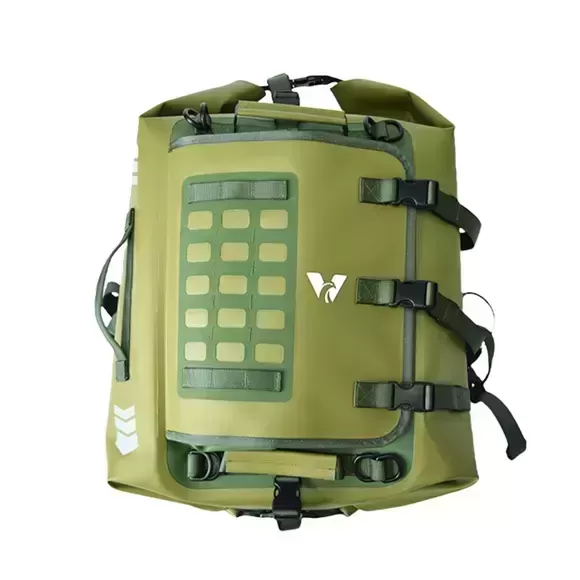
Mountain biking is a sport that demands extreme resilience from equipment. Unlike city commuting bags, mountain bike (MTB) bags must endure relentless vibrations, thick mud, and abrasive rocks. For B2B buyers, choosing a specialized mountain biking bag factory is a critical decision that impacts brand reputation and product returns. A standard luggage manufacturer often lacks the technical equipment to produce gear that survives the trail.
Reliable partners like weierken understand that an MTB bag is a functional component of the bike itself. It must integrate seamlessly with the frame without compromising the rider's balance. Identifying a high-quality factory requires looking past the showroom and into the technical specifications of their manufacturing process. This article highlights six non-negotiable quality signs to look for during your next factory audit.
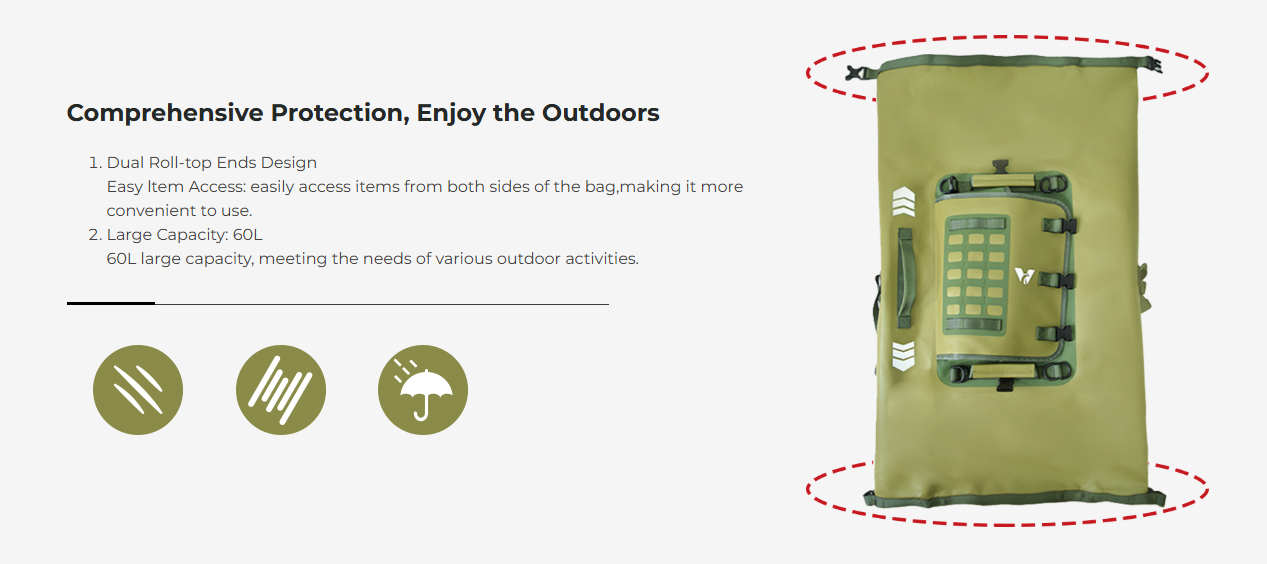
Sign 1: High-Strength Anti-Tear Fabrics and Wear-Resistant Treatments
The foundation of any durable MTB bag lies in its textile choice. A professional mountain biking bag factory does not use generic nylon. Instead, they prioritize high-denier fabrics such as 900D or 1680D nylon. Many premium manufacturers also offer Cordura® or ballistic nylon options, which provide exceptional tensile strength and resistance to punctures.
Check for these fabric standards when evaluating a supplier:
Testing Reports: The factory should provide tear strength data based on ASTM D2261 or ISO 13937 standards.
Reinforcement Patches: High-wear areas, such as the bottom of a saddle bag or the contact points of a frame bag, should feature TPU coating or reinforced PVC patches.
Hydrostatic Pressure: Ensure the fabric has a waterproof rating (e.g., ≥2000mm) to protect electronic gear or tools during creek crossings.
Using premium materials ensures the bag won't shred the first time a rider brushes against a thorny bush or slides out on a gravel corner. A factory that understands material science is a factory that understands the rider's needs.
Sign 2: Professional Water-Repellent and Sealing Technology
Mountain bikers often ride through rain, slush, and mud. A reliable mountain biking bag factory must master more than just basic sewing. They need advanced seam sealing capabilities. For a bag to be truly weather-resistant, the needle holes from the stitching must be covered with waterproof seam tape or processed using heat-welding technology.
Pay close attention to these sealing details:
Zipper Quality: Look for YKK waterproof zippers or equivalent reverse-coil zippers with a protective polyurethane film.
Seam Taping: Critical joints should be reinforced with internal tape to prevent moisture from wicking through the threads.
Rain Covers: For large-capacity panniers or seat packs, the factory should offer integrated, stowable rain covers for extreme downpours.
The difference between a "water-resistant" bag and a "waterproof" bag is huge in the MTB world. A top-tier mountain biking bag factory like weierken provides specific IPX ratings (from IPX3 to IPX6) to give buyers confidence in their product's performance.
Sign 3: Anti-Vibration Structure and Sewing Strength
Mountain bikes encounter high-frequency vibrations and heavy impacts. These forces put immense stress on the mounting points where the bag attaches to the bike. A standard stitch will simply snap under these conditions. A specialized mountain biking bag factory utilizes bar-tacking—a series of tight, reinforced stitches—at every stress point.
Durability signs in the construction include:
Nylon Webbing: High-strength polyamide webbing should be used for straps to prevent stretching over time.
Internal Stiffeners: A reliable factory uses EVA foam liners or PE boards to help the bag maintain its shape. This prevents the bag from sagging and rubbing against the tires.
Heavy-Duty Buckles: Mounting straps must use cam-lock buckles or high-tension fasteners that won't loosen during a bumpy descent.
Without proper structural integrity, a handlebar bag can swing into the front wheel, causing a dangerous crash. Professional factories test their designs on vibration tables to ensure the bag stays securely fastened no matter how rocky the trail becomes.
Why Customization Capability is Essential for MTB Bags
Mountain bikes come in countless shapes and sizes. An ODM bag factory must be able to adapt designs to fit modern geometry. For instance, a frame bag must be shaped to avoid interfering with rear shock movement or rubbing against the rider's knees. weierken bridges this gap by offering deep customization for B2B clients who need specific fitments.
Factories that offer custom mold development allow you to create unique hardware, such as specialized spacers or non-slip strap mounts. This level of detail ensures the product isn't just a generic accessory but a high-performance tool tailored for a specific type of rider, whether they are cross-country racers or enduro enthusiasts.
Sign 4: High-Grade Accessories and Weather Resistance
A bag is only as strong as its weakest buckle. In the mountain biking bag factory sector, sourcing branded accessories is a sign of quality. Reputable factories partner with hardware leaders like ITW Nexus, Duraflex, or Woojin. These components are often made from glass-fiber reinforced nylon rather than cheap acetate.
Accessory standards to verify:
UV Stability: Plastic parts must undergo UV resistance testing to ensure they don't become brittle and snap after a summer in the sun.
Cold Crack Resistance: For winter riding, buckles must remain flexible at sub-zero temperatures.
Pull Force Testing: Every D-ring and clip should have a rated load capacity to prevent failure under weight.
By using nylon-plus-fiber hardware, a professional factory ensures the longevity of the product. This reduces the warranty claim rate for B2B buyers and builds long-term consumer trust in your brand.
Sign 5: Ergonomic Design for Mountain Biking Scenarios
The best MTB bags disappear while riding. This requires ergonomic design that considers the rider's movement. A reliable mountain biking bag factory will have designers who actually ride. They understand that a hydration pack needs a ventilated mesh back panel for moisture management, and a top tube bag needs to be narrow enough to avoid "knee strike."
Look for these rider-focused features:
Quick-Release Systems: Support for Fidlock magnetic fasteners or hook-and-loop systems that allow for one-handed access while riding.
Modular Expandability: Utilizing MOLLE webbing or daisy chains to allow riders to attach extra gear.
Aerodynamic Profile: Ensuring the bag doesn't create unnecessary drag or catch the wind during fast descents.
Customization in this area is key. A factory should be able to adjust the strap placement to avoid cable housing or hydraulic brake lines. This attention to detail shows that the mountain biking bag factory is thinking about the end-user's safety and comfort.
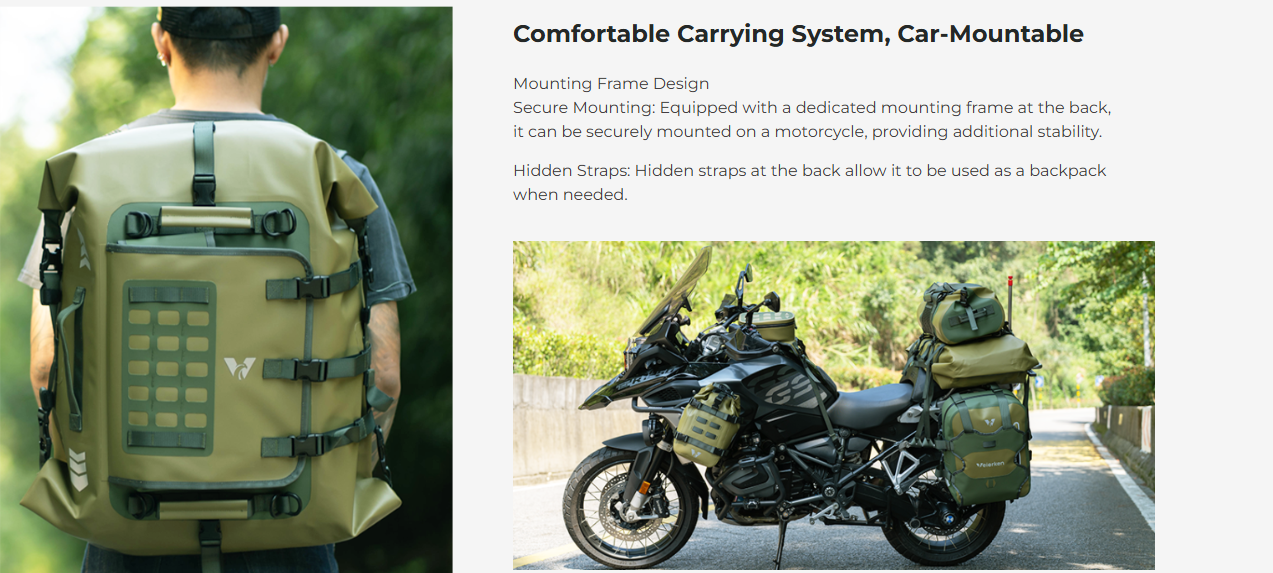
Sign 6: Factory Quality System and Batch Consistency
Consistency is the biggest challenge in mass production. You don't want the first 100 bags to be perfect and the next 900 to have loose threads. A professional mountain biking bag factory must operate under a strict Quality Management System (QMS) like ISO 9001. They should perform IPQC (In-Process Quality Control) and OQC (Outgoing Quality Control) on every shipment.
Reliability indicators on the factory floor include:
Automated Testing: Use of zipper fatigue testers (running for 5,000+ cycles) and specialized spray test booths to verify waterproofness.
Vibration Testing: A machine that shakes a loaded bag to simulate hours of riding on a gravel road.
Golden Samples: The factory should keep "sealed samples" from every batch to ensure color consistency and material matching for future orders.
When you work with weierken, you benefit from these rigorous standard operating procedures. Traceable records for every batch allow you to pinpoint the source of any issue, ensuring that your bag supply chain remains stable and reliable.
Summary of Quality Signs
Identifying a reliable mountain biking bag factory requires a focus on technical details. From tensile strength reports for fabrics to vibration testing for mounting systems, every step counts. A factory that invests in branded hardware and ergonomic design isn't just a supplier; they are a partner in your brand's growth. By checking for these six signs, you ensure your products can handle the toughest trails in the world.
Choosing weierken as your production partner means choosing a team dedicated to these high standards. We combine advanced sewing technology with a deep understanding of the cycling industry to produce bags that riders love. Our commitment to quality consistency ensures your brand stays at the top of the market.
Frequently Asked Questions (FAQ)
1. What is the typical MOQ for a custom mountain biking bag?
Most professional mountain biking bag factories require a Minimum Order Quantity (MOQ) of 500 to 1,000 pieces per style. This is usually due to the minimum fabric dye lots and the setup time for technical sewing machines. However, some factories offer lower MOQs for existing stock colors.
2. How does the factory test for waterproofness?
Factories use hydrostatic head testers to see how much water pressure the fabric can take before leaking. For finished bags, they often use a rain chamber or a pressurized spray booth to check the integrity of the sealed seams and zippers.
3. Can the factory handle complex frame bag geometries?
Yes. A high-quality mountain biking bag factory uses CAD software to design patterns that match specific bike frame sizes. They can create templates for hardtails, full-suspension bikes, and even e-bikes with integrated batteries.
4. What are the best materials for a lightweight MTB bag?
For riders focused on weight, factories often suggest X-Pac or lightweight Ripstop Nylon with a DWR (Durable Water Repellent) coating. These materials offer a high strength-to-weight ratio without sacrificing too much durability.
5. How do I protect my brand's design in the factory?
You should always sign a Non-Disclosure Agreement (NDA) and an Exclusivity Agreement. Reputable factories like weierken respect intellectual property and will not sell your custom designs to other clients.
6. What is the average lead time for a bulk order?
After the pre-production sample (PPS) is approved, mass production usually takes between 40 and 60 days. This allows for material sourcing, quality inspections, and final packaging before the goods are shipped.
Ready to build a product line that can conquer any trail? Our experts at weierken are here to turn your technical requirements into reality. We offer comprehensive OEM and ODM services tailored specifically for the outdoor and cycling markets. Contact us today to request a quote and find out how our mountain biking bag factory can support your brand's expansion into the high-performance gear market.