
B2B buyers often make the mistake of focusing solely on cheap prices and attractive samples. A cheap thermal delivery bag might look decent on a desk. However, when custom authorities hold up a container or a major supermarket chain rejects a batch, those low margins disappear.
Compliance is the backbone of any serious manufacturing partner. At weierken, we have spent years manufacturing heavy-duty cooler bags for global brands. We understand how strict global logistics and retail shelves can be.
If your business imports insulated food delivery bags or retail cooler bags to Europe or North America, your supplier must pass five key audits. This guide outlines these standards so you can protect your supply chain.
1. Social Compliance Audits (BSCI / SMETA / SA8000)
Social compliance is no longer an optional add-on. For major retail buyers, it is the absolute starting point. Major supermarkets and brands will not even look at a quote if the factory lacks a valid social audit report.
Why It Matters
Large retail chains like Walmart, Target, Aldi, and Carrefour must protect their brand reputation. They require every durable insulated bag factory in their supply chain to prove they do not use child labor or forced labor. These audits check working hours, minimum wage payments, structural fire safety, and basic employee welfare.
The Impact on Your B2B Business
Without a valid BSCI or SMETA report, your business cannot pitch to major retail buyers. Even if you sell online through platforms like Amazon, you may face sudden suspension if a competitor flags your supply chain for ethical violations.
What the Factory Must Provide
A valid BSCI audit report or SMETA 4-pillar report issued within the last 12 months.
An overall rating of "C" or higher (preferably "B" or "A").
Corrective action plans (CAPA) for any minor non-compliance issues found during the audit.
2. Quality Management System Audit (ISO 9001:2015)
A sample is easy to make. Manufacturing 50,000 identical, defect-free units is the real challenge. The ISO 9001 certification verifies that a factory can deliver consistent quality over long production runs.
Why It Matters
An experienced OEM thermal bag supplier uses complex assembly steps. Workers must handle fabric cutting, high-frequency welding, thick foam insulation layering, and heavy stitching. ISO 9001 evaluates how the factory manages incoming material inspections (IQC), in-process quality control (IPQC), and final quality control (FQC).
At weierken, we use these quality management systems to monitor every step of production. This systematic approach ensures that every leak-proof cooler bag leaves the factory with uniform seam strength and insulation thickness.
The Impact on Your B2B Business
Working with an uncertified factory increases your defect rate. You might receive bags with failing zippers, loose handles, or uneven heat-sealed seams. When bulk products fail in the hands of your customers, your brand reputation suffers, and return rates spike.
What the Factory Must Provide
A valid ISO 9001:2015 certificate issued by an accredited third-party registrar like SGS, TÜV, or Bureau Veritas.
Traceability records for raw materials, allowing you to trace a defect back to a specific roll of fabric or batch of insulation foam.
Documented procedures for handling non-conforming materials.
3. Supply Chain Security Audits (C-TPAT / GSV)
If you ship full container loads (FCL) into the United States or Canada, cargo security is a major operational hurdle. This is where security audits become essential.
Why It Matters
The Customs-Trade Partnership Against Terrorism (C-TPAT) and Global Security Verification (GSV) focus on secure manufacturing environments. These programs ensure that a durable insulated bag factory has strict controls to prevent unauthorized access to cargo. The audit evaluates physical security, access controls, container packing procedures, and employee screening.
The Impact on Your B2B Business
Without these protocols, US Customs may flag your shipments for physical inspections. Customs exams cause long shipping delays and trigger expensive demurrage fees. In worst-case scenarios, your cargo can sit at the port for weeks, missing critical retail delivery windows.
What the Factory Must Provide
A GSV audit score sheet showing compliant marks.
7-point container inspection checklists for every shipment.
CCTV records covering the loading dock and packing areas.
4. Environmental and Chemical Audits (ISO 14001 / Higg Index)
Global consumer demand is shifting toward sustainability. European and North American buyers actively look for green supply chains that minimize their carbon footprint.
Why It Matters
Manufacturing insulated lunch bags involves synthetic materials like Oxford polyester, polyurethane coatings, and closed-cell EPE foam. These materials require chemical processing. Environmental audits like ISO 14001 or the Higg Facility Environmental Module (Higg FEM) assess how a factory handles wastewater, solid waste, energy use, and chemical storage.
The Impact on Your B2B Business
Many eco-conscious brands and European distributors will not sign purchase agreements with factories that pollute local waterways. Additionally, if local environmental authorities shut down a non-compliant factory for illegal waste disposal, your production schedule will halt immediately.
What the Factory Must Provide
An active ISO 14001:2015 certificate.
A verified Higg FEM self-assessment report.
Local environmental permits for waste handling and emissions.
5. Food Contact Safety Audits (FDA / LFGB / DGCCRF)
Because thermal bags carry meals, groceries, and temperature-sensitive biologicals, the inner lining must be completely safe for food contact.
Why It Matters
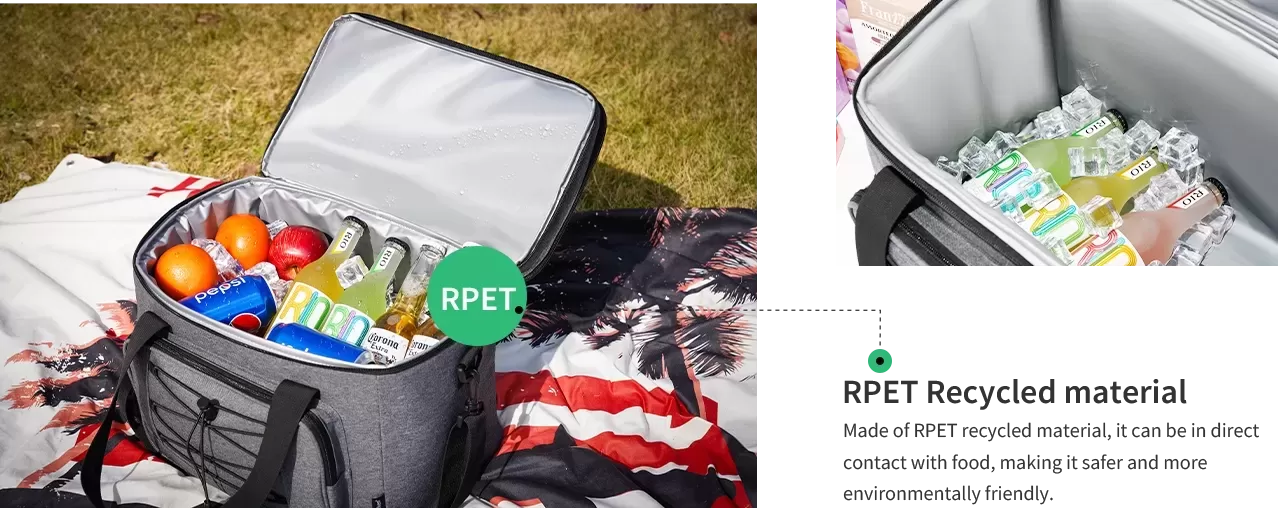
Inner linings made from PEVA, TPU, or aluminum foil must not leach toxic substances into food. The US FDA 21 CFR regulations, German LFGB, and French DGCCRF set strict legal limits on plasticizers, heavy metals, and overall chemical migration. A trustworthy bulk custom cooler bag manufacturer must verify their materials constantly.
The Impact on Your B2B Business
If customs testing or local consumer protection agencies find high levels of lead, BPA, or phthalates in your bags, you face immediate recalls. This can lead to heavy government fines, product destruction at your own expense, and permanent damage to your brand.
What the Factory Must Provide
Recent, material-specific test reports from recognized labs like Intertek or SGS.
Compliance certificates for food-grade lining materials like PEVA or TPU.
Chemical safety data sheets (SDS) for all adhesives used to bond the insulation layers.
How Weierken Maintains Global Standards
We do not treat factory audits as a chore to complete once a year. At weierken, we run a continuous compliance program. We keep our production lines, raw material storage, and employee facilities ready for inspection at any time.
Our facility holds active BSCI and ISO 9001 certifications. We source our raw materials from audited, eco-friendly suppliers to ensure our finished heavy-duty cooler bags pass all US and EU food contact requirements. When you partner with us, you receive full documentation to clear customs smoothly and satisfy your retail buyers.
Frequently Asked Questions
Can a factory use old audit reports for new orders?
No. Most retail buyers and customs authorities require audit reports that are less than 12 months old. Social compliance audits like BSCI and SMETA must be renewed annually to remain valid.
What is the difference between BSCI and SMETA?
BSCI is an initiative of the Foreign Trade Association (FTA) and is widely used across Europe. SMETA is an audit methodology developed by Sedex, which is highly popular among UK and US retailers. Both cover similar social compliance, health, and safety metrics.
Does a food-grade report cover the entire bag?
No. Food contact tests like FDA or LFGB only cover the inner lining material, such as PEVA or TPU, and the seams. The outer shell fabric is usually tested for general safety standards, like REACH or Prop 65, which restrict harmful colorants and heavy metals.
How does a factory prove its bags are leak-proof?
A reliable durable insulated bag factory uses high-frequency voltage welding or ultrasonic welding for the inner lining instead of traditional stitching. They verify this by conducting leak tests, filling sample linings with water for 24 hours to ensure zero moisture penetration.
Can I conduct my own third-party inspection at your factory?
Yes. We welcome third-party inspectors. Most professional buyers hire services like QIMA or SGS to inspect goods before they leave our warehouse. A compliant factory will always accommodate pre-shipment inspections.
Secure Your Supply Chain Today
Do not let factory audit failures disrupt your business operations. Partner with a compliant, experienced, and transparent manufacturer who understands the details of international trade.
Contact the weierken team today to review our compliance certificates, view our latest product catalog, or request a detailed manufacturing quote for your next project.
Request a Factory Audit Copy & Quote