
Global brands now face strict Environmental, Social, and Governance (ESG) standards from retailers and regulators alike. Because of this, the bag manufacturing sector is undergoing a deep green transformation. When sourcing new products, choosing a sustainable bag factory in China is no longer just an optional branding strategy. It has become a key way to protect your supply chain from compliance risks.
At weierken, we recognize that green technologies reduce waste and lower production costs for our B2B partners. Modern manufacturing facilities in China are investing heavily in cleaner production methods to meet global standards. Below, we look at five essential sustainable tech upgrades that are reshaping the traditional bag manufacturing process.

1. CAD Intelligent Layout and Automatic Computerized Cutting
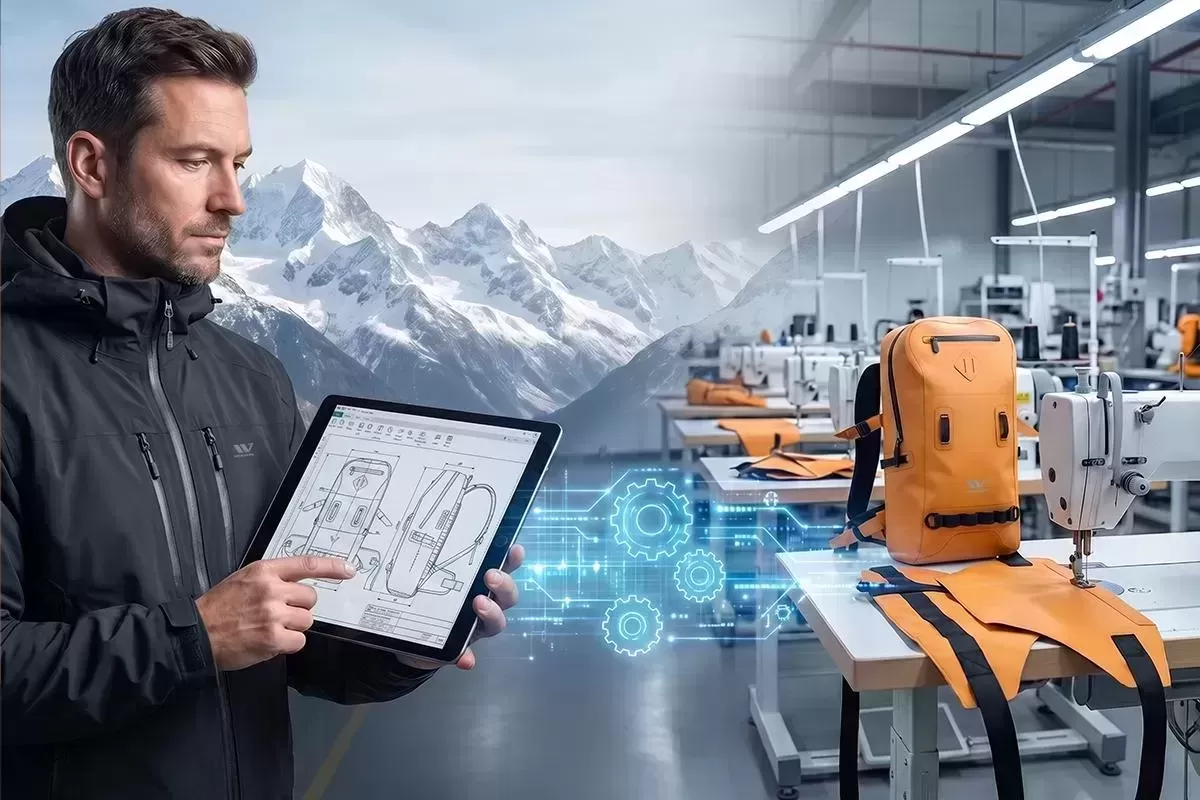
Fabric and trim consumption represent the largest cost and source of waste in bag production. Traditional hand-cutting methods often leave behind significant scraps that end up in landfills. Advanced facilities are solving this problem by replacing manual layout boards with computerized automation.
A forward-thinking bag factory in China now relies on high-precision CAD software paired with automatic CNC cutters to optimize material use.
Optimized nesting algorithms: The software automatically arranges pattern pieces to minimize gaps on the fabric roll.
Automated CNC knife cutters: Replaces manual shears to achieve highly precise fabric panel cuts, eliminating human error.
Zero-waste fabric cutting goals: Minimizes edge scraps, saving precious centimeters of material on every production run.
For brands using premium sustainable options like eco-friendly RPET bags, this system directly lowers sourcing costs. Less wasted fabric means lower raw material bills for your business. It allows your brand to meet green standards without paying a massive premium.
2. Waterless Digital Printing and Eco-Friendly Water-Based Inks
Traditional screen printing and dyeing processes use massive amounts of water. They also release volatile organic compounds (VOCs) and hazardous chemical runoff into local ecosystems. Sustainable factories are actively phasing out these outdated chemical methods.
To protect local water systems, factories are adopting dry sublimation and water-based ink processes during custom bag production.
Waterless sublimation transfer: Uses heat to transfer designs from paper to fabric without needing a wash cycle.
Water-based printing ink: Replaces petroleum-based plastisol inks with safer, water-soluble alternatives.
Zero heavy metals: Eliminates formaldehyde and phthalates from the printing stage entirely.
This transition helps your products comply with international chemical safety standards, such as REACH and RoHS. It ensures that your inventory passes strict customs inspections and chemical testing without delays. Your customer receives a safe, odor-free product.
3. Direct-Drive Servo Motors and IoT-Enabled Smart Sewing
Sewing workshops consume the vast majority of electricity in any manufacturing facility. Older sewing machines used heavy clutch motors that ran continuously, even when the operator was adjusting fabric. This idle run wasted massive amounts of electricity over a single shift.
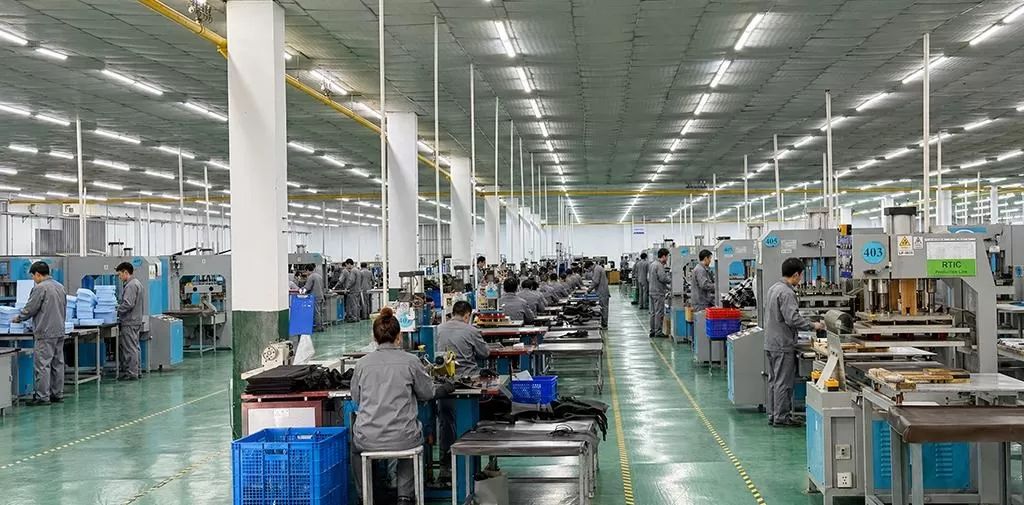
To curb this waste, factories are upgrading to modern direct-drive servo motors connected to Internet of Things (IoT) systems.
On-demand power usage: Servo motors only draw power when the operator depresses the foot pedal, cutting standby power consumption.
Reduced noise and heat: Creates a quieter, cooler, and safer workspace for factory employees.
IoT production tracking: Sensors monitor machine health and stitching efficiency in real time, preventing energy-draining idle states.
Weierken has integrated these energy-efficient technologies across our partner production lines. By optimizing our energy use, we maintain competitive pricing for our clients while lowering our overall operational footprint. Sourcing from an energy-conscious bag factory in China protects your brand from fluctuating local energy tariffs.
4. Rooftop Distributed Photovoltaic Power Systems
For international buyers tracking Scope 3 carbon emissions, the power source of their supplier matters. Burning coal to generate grid electricity for manufacturing defeats the purpose of using recycled fabrics. To address this, many large-scale facilities are changing their energy mix.
Installing massive solar arrays on the flat roofs of factory buildings has become a common practice in China's industrial zones.
Solar energy integration: Generates clean, renewable electricity to power sewing machines, lights, and cutting tables.
Lower grid dependency: Reduces reliance on coal-heavy municipal grids, significantly lowering carbon emissions.
Verifiable carbon data: Provides green energy certificates that brands can use for their carbon footprint calculations.
If your brand must perform a formal carbon footprint reduction assessment, sourcing from a solar-powered facility is highly beneficial. It gives you verifiable data to share with stakeholders. This transparency helps you build an honest green narrative for your customers.
5. Digital GRS Traceability and Closed-Loop Recycling
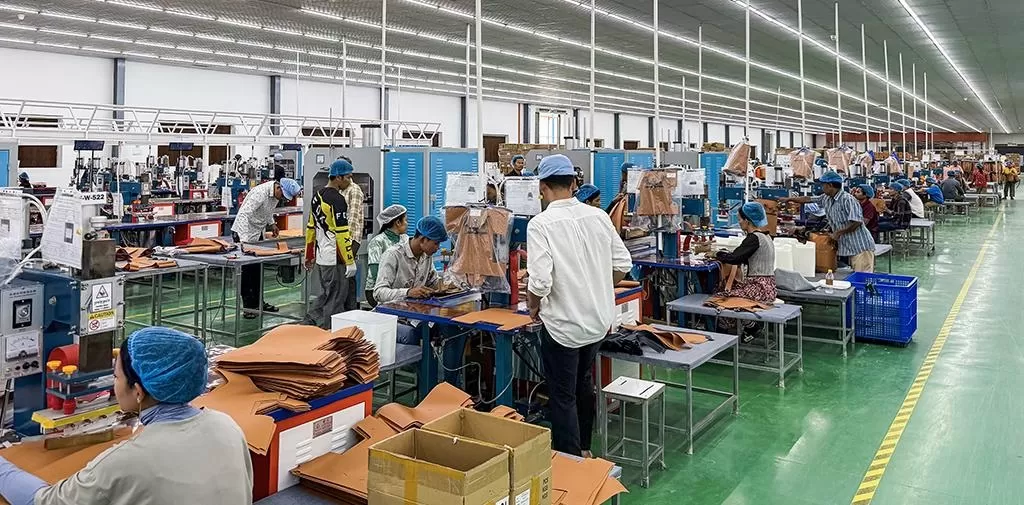
Many brands worry about the authenticity of recycled claims. How do you prove that your bag is made of genuine post-consumer waste? A responsible bag factory in China solves this through digital record-keeping and strict material segregation.
Modern ERP systems can track certified materials from raw yarn suppliers all the way to the finished carton.
Dedicated GRS storage zones: Prevents virgin polyester from mixing with certified recycled materials.
ERP-linked transaction certificates: Generates a clear digital paper trail for every production batch.
Scrap plastic recycling: Collects fabric scraps (like nylon and polypropylene) to melt down for secondary industrial use.
This closed-loop system ensures complete transparency for your brand. It eliminates the risk of greenwashing, giving your marketing team authentic data to present to consumers. This tracking is essential for complying with modern anti-greenwashing laws.
Partner with a Sustainable Manufacturer
Sustainable technology is no longer just a marketing trend. It is a highly practical way to reduce material waste, lower carbon emissions, and guarantee compliance. Choosing a factory that invests in these technologies secures your brand's future in a green-focused market.
Weierken offers reliable sustainable bag manufacturing services that align with these modern environmental expectations. We work closely with our partners to ensure consistent, compliant production. We invite you to discuss your upcoming collection with us.
Please contact our team today to request a quote, schedule a factory consultation, or ask about our sustainable options. Let us help you develop a greener, more resilient supply chain.
Frequently Asked Questions
1. What is a GRS certification, and why does my bag factory in China need it?
The Global Recycled Standard (GRS) certifies that the recycled content in a product is authentic. A certified factory can provide a Transaction Certificate (TC) to prove your bags are genuinely made from recycled materials like plastic bottles.
2. How do direct-drive servo motors improve production efficiency?
Unlike clutch motors, direct-drive motors are quieter, start faster, and stop instantly. This improves the operator's control over complex stitching, leading to fewer defects and lower electricity usage.
3. Are water-based inks as durable as traditional plastisol inks on polyester bags?
Yes. Modern water-based inks offer excellent adhesion, flexibility, and washing durability. They feel softer to the touch and easily pass international chemical safety tests like REACH.
4. Can we track the carbon footprint reduction of our orders?
Factories equipped with rooftop solar systems and digital ERP tracking can provide estimated carbon reduction metrics. You can share these reports with your ESG compliance team.
5. Does automated CAD cutting increase the minimum order quantity (MOQ)?
No. In fact, computerized cutting makes small-batch runs more cost-efficient because it eliminates the need to manufacture physical metal cutting dies for every shape.
6. How does a factory handle and recycle its synthetic fabric waste?
Clean scraps of nylon and polyester are collected, sorted by material type, and sent to recycling partners. These partners melt them down into plastic pellets for other industries, reducing landfill waste.