

Managing supply chain margins is a constant challenge for custom brands. With rising material costs and unpredictable shipping rates, finding ways to optimize your procurement budget is essential. Many brands believe the only way to save money is by squeezing their supplier's profit margins, but this often leads to compromised quality.
The most effective way to cut costs is by eliminating waste in design, material selection, and logistics. Partnering with a direct lunch insulated tote maker is the first step. By working directly with the factory, you bypass trading company markups and gain direct control over the manufacturing process.
However, simply finding a factory is not enough. You must understand how to collaborate with them to design out unnecessary expenses. Here are five practical, industry-tested tips to reduce your sourcing costs when working with a direct lunch insulated tote maker like weierken.
1. Leverage the Maker’s Stock Materials
Custom colors and proprietary fabrics look great, but they come with a high price tag. When you request a specific Pantone matching color for nylon or polyester outer fabric, the textile mill enforces high minimum order quantities (MOQs) for dyeing. This requirement can tie up your capital and leave you with excess fabric waste.
A direct lunch insulated tote maker usually keeps a steady inventory of standard fabrics in popular colors. These typically include black, navy blue, charcoal grey, and olive green. Choosing these in-stock materials provides several immediate benefits:
Lower Fabric MOQs: You can place smaller product orders because the factory does not need to order a massive custom-dyed batch of fabric.
Reduced Unit Costs: Stock materials are purchased by the factory in bulk, allowing them to pass the material savings directly to you.
Shorter Lead Times: Skipping the fabric-dyeing stage can shave 10 to 15 days off your overall production schedule.
If your brand identity requires a specific signature color, consider using stock colors for the main body of the bag. You can then add your brand's unique color accents to smaller, less expensive components like the zippers, handles, or rubber labels.
2. Streamline the Tote Design to Reduce Assembly Labor
While automation handles the material cutting, assembling a thermal bag remains a highly manual process. Skilled sewing machine operators assemble each panel, zipper, and pocket by hand. Consequently, labor hours make up a significant portion of your total production cost.
A complex design with too many features increases the assembly time, which raises the cost per unit. To keep production efficient, work with your insulated lunch bag factory to simplify the structure without losing core functionality.
Consider the following design simplifications to reduce labor hours:
Limit the Number of Pockets: Every zippered pocket, mesh side pouch, or hidden compartment requires extra sewing steps. Limit your design to one main compartment and one simple slip pocket on the exterior.
Simplify Zipper Paths: Curved zippers look modern but are difficult to sew. Straight-line zippers are much faster to assemble, resulting in lower labor costs and fewer sewing defects.
Use Smarter Closures: For secondary pockets, consider hook-and-loop fasteners (Velcro) or magnetic snaps instead of zippers. These alternatives are faster to install and require less hardware.
3. Optimize Lining and Insulation Foam Thickness
Not every lunch bag needs to keep food frozen for 24 hours. Over-engineering your product with thick insulation and premium linings for standard everyday use creates unnecessary costs. Aligning your material specifications with your target user's actual needs is key.
At weierken, we work closely with clients to evaluate their target market. For example, a daily office commuter bag does not require the same heavy-duty insulation as a professional outdoor cooler bag. By adjusting the internal layers, you can achieve significant savings.
Use this guide to match your materials with your market positioning:
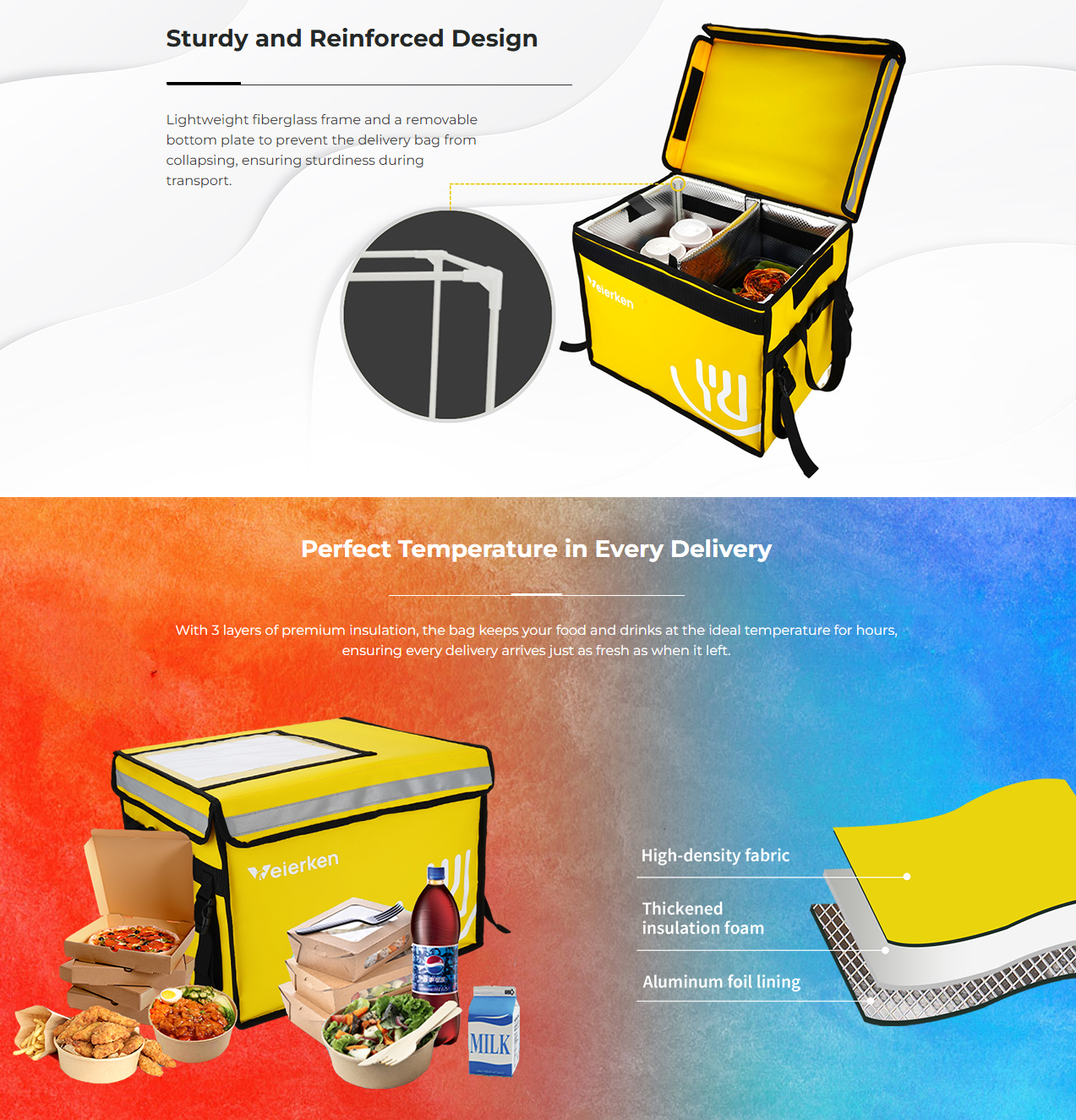
For Daily Commuters (Office/School): A 3mm to 4mm EPE (expanded polyethylene) foam layer combined with a standard PEVA or embossed aluminum foil liner is highly cost-effective. It keeps food fresh for 3 to 4 hours, which is perfect for standard routines.
For Outdoor and Premium Lines: This segment justifies thicker 6mm to 8mm EPE foam or NBR foam, paired with a seamless, leakproof TPU liner. While more expensive, these materials provide the 8-to-12-hour thermal window that outdoor enthusiasts expect.
Choosing PEVA over PVC is also a smart move. PEVA is eco-friendly, compliant with food safety standards, and remains flexible in cold temperatures, making it a reliable choice for budget-conscious brands.
4. Optimize Packaging for Flat-Packing to Save CBM
Because thermal bags contain soft foam layers, they are naturally bulky. If you ship them in their fully expanded shape, you will pay to transport a lot of empty space. In international logistics, you are billed based on volume (cubic meters or CBM) rather than just weight.
A knowledgeable lunch insulated tote maker will help you design your packaging to minimize this volume. Collapsing and flat-packing the products can significantly reduce your shipping bills.
Work with your factory to implement these packaging strategies:
Flat-Fold Design: Ensure the bag's construction allows it to fold flat without permanently creasing the insulation foam or damaging the internal lining.
Bulk Packing in Polybags: Instead of packing each bag in an individual rigid cardboard box, pack them flat in master polybags inside the shipping carton. This maximizes the number of pieces you can fit in a single carton.
Carton Optimization: Ensure the outer shipping carton dimensions match standard shipping container configurations. This prevents wasted space in full container loads (FCL) or less-than-container-load (LCL) shipments.
5. Amortize Set-up Costs with Annual Volume Forecasts
Factories face fixed setup costs every time they start a new production run. These setup tasks include cutting-die preparation, logo printing plate setup, and machine calibration. If you place small, frequent orders, these setup costs will drive up your unit price.
You can lower these costs by sharing your long-term business plans with your bulk lunch bag manufacturer. Even if you cannot pay for a massive order all at once, an annual forecast helps the factory plan better.
Use these tactics to build a cost-effective partnership:
Share an Annual Forecast: Present your estimated sales volume for the year. This helps the factory purchase raw materials in bulk during low-cost seasons, saving money that they can share with you.
Negotiate Plate Fee Refunds: Ask your supplier to refund your initial printing plate or tooling mold fees once your cumulative order volume reaches a set milestone (e.g., 5,000 or 10,000 units).
Consolidate Shipments: If you sell multiple colors of the same design, try to run them in a single production batch. This reduces the time the factory spends resetting machines and helps you secure better volume discounts.
Sourcing your products at a lower cost does not require sacrificing quality or choosing cheap, unreliable suppliers. Genuine savings come from smart product engineering, using readily available materials, and planning efficient logistics.
When you partner with a direct lunch insulated tote maker like weierken, you get direct access to experienced factory engineers. We help you review your technical designs, suggest cost-effective material alternatives, and optimize your packaging to protect your profit margins.
Do you want to see how much you can save on your next production run? Send us your design files today for a free design review and cost-optimization assessment.
Frequently Asked Questions
1. Will using stock colors make my brand look generic?
Not at all. While the main body of your bag uses a popular, cost-effective stock fabric, you can still customize the overall look. High-contrast zippers, custom zipper pulls, custom-woven handles, and unique logo patches can make a stock-fabric bag look entirely custom and premium.
2. Why are seamless PEVA liners cheaper to assemble than stitched liners?
Seamless PEVA liners are joined using high-frequency heat welding machines. This process takes only seconds and creates a completely leakproof seal. Stitched liners require a worker to sew the panels together and manually apply waterproof tape over the seam, which takes more time and increases labor costs.
3. Can we get a discount on our sample fee when we place a bulk order?
Yes. Most direct manufacturers charge an initial sampling fee to cover pattern making and material sourcing. Once you proceed with the official bulk production order (usually meeting a minimum threshold like 1,000 units), the factory will deduct or refund the sample fee from your final invoice.
4. Does a flat-packed lunch bag get permanently wrinkled during transit?
High-quality EPE foam has excellent shape memory. While some minor temporary creases may appear during long ocean shipments, the bag will naturally regain its original shape once unpacked and used. Using 4mm to 6mm foam balances structural softness and shape recovery perfectly.
5. How does a direct manufacturer help us save on customs clearance?
Experienced direct manufacturers understand the documentation required for different countries. They provide accurate Harmonized System (HS) codes, commercial invoices, and certificates of origin. This documentation ensures your customs broker can classify the goods correctly, helping you avoid unnecessary import duties or inspection penalties.