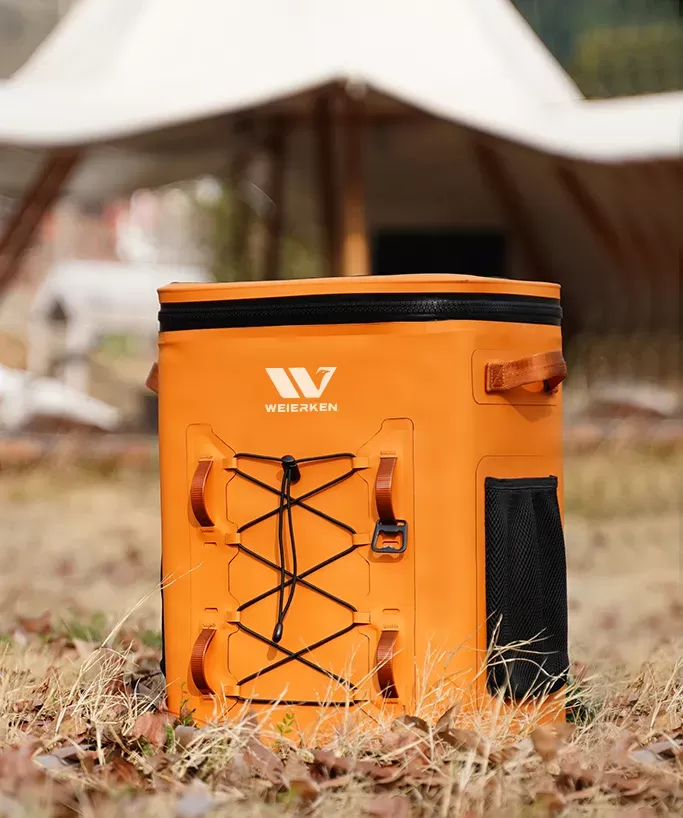

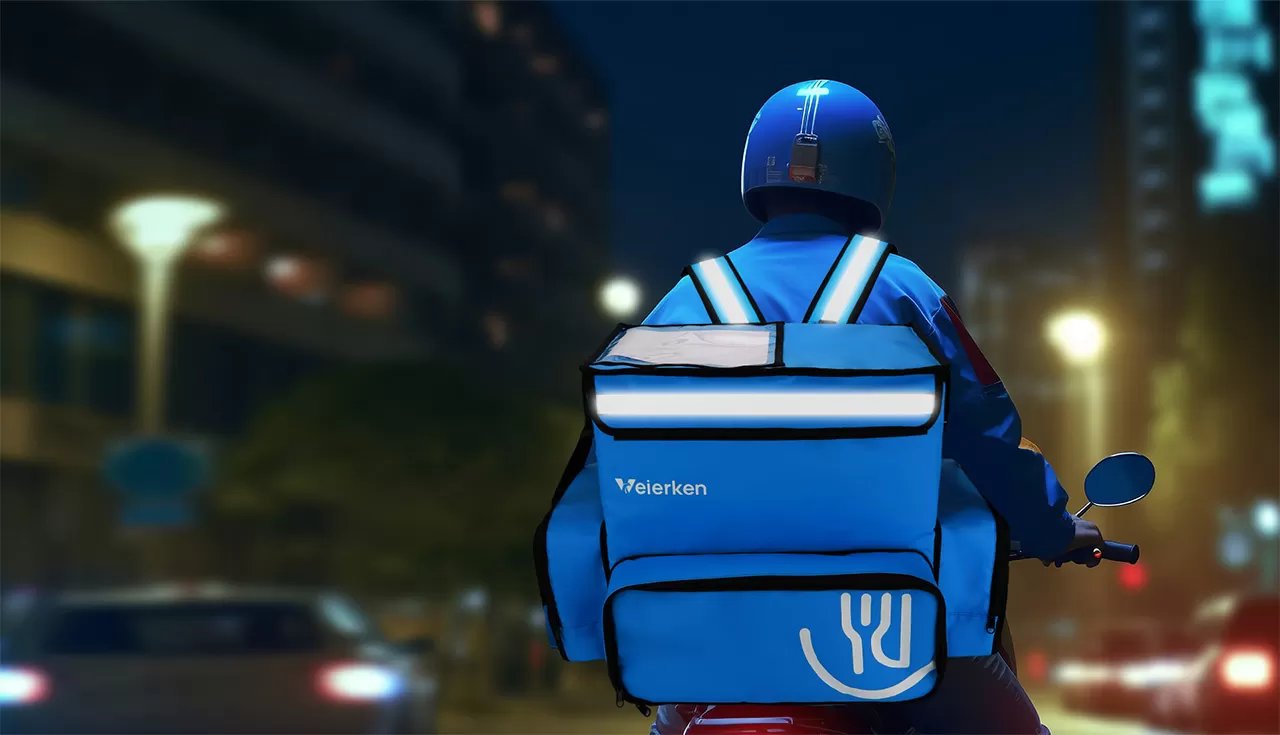
Shipping fresh or frozen meat isn't the same as delivering a hot pizza. The stakes are much higher. Meat products face unique challenges like blood leakage, heavy weights, and the need for strict temperature maintenance. Finding a professional meat delivery bag factory requires more than just looking at a price list. You need to know if their products survive the "last mile" reality.
Many suppliers claim their bags offer "excellent insulation." However, when you put 10kg of frozen ribeye in a bag for four hours in 35°C heat, those claims often melt away. Brands like weierken have built their reputation on technical precision, moving beyond marketing fluff to provide real-world data. To find a partner that actually understands cold chain logistics, you must ask the right technical questions.
Use this auditing guide to evaluate your next meat delivery bag factory. These six questions will separate the amateur workshops from the professional manufacturers.
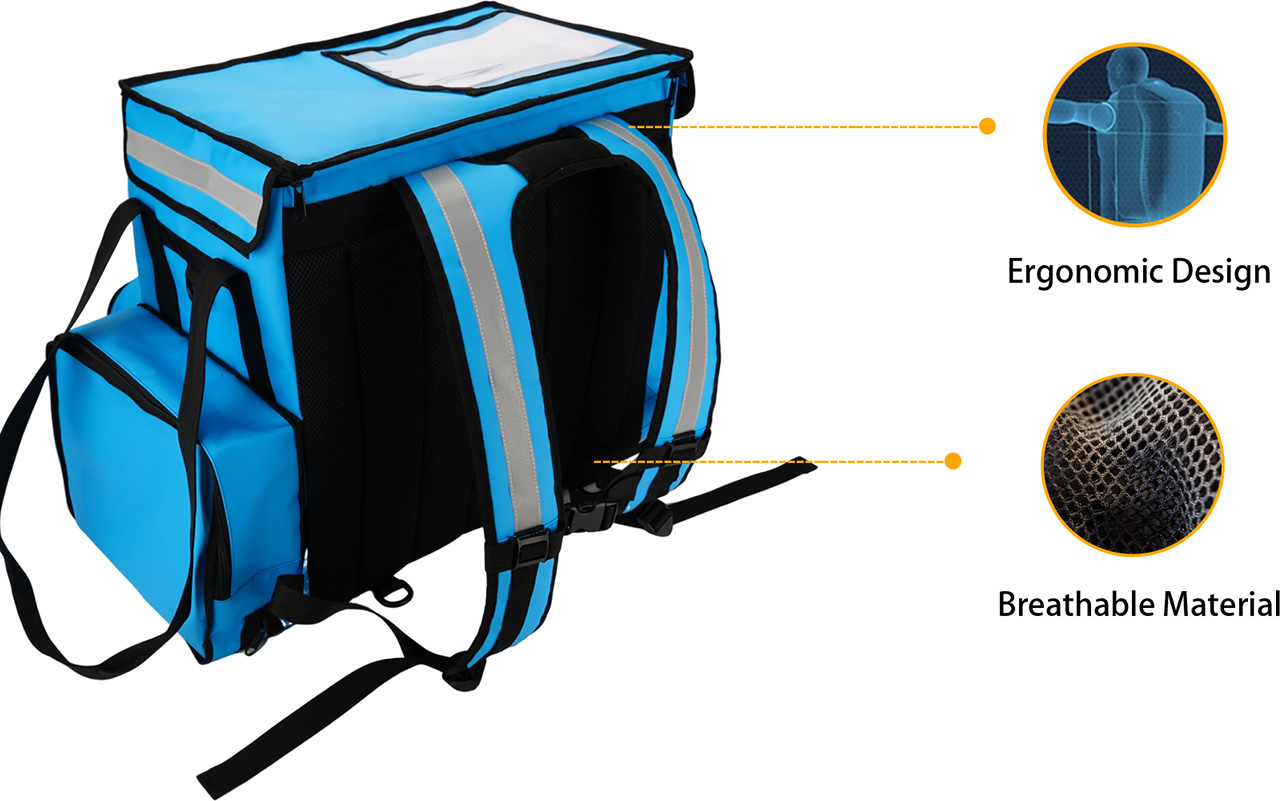
Question 1: What Insulation Core Materials Do You Use? (Density vs. Thickness)
Most cheap delivery bags use low-grade EPE (Expanded Polyethylene). This material often has a density of only 18-20kg/m³. While it works for short-distance food delivery, it fails for high-stakes frozen meat delivery. You need to know the specific technical specs of the foam inside the walls.
Ask the meat delivery bag factory for the exact material type. Is it standard EPE, XPE (Cross-linked Polyethylene), PU foam, or even VIP (Vacuum Insulation Panels)? Each has a different thermal conductivity coefficient, also known as the λ-value. Higher-end materials like XPE offer better structural memory and don't compress easily under the weight of heavy meat cuts.
Density Matters: Request a density like "25x expansion EPE" or "XPE density 120kg/m³." Low density means the air bubbles collapse, losing insulation value.
Thickness Strategy: Frozen meat (-18°C) typically requires 10mm to 20mm of high-density foam. Chilled meat (0-4°C) can sometimes use 8mm, depending on the transit time.
Structural Integrity: Ask if the foam is glued or friction-fitted. In high-quality bags from weierken, the insulation is often integrated to prevent shifting during transit.
A professional factory should explain why a specific material combination suits your specific meat type. If they cannot provide density figures, they are likely just a generic bag assembler, not a technical meat delivery bag factory.
Question 2: What Are Your Thermal Testing Methods? Can You Provide Data?
Promises are cheap. Data is expensive. A reliable meat delivery bag factory must prove their bags work through rigorous testing. Don't settle for "it stays cold for 4 hours." Ask for the environment and the payload details.
Check the ambient temperature of their tests. A bag that stays cold in a 20°C office will fail in a 40°C delivery van. You want to see tests conducted at 30°C, 35°C, or even 45°C for extreme summer conditions. The "starting temperature" of the meat also matters—was it -18°C or -10°C?
Look for the following in a test report:
Load Conditions: How many kilograms of meat were used? Thermal mass affects the results.
End-point Temperature: Did the frozen meat stay below -15°C? Did the chilled meat stay under 6°C?
Dynamic vs. Static: Static tests in a lab are different from real-world movement. Ask if they use vibration tables to simulate the shaking of a delivery bike or truck.
An expert meat delivery bag factory should provide full reports with temperature curve charts. These charts show exactly when the "danger zone" is reached. Look for references to international standards like ASTM D3103 or local equivalents like GB/T 4857.
Question 3: How Do You Handle "Thermal Bridges" in the Design?
Even the thickest insulation fails if heat leaks through the gaps. In the industry, we call these "thermal bridges." Common culprits include zippers, stitching lines, handle attachment points, and the bottom corners of the bag. This is where most custom insulated bags fail the audit.
Inquire about the stitching process. Traditional needle holes allow cold air to escape and warm air to enter. A top-tier meat delivery bag factory will use heat-sealed seams or silicone sealing strips. This prevents thermal leakage and ensures that blood or condensation doesn't seep into the insulation core.
The Zipper Problem: Metal zippers are excellent heat conductors. Professional meat bags use waterproof zippers with rubber coatings or specialized insulation flaps that cover the zipper from the inside. At weierken, we often design double-layered covers to ensure the zipper area remains as cold as the rest of the bag. Ask your factory if they use thermal bridge prevention techniques at the base, where heat transfer from the ground or vehicle floor is highest.
Question 4: How Much Does Performance Drop After Repeated Openings?
Real-world delivery involves "multi-drop" routes. A courier might open the bag ten times in three hours to pull out individual orders. Every time that bag opens, a massive amount of cold air escapes. A standard meat delivery bag factory might not account for this "dynamic loss."
Ask if they have performed "opening cycle tests." For example: "If I open the bag for 10 seconds every 30 minutes, how much does the internal temperature rise?" This data is vital for high-volume last-mile delivery operations.
Sealing Aids: Check for magnetic closures or self-closing flaps. These reduce the time the bag stays fully open.
Internal Compartments: Can the bag be partitioned? Dividing the space helps contain the cold air when only one section is accessed.
Performance Decay: A professional factory should tell you that "after 20 openings, the insulation duration drops by 15%." This transparency builds trust.
By understanding these variables, you can optimize your cold chain packaging strategy and prevent food spoilage during busy delivery windows.
Question 5: What Happens When the Bag Gets Wet or Soaked in Blood?
Meat delivery is messy. Blood, melted ice, and condensation are inevitable. If moisture reaches the insulation core, the thermal performance plummets. Water is a much better heat conductor than air. Once your EPE foam or fabric gets "waterlogged," the bag becomes useless.
A high-quality meat delivery bag factory will prioritize leak-proof lining. Ask about the materials: Are they using food-grade TPU, PEVA, or PVC-coated fabrics? TPU is often preferred for meat because it is durable and easy to sanitize. However, the material is only half the battle. You must check the welding technology.
Ultrasonic welding or high-frequency heat sealing creates a "tub" inside the bag. This means there are zero needle holes for blood to leak through. If the factory only offers sewn linings, walk away. Blood trapped in seams leads to bacterial growth and foul odors. A weierken-standard bag allows for easy "wipe-down" cleaning, ensuring food safety compliance for every delivery.
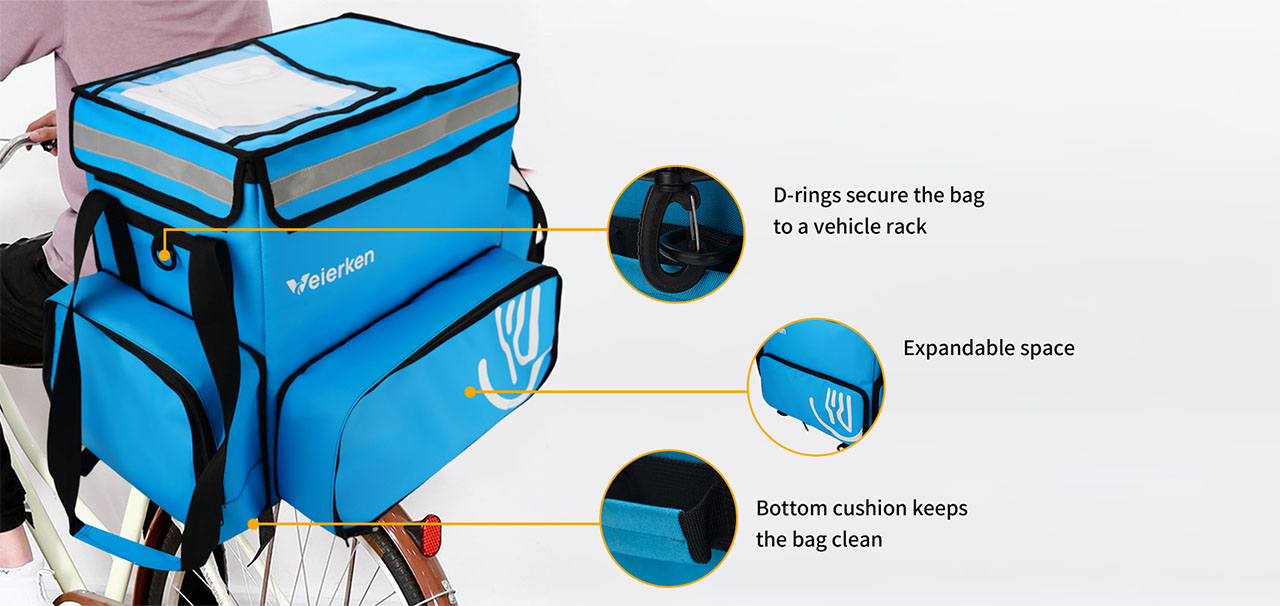
Question 6: Do You Offer Differentiated Designs for Frozen vs. Chilled Meat?
A "one size fits all" approach is a red flag. Frozen beef, chilled chicken, and fresh seafood have different requirements. A reliable meat delivery bag factory should provide structural variations based on your product line.
Frozen Meat (-18°C): Needs maximum R-value. The focus is on thickness and air-tightness. These bags often feature internal dividers to prevent frozen blocks from touching and potentially damaging the liner.
Chilled Meat (0-4°C): These often require integrated pockets for ice packs or PCM (Phase Change Material). The bag design must ensure the ice packs stay in place and don't crush the meat.
Iced Seafood: If you are shipping seafood on crushed ice, the liner must be salt-corrosion resistant. You might even need a bottom drainage plug with a leak-proof seal.
Ask the factory for samples of their previous custom meat delivery bags. If they show you the same bag for every temperature range, they don't have the engineering depth you need. Specialized factories will suggest specific thermal insulation materials for each use case.
Finding a partner like weierken ensures you get a solution tailored to your operational reality. When you vet a meat delivery bag factory with these six questions, you move beyond "low price" and start investing in "high performance."
Frequently Asked Questions (FAQ)
1. What is the best material for a meat delivery bag liner?
For meat delivery, food-grade TPU (Thermoplastic Polyurethane) is generally considered the best. It is highly resistant to grease and blood, stays flexible in freezing temperatures, and can be heat-sealed for a 100% leak-proof finish. Unlike PVC, it is also more environmentally friendly and safer for food contact.
2. How long can a professional meat delivery bag keep food frozen?
A high-quality bag from a reputable meat delivery bag factory can keep meat frozen for 4 to 12 hours, depending on the ambient temperature and the use of refrigerants like gel packs or dry ice. For transit times exceeding 8 hours, we recommend using 20mm XPE insulation and pre-chilling the bag.
3. Can these bags be customized with my brand logo?
Yes. Most meat delivery bag factory partners offer OEM and ODM services. You can choose silk-screen printing, heat transfer, or rubber patches. It is important to ensure the printing process doesn't compromise the thermal insulation performance of the outer shell.
4. How do I clean a bag that has had a blood leak?
If the bag has a heat-sealed lining, you can simply wash it with warm soapy water and a mild disinfectant. Avoid using harsh bleach as it may degrade the TPU coating. Always air-dry the bag completely before the next use to prevent mold growth.
5. What is the difference between EPE and XPE foam?
EPE is a standard foam that is cheaper but can lose its shape over time. XPE (Cross-linked Polyethylene) has a more stable chemical structure. It offers better thermal resistance, higher durability, and does not absorb any moisture. For heavy meat products, XPE is the superior choice for a meat delivery bag factory to use.
6. Is it necessary to use ice packs in an insulated meat bag?
Yes. An insulated bag is a passive thermal barrier; it slows down heat gain but doesn't "create" cold. To maintain a specific temperature (like 2°C) for several hours, you must include ice packs or PCM plates to absorb the incoming heat energy.
Take the Next Step in Cold Chain Excellence
Choosing the wrong meat delivery bag factory leads to more than just melted ice; it leads to lost inventory and unhappy customers. Quality matters when food safety is on the line. Don't settle for "good enough" when you can have technically engineered solutions.
Are you ready to upgrade your cold chain logistics? Contact our experts at weierken to discuss your specific temperature requirements. Whether you need custom insulated bags for frozen beef or specialized liners for seafood, we provide the data-driven performance your business deserves.
Request a quote from our meat delivery bag factory today and ensure your products arrive in perfect condition.