
Cold chain logistics and last-mile grocery delivery have grown rapidly over recent years. Businesses need reliable methods to keep frozen food from thawing during transit. A single temperature spike can ruin inventory, harm your brand reputation, and violate food safety standards.
Finding a reliable frozen food thermal tote maker is crucial for retail chains, delivery startups, and food distributors. A structured sourcing approach helps you procure bags that protect your perishable goods. Working with a specialized manufacturer like weierken helps you bridge the gap between product design and field performance.
Evaluating a Custom Insulated Bag Manufacturer: Key Criteria
Selecting the right partner requires looking beyond unit prices. You must assess a factory's material sourcing, engineering capabilities, and quality control systems. A cheap bag that leaks or tears during use will cost your business more in the long run.
Insulation Materials and Thermal Performance
The performance of an insulated bag depends heavily on its material layers. Most high-performance totes use a three-layer composite structure to minimize heat transfer.
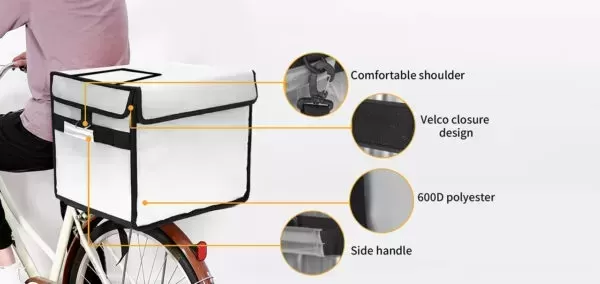
Outer Layer: This layer must withstand abrasion, moisture, and rough handling. Factories commonly use 600D Oxford fabric, heavy-duty polyester, or non-woven fabrics for budget-friendly promotions.
Middle Layer (Insulation): Expanded Polyethylene (EPE) foam is the industry standard. A thickness of 3mm to 5mm works well for short-distance grocery deliveries. For extended transit, look for 8mm foam or polyurethane (PU) insulation to delay heat transfer.
Inner Lining: The lining directly faces the frozen goods. Aluminum foil offers excellent heat reflection. PEVA (Polyethylene Vinyl Acetate) is highly durable, easy to wipe clean, and provides better leak resistance when high-frequency welded.
Compliance and Factory Certifications
Food safety regulations are strict worldwide. Your chosen custom insulated bag manufacturer must utilize materials that are safe for food contact.
Food-Grade Materials: Confirm that the inner lining complies with FDA, LFGB, or REACH standards. These certifications prove the material does not leach harmful chemicals under cold conditions.
Factory Audits: Look for factories with ISO9001 certification to ensure consistent quality management. Social compliance audits, such as BSCI or Sedex, indicate the factory maintains fair labor practices.
How to Customize Your Thermal Totes
Standard off-the-shelf bags rarely meet the precise operational demands of commercial delivery. Working directly with an insulated delivery bag factory allows you to tailor every specification of your bulk order.
As a veteran supplier, weierken offers versatile options to match your logistics specifications and temperature targets.
Structure and Portability Features
How your delivery personnel handle the bags impacts their daily efficiency. Consider how these structural choices affect usability:
Collapsible Designs: Foldable bags save valuable warehouse space when not in use. They also make return-trip transport much more efficient.
Reinforced Carrying Handles: Frozen foods can be heavy. Ensure the manufacturer uses cross-stitching or heavy-duty webbing that wraps completely under the bag's base.
Sealing Systems: Traditional zippers can allow cold air to escape. Heavy-duty hook-and-loop closures or waterproof zippers create a tighter seal to keep external heat out.
Target Temperature Ranges
Different foods require different thermal conditions during transit:
Frozen Foods (-18°C and below): These require thick EPE foam, reflective foil linings, and space for dry ice packs or gel packs to maintain sub-zero temperatures.
Chilled Foods (0°C to 4°C): Standard PEVA lining with moderate foam thickness is usually sufficient. These bags prevent condensation from dripping outside.
Branding and Printing Methods
Thermal totes double as mobile billboards for your business. Choosing the right printing method ensures your logo remains visible even after months of use in wet or cold environments.
Silk Screen Printing: Best for simple, solid-color logos. It offers clear visibility at a relatively low setup cost.
Heat Transfer Printing: Ideal for complex, multi-color logos with gradients. This method yields vibrant details but carries a higher unit cost.
Gravure Printing (Laminated Bags): Best for full-coverage, photographic prints on non-woven or PP woven materials. This is highly cost-effective for high-volume orders.
OEM Sourcing Journey: Best Practices
Sourcing products from an offshore OEM cold chain bags wholesale supplier involves several critical phases. Managing these phases systematically reduces the risk of production delays or quality discrepancies.
The Sample Development Stage
Never bypass the sampling stage. Requesting a physical prototype allows you to test the bag's actual thermal performance and structural durability before committing your budget.
Sample Timeline: A typical prototype takes 5 to 7 days to design and sew. Custom molded components or custom-dyed fabrics may extend this timeframe.
Prototyping Fees: Most factories charge a fee to cover labor and material setup. Reputable manufacturers usually credit this fee back to you once you place the bulk production order.
MOQ and Tiered Pricing Realities
Minimum Order Quantity (MOQ) depends heavily on the materials you select. If you require standard fabrics and stock colors, the MOQ might be relatively low, such as 500 to 1,000 units.
If you require custom-dyed fabrics to match your brand's exact Pantone colors, the material mill may require a much higher minimum run. Discussing material alternatives early on can help you stay within your budget.
Quality Control and Factory Testing
To avoid receiving defective goods, establish clear quality standards before production begins. A professional factory should perform several standard tests:
Seam Tension Test: Pulling the handles under mechanical stress to ensure the stitching does not fail.
Load-Bearing Test: Packing the bag to its maximum weight capacity and hanging it for 24 to 48 hours to check for stretching or tearing.
Thermal Duration Test: Placing sensors inside the bag along with ice packs to measure how long the internal temperature stays below freezing.
Choosing a R&D-Driven Sourcing Partner
Procuring functional, durable delivery tools requires a manufacturing partner that understands thermal dynamics and textile engineering. Rather than treating bags as simple merchandise, the right factory views them as crucial components of your logistics chain.
When you partner with weierken, you get direct access to modern production facilities and technical design support. This ensures your customized bags perform reliably on the road, protect your inventory, and represent your brand well.
Are you ready to optimize your cold chain packaging? Reach out to the team at weierken today to discuss your project requirements, request a custom sample, or receive an official quotation.
Frequently Asked Questions
1. What is the standard MOQ for bulk thermal tote bags for frozen food?
The standard Minimum Order Quantity typically ranges from 1,000 to 2,000 pieces per design. This depends on whether you require standard stock colors or custom-dyed materials. Smaller test batches can sometimes be negotiated depending on fabric availability.
2. How long can a high-quality thermal tote keep food frozen?
Most commercial thermal bags keep food frozen for 2 to 4 hours under normal conditions. This duration can extend to 6 hours or more when using high-density 8mm EPE foam, reflective inner linings, and supplementary gel cold packs.
3. Are the lining materials food-safe and leakproof?
Yes. Reputable manufacturers use FDA-compliant, LFGB, or REACH-certified PEVA and aluminum foil linings. To ensure complete leak protection, factories apply heat-welded seams rather than traditional stitching, preventing liquids from seeping into the insulation layer.
4. Can I get a physical sample before placing a bulk order?
Yes. Factories recommend developing a pre-production sample. This physical sample allows you to test the insulation performance, sizing, and handle strength with your own products before authorizing full-scale manufacturing.
5. How does a frozen food thermal tote maker test thermal performance?
Manufacturers place digital temperature loggers inside the bag along with a standardized amount of frozen product or ice packs. The bag is then placed in a temperature-controlled chamber to monitor how many hours the interior remains within the safe zone.