
In the commercial catering sector, temperature management directly affects your business reputation. Food that arrives cold or lukewarm disappointed clients and leads to lost accounts. Commercial food delivery requires heavy-duty thermal containment that performs consistently under demanding, daily use.
Procurement managers often face a crowded market of suppliers. Choosing the right catering insulated tote maker is a critical decision that impacts your operating costs, delivery safety, and brand perception. A bag that fails after a few weeks of use increases replacement costs and compromises food safety.
At weierken, we approach thermal bag manufacturing with technical precision and material science. This guide outlines how to evaluate a commercial insulated tote manufacturer. We share the material, structural, and testing benchmarks you must consider to make an informed, long-term procurement decision.
1. Materials Science: Deconstructing Thermal Performance
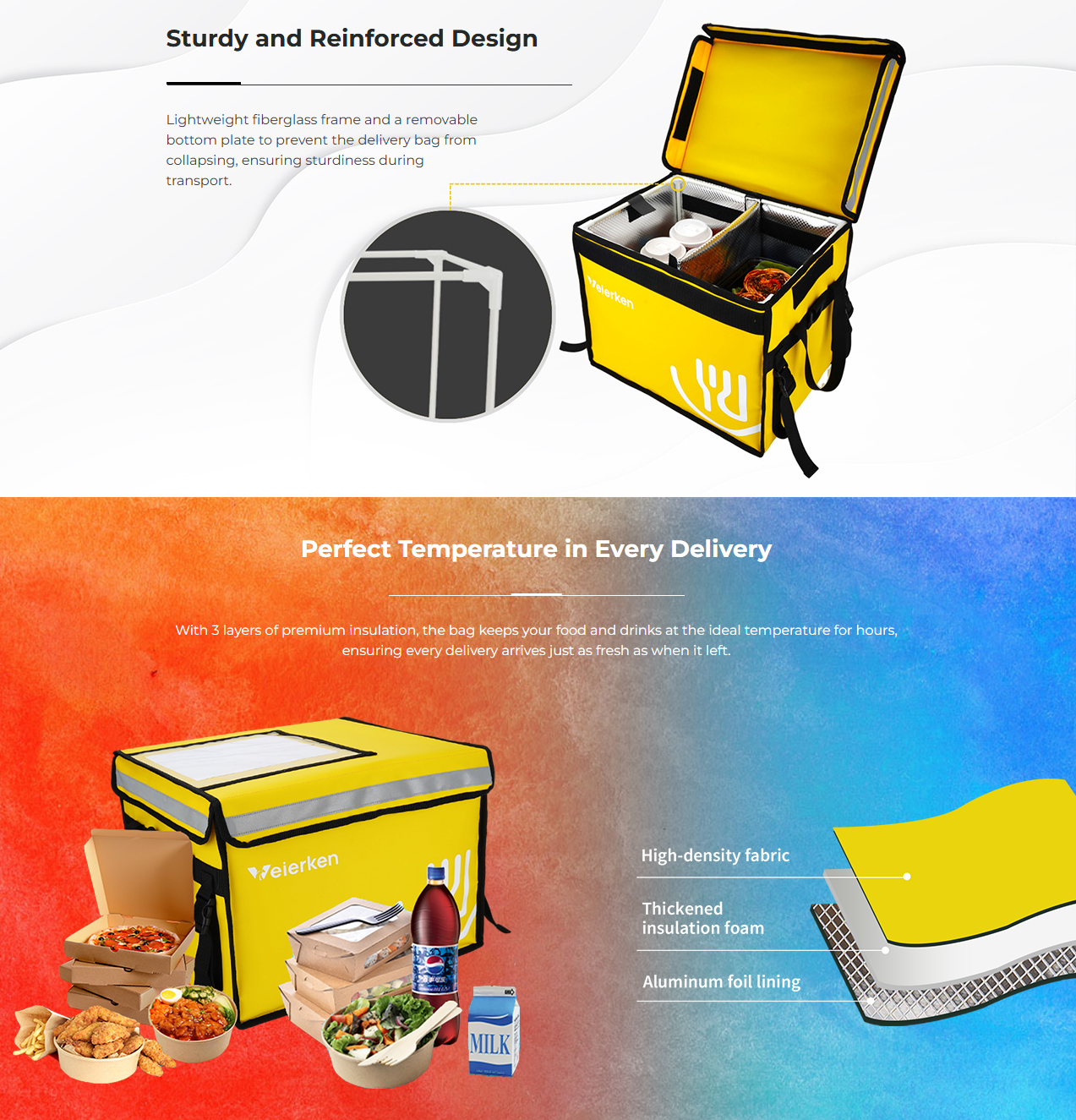
To assess a thermal bag, you must look closely at its components. A high-quality delivery bag is an engineered assembly of three distinct layers. Each layer serves a specific purpose in thermal retention and physical durability.
Inner Liners and Leak-Proof Technology
The interior liner comes into direct contact with food containers, heat, condensation, and occasional spills. Your choice of lining material determines both thermal retention and hygiene maintenance.
Aluminum Foil Liners: These liners reflect radiant heat back toward the food. They perform well for hot foods but can crack over time if they are folded repeatedly.
PEVA Liners: Polyethylene vinyl acetate is a durable, flexible, and food-safe material. It resists cracking and handles low to moderate temperatures well.
Composite Polymer Liners: Advanced composite linings combine the reflective qualities of foil with the flexibility of polymer sheets, offering balanced thermal properties.
Regardless of the material, water resistance is critical. Any professional catering insulated tote maker should use high-frequency heat sealing instead of traditional stitching for the interior seams. Stitched seams create needle holes that allow condensation and grease to seep into the insulation core, which can lead to mold and unpleasant odors.
The Insulation Core: PU Foam vs. EPE Foam
The middle layer of the bag is the core insulation barrier. It slows down conductive heat transfer between the interior of the bag and the outside air.
Polyethylene Foam (EPE) is lightweight, flexible, and cost-effective. It provides decent thermal resistance (R-value) for short-distance transport. EPE thickness usually ranges from 5mm to 15mm in commercial bags.
Polyurethane Foam (PU) has a denser molecular structure, offering higher thermal resistance per inch than EPE. It provides a more rigid shape to the bag, which helps prevent food containers from shifting during transport. For long-distance transport, a heavy-duty catering insulated tote maker typically recommends dense PU foam or composite foam panels.
Outer Fabrics: Weathering the Elements
The exterior fabric must withstand abrasion, UV exposure, rain, and frequent contact with rough surfaces. Polyester and nylon are the standard raw materials used by any commercial factory.
We measure fabric durability in Denier (D). While consumer-grade bags might use 600D polyester, a professional commercial insulated tote manufacturer uses 1680D double-strand Oxford fabric or heavy-duty Tarpaulin. These materials offer high tear strength and puncture resistance.
Additionally, look for water-resistant coatings like polyurethane (PU) or polyvinyl chloride (PVC) applied to the back of the outer fabric. This protective layer prevents rain from soaking the insulation core during outdoor deliveries.
2. Structural Engineering for Commercial Use
Material quality alone does not guarantee a long product lifespan. Under high-frequency commercial use, physical stress points will fail if the bag's structural engineering is weak. When looking for wholesale insulated food delivery bags, you should inspect these key structural components.
Load-Bearing Reinforcement
A fully loaded catering bag containing stainless steel pans or heavy food trays can easily weigh more than 15 kilograms. The physical stress concentrates on the handles and shoulder straps.
Cross-Stitching (Box-X): Ensure all handle attachments use box-X stitch patterns with high-tensile nylon thread to distribute weight.
Wrap-Around Straps: High-quality bags feature webbing straps that run completely underneath the bottom of the bag. This design transfers weight from the fabric to the heavy-duty webbing.
Reinforced Baseboards: A rigid PP (polypropylene) or PE baseboard prevents the bag from sagging under load, keeping your food trays flat and reducing spills.
At weierken, we conduct physical load tests to verify that these stress points can handle daily commercial delivery routines without tearing.
Hardware and Closure Durability
Zippers and closures are often the first points of failure on a delivery bag. A broken zipper renders an expensive bag useless. Commercial bags require industrial-grade hardware.
Look for size #10 resin zippers or heavy-duty nylon coil zippers. Famous brands like YKK offer reliable performance, but reputable manufacturers also source certified, equivalent industrial brands. The zipper teeth must resist salt corrosion, heat warping, and repetitive pull fatigue.
For high-speed operations, heavy-duty hook-and-loop (Velcro) fasteners can supplement or replace zippers. However, hook-and-loop closures can collect lint and debris over time, which reduces their holding strength. A professional catering insulated tote maker will combine zipper seals with storm flaps to optimize both thermal retention and ease of access.
Ergonomics and Modular Compartments
Catering menus vary widely. Your transport bags must adapt to changing menu items. Adjustable, insulated internal dividers allow you to separate hot and cold items within the same bag.
Ensure the bag’s interior dimensions match standard Gastronorm (GN) pans. A well-designed bag should hold multiple 1/1, 1/2, or 1/3 GN pans securely, minimizing lateral movement during transit. Ergonomic side handles are also helpful, allowing two delivery staff to carry heavy loads together.
3. Factory Compliance, Customization, and Quality Control
When sourcing custom thermal bags for catering, a factory's manufacturing processes are just as important as their physical samples. B2B buyers need to verify compliance, customization capability, and quality control systems.
Food Safety Compliance
Because these bags transport food, the materials must not leach volatile organic compounds (VOCs) or toxic chemicals under high heat. Ask your catering insulated tote maker for material safety certifications.
FDA Food Contact Safety: Verifies that inner liners are safe for food contact.
RoHS and REACH: Confirms the absence of heavy metals and harmful plasticizers in the polymers and fabrics.
Lead-Free Fabrics: Crucial for external surfaces handled daily by kitchen staff and delivery couriers.
Customization and OEM/ODM Services
A delivery bag is also a mobile billboard for your brand. Your manufacturing partner should offer clear branding options that withstand commercial washing and outdoor exposure.
Silk-screen printing is durable and cost-effective for simple logos. Heat transfer printing works well for complex, multi-color branding. For premium corporate clients, embroidered logos offer a long-lasting, high-end look.
Beyond branding, a capable catering insulated tote maker should be able to customize functional features. These include integrated receipt pockets, high-visibility reflective strips for night deliveries, external pockets for thermal packs, and specialized sleeves for GPS tracking devices.
Industrial Quality Control Processes
A reliable factory does not rely on visual inspection alone. They use specialized equipment to verify performance standards before shipping. Ask prospective manufacturers if they perform these quality control tests:
| Test Type | Testing Purpose | Target Performance Metric |
|---|---|---|
| Thermal Duration Test | Measures heat loss over time in a climate-controlled room. | Maintains food temperature above 60°C (140°F) for at least 2 to 4 hours. |
| Tensile Strength Test | Applies physical force to handle straps and seams. | Handles must support 2 to 3 times their rated weight capacity without stitch failure. |
| Drop Test | Simulates dropping a fully loaded bag from a delivery vehicle. | No seam splits, liner tears, or structural deformation after repeated impacts. |
| Hydrostatic Pressure Test | Measures the water-resistance of outer fabrics and interior liners. | Liner must prevent water penetration under constant moisture exposure. |
4. The B2B Sample Evaluation Checklist
When you receive a physical sample from a catering insulated tote maker, you should conduct a hands-on inspection before placing a bulk order. Use this simple checklist to verify the sample's build quality.
Check the Seams: Pull firmly along the inner seams. Are there needle holes, or is it a clean, heat-sealed weld?
Inspect Stitch Density: Count the stitches per inch on load-bearing areas. Look for at least 6 to 8 stitches per inch with heavy-duty thread.
Test the Zippers: Pull the zippers repeatedly around the corners. Do they glide smoothly, or do they catch on the fabric?
Assess Material Odor: Unzip the bag and check for strong chemical smells. High-quality, food-safe materials have minimal odor.
Conduct a Spill Test: Pour a cup of water into the liner, close the bag, and wait 30 minutes. Check the outer seams to make sure there are no leaks.
At weierken, we invite clients to run these tests on our production samples. We believe that physical verification is the best way to build trust between a buyer and a manufacturer.
Frequently Asked Questions
1. What is the standard MOQ when working with a catering insulated tote maker?
Minimum Order Quantities (MOQs) vary depending on the customization required. For standard stock models with simple logo printing, MOQs can be as low as 100 to 200 units. For fully customized bag sizes, unique colors, or custom features, the MOQ typically ranges from 500 to 1,000 units to justify the raw material production run.
2. How long can a high-quality delivery bag keep food hot?
A well-built commercial bag with 8mm to 10mm PU or EPE foam insulation can maintain safe hot-holding food temperatures (above 60°C or 140°F) for 2 to 4 hours. This duration depends on the initial food temperature, the volume of food in the bag, and ambient environmental conditions.
3. Are PEVA liners better than aluminum foil liners?
PEVA liners are generally more durable for liquid containment because they can be welded leak-proof without seams. They are also easy to wipe down and clean. Aluminum foil liners offer excellent radiant heat reflection but are more prone to physical wear, creasing, and cracking over long-term commercial use.
4. Can we wash these commercial thermal bags in a washing machine?
We do not recommend machine washing commercial thermal bags. The agitation and heat can damage the internal foam, break down the water-resistant outer coatings, and compromise the heat-sealed inner seams. Instead, wipe the bags down with warm water, mild detergent, and a sanitizing spray, then air dry them completely.
5. What certifications should a B2B buyer request from a manufacturer?
Buyers should request food contact safety reports for the inner liner (such as FDA or EU food grade compliance tests) and environmental safety certificates (RoHS/REACH) for all synthetic fabrics and plastics. It is also helpful to ask if the factory has ISO 9001 quality management system certification.
Partner with an Experienced Manufacturing Expert
Selecting the right transport equipment is a long-term investment in your food quality and customer satisfaction. Working with an experienced catering insulated tote maker helps ensure your deliveries stay fresh and secure from the kitchen to the customer's table.
At weierken, we focus on durable construction, reliable thermal efficiency, and food-safe materials. We collaborate closely with B2B buyers to design and manufacture commercial delivery solutions tailored to their operational needs.
If you are looking to source high-quality wholesale insulated food delivery bags, our engineering team is here to assist you. Contact us today to discuss your specifications, request a sample, or get a competitive production quote.