

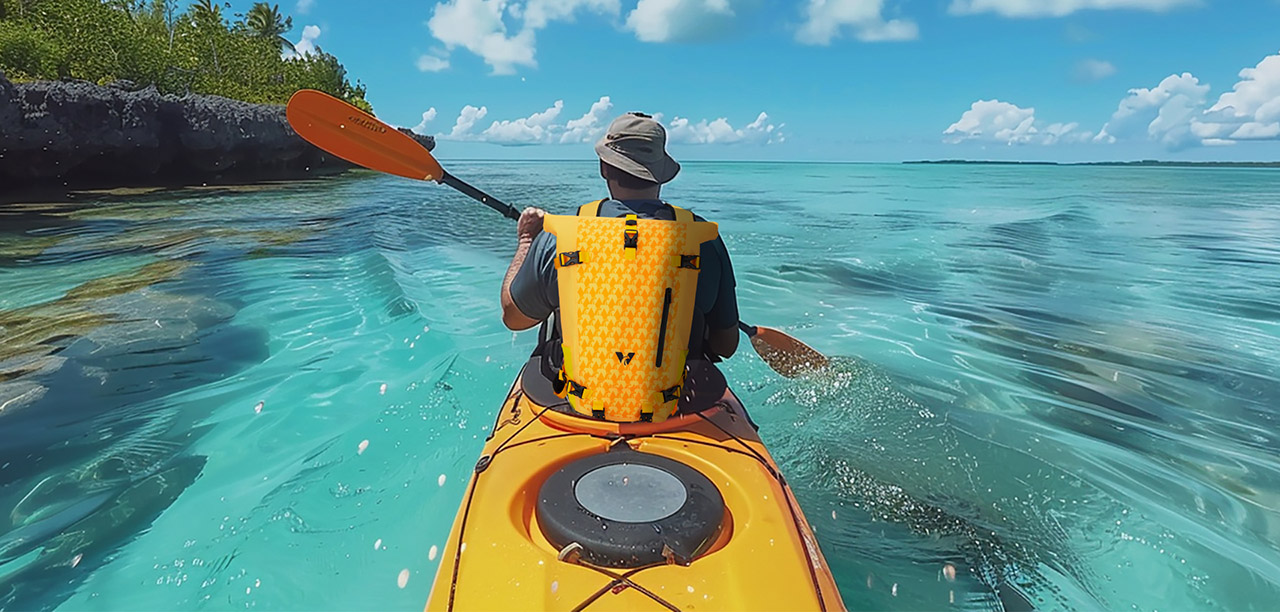
Marine environments are unforgiving. Saltwater, continuous UV exposure, and intense hydraulic pressure quickly expose the flaws in cheap gear. For outdoor brands, e-commerce leaders, and marine equipment managers, sourcing private label marine dry bags from standard off-the-shelf catalogs often leads to product returns and damaged reputations.
A failed seam miles off the coast ruins gear and shatters consumer trust. Manufacturing a premium dry bag requires strict technical oversight, shifting the focus from cosmetic design to robust baseline specifications. Established original equipment manufacturers like Weierken build technical marine dry packs that withstand heavy offshore abuse.
This technical guide outlines the precise engineering specifications required for your product development tech pack. Hand these parameters directly to your contract manufacturer to guarantee high-performance production runs.
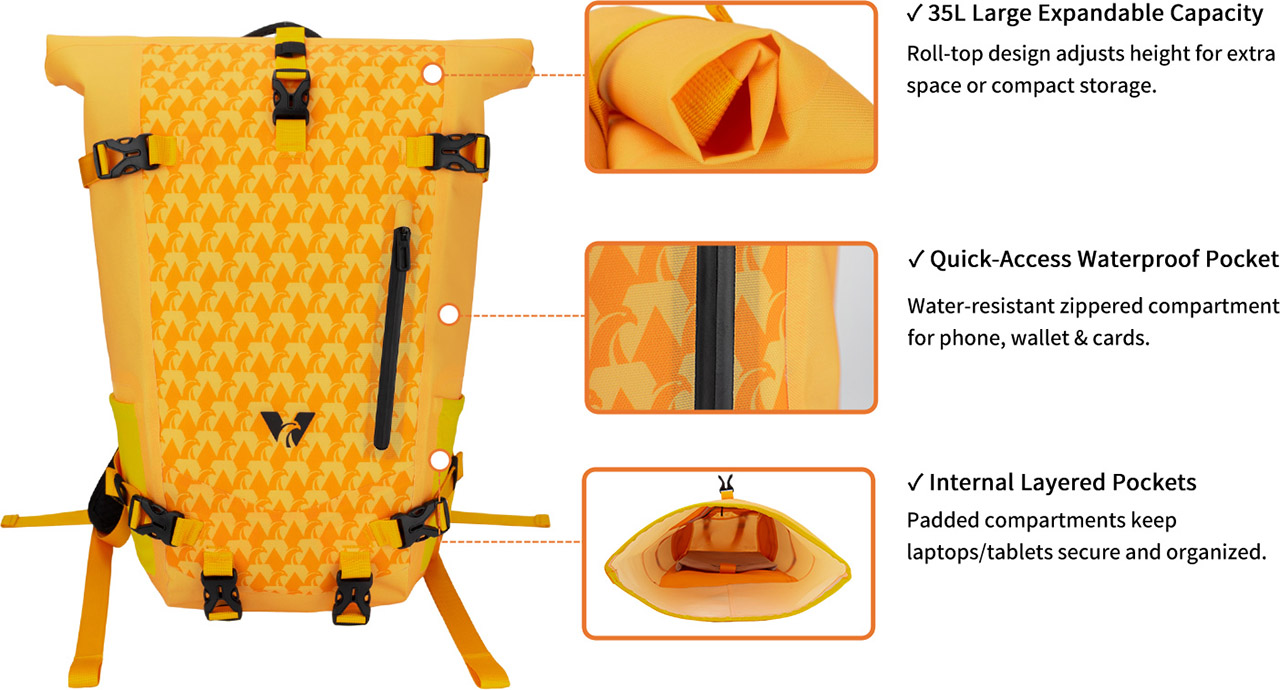
1. The "Seamless" Core: Seam Welding Technologies for Marine Environments
Traditional sewing punches thousands of microscopic holes through a fabric. Even with glued seam tape, thermal cycling and salt corrosion will break those bonds down within a single season. True marine reliability requires seamless molecular fusion.
RF (Radio Frequency) Welding vs. Traditional Sewing
Radio frequency (RF) welding—also called high-frequency (HF) dielectric sealing—is non-negotiable for marine-grade bags. Instead of using external heat to melt the outside of a textile, RF welding uses electromagnetic energy to agitate the molecules within the polymer coating.
- Molecular Fusion: The coatings on both fabric layers fuse into a single, uniform bond.
- Zero Needle Holes: Eliminates structural weak points and points of water ingress.
- Mechanical Stress Distribution: Pulling forces disperse evenly across the weld face rather than concentrating on thread stitches.
Seam Overlap Width & Burst Strength
Skinny seam margins invite mechanical peel failure under internal air pressure. Your tech pack must dictate strict geometric parameters for every critical weld line:
- Minimum Overlap: The weld track width must measure at least 15mm to 20mm on main cylindrical seams and bottom panels.
- Burst Pressure Standard: Completed bags must withstand a sustained internal pneumatic pressure of ≥ 3.0 to 5.0 PSI for 3 minutes without seam elongation or micro-tearing.
- Tooling Accuracy: Welded corner junctions must incorporate radiused edges (minimum 3mm radius) to prevent stress risers that crack under heavy loads.
Anti-Delamination Standards
Salt crystals penetrate microscopic fissures in poorly laminated materials, expanding as they dry to push layers apart. Prevent delamination by mandating base fabrics with a peel strength rating of no less than 80 N/5cm (tested under ISO 2411 standards). Specify that raw roll stock undergoes continuous corona treatment before coating to ensure permanent adhesion between the fabric base and outer barrier film.
2. Material Specifications: Choosing the Right Marine-Grade Substrate
Your primary fabric defines weight, flexibility, puncture resistance, and environmental footprint. Selecting the right substrate balances production costs against performance targets.
TPU-Coated Nylon vs. Heavy-Duty PVC
Never leave the raw material choice ambiguous. Pick the substrate that matches your market positioning:
- TPU-Coated 420D / 840D Nylon: The choice for premium expedition packs. Thermoplastic Polyurethane (TPU) stays flexible down to -30°C, offers exceptional abrasion resistance per gram, and resists microbial hydrolysis. It provides an upscale, matte appearance and soft hand-feel.
- 500D / 1000D PVC Tarpaulin: The classic utility build. Heavy polyester scrim laminated with Polyvinyl Chloride (PVC) delivers exceptional puncture resistance at a lower price point. It works well for commercial fishing gear, dive bags, and high-wear river rafting equipment where weight is not an issue.
UV Resistance & Anti-Fading
Direct ocean sunlight degrades polymers rapidly through photo-oxidation, turning flexible PVC chalky and brittle while yellowing clear TPU windows. Insist on the following criteria:
- QUV Accelerated Weathering: The outer skin must endure 500 hours of continuous ASTM G154 cycle testing with zero visible surface cracking.
- Colorfastness: Pigments must rate at Grade 4.5 or higher on the blue wool scale to prevent coastal fading.
- UV Stabilizers: Compound your resins with Hindered Amine Light Stabilizers (HALS) at a minimum concentration of 0.3% by weight.
Saltwater & Mildew Resistance
Stowing a damp bag in a warm boat hatch creates an ideal breeding ground for fungus and chemical breakdown. Your material tech pack should require an anti-mildew additive passing ASTM G21 standards (zero trace growth after 28 days of fungal incubation). Additionally, specify that internal and external surface coatings show no bubbling, tackiness, or softening after 96 hours of continuous 5% salt spray exposure per ASTM B117 testing.
3. Waterproofing & Closure Specs: Beyond the Standard Roll-Top
A dry bag is only as dependable as its closure mechanism. Water follows the path of least resistance, which is almost always the bag opening.
Roll-Top Closure Requirements
The roll-top remains the classic system for surface watersports, but cheap builds leak because their sealing strips lack sufficient rigidity. Specify the following details:
- Stiffener Material: Use reinforced Hypalon strips or high-resilience EVA stiffeners (minimum 0.8mm to 1.2mm thickness) sewn or welded inside the rim.
- Memory Retention: The stiffener must snap flat after release rather than retaining a curled shape, ensuring even compression along the entire rim.
- 3-Roll Protocol: The fabric throat length must accommodate three full rolls while leaving enough strap clearance to buckle without stressing the top welded seams.
Airtight / Watertight Zippers (For Submersible Bags)
If your brand targets cold-water diving, ocean paddling, or technical boat expeditions, build a submersible variant using a true pressure-tight zipper rather than a basic splash-resistant track.
- Tooth Engagement: Use vulcanized rubber or TPU-extruded toothless zippers capable of holding air pressure.
- Lateral Cross-Tension: The closed zipper track must withstand cross-directional tension of ≥ 250 N without bursting open.
- Operating Pressure: Specify an operational closure rating of ≥ 30 kPa (4.35 PSI) to prevent water intrusion even when fully submerged under continuous mechanical agitation.
Defining IPX Ratings for Marine Use
Avoid marketing ambiguity by holding your production lots to verified Ingress Protection (IPX) ratings:
- IPX6 (Heavy Seas & Powerful Water Jets): The bag withstands water projected at 100 liters per minute through a 12.5mm nozzle from any angle for 3 minutes. This is the minimum baseline for general marine dry sacks.
- IPX7 (Temporary Immersion): Zero water entry when submerged to a depth of 1 meter for 30 minutes. This level requires airtight zippers or specialized dual-closure roll designs.
- IPX8 (Continuous Submersion): Bag integrity holds at depths exceeding 1 meter under parameters negotiated directly between your engineering team and your factory (e.g., 3 meters for 60 minutes).
4. Private Label Customization: Durability Meets Brand Aesthetics
Custom marine gear must look professional without sacrificing mechanical strength. Hardware and graphics need the same corrosion resistance as your primary fabric.
Salt-Proof Logo Printing Technologies
Standard solvent silkscreen inks peel and flake after exposure to saltwater and friction. Upgrade your branding methods with more durable approaches:
- High-Frequency Debossing: Presses your logo directly into the fabric using an engraved RF die. This process creates clean, raised dimensions that will never peel or fade over time.
- Two-Part Polyurethane Inks: If screen printing is required, demand two-component UV-cured inks formulated specifically for TPU or PVC films. They chemically bond to the coating rather than simply sitting on top of it.
- Laser-Cut Hypalon Badges: Bond a contrasting Hypalon logo patch directly onto the bag body using thermal welding for an upscale, technical look.
Marine-Grade Hardware Options
Hardware failures leave a dry bag unusable. Eliminate cheap, brittle plastics and low-grade metals from your bill of materials (BOM):
- Polyacetal Buckles: Specify POM (Polyoxymethylene) hardware from established suppliers such as Duraflex or Woojin. POM retains structural impact strength down to sub-zero temperatures.
- Metallic Trims: Every D-ring, carabiner, and swivel snap hook must be manufactured from passivated 316 Marine-Grade Stainless Steel or anodized 6061-T6 aluminum. Do not use plated zinc alloys, as they corrode within weeks of ocean use.
- Stress Reinforcement: Back every anchor point, D-ring patch, and carry handle with an extra welded 0.5mm TPU or PVC backing plate to spread out tensile strain.
Custom Packaging & Barcoding
Protect products during transit to ensure they arrive retail-ready for warehouse handling or direct consumer delivery:
- Frosted EVA Zipper Bags: Package bags in recyclable frosted EVA pouches with ventilation holes instead of disposable polybags. EVA resists humidity and prevents plasticizer migration that makes PVC sticky during sea freight.
- Moisture Control: Include a minimum 5-gram clay desiccant pack inside every rolled unit to prevent internal mold during ocean transit.
- GS1-Compliant Labeling: Affix scannable, waterproof
thermal-transfer SKU barcodes directly to hangtags and external cartons for
hassle-free inventory intake.
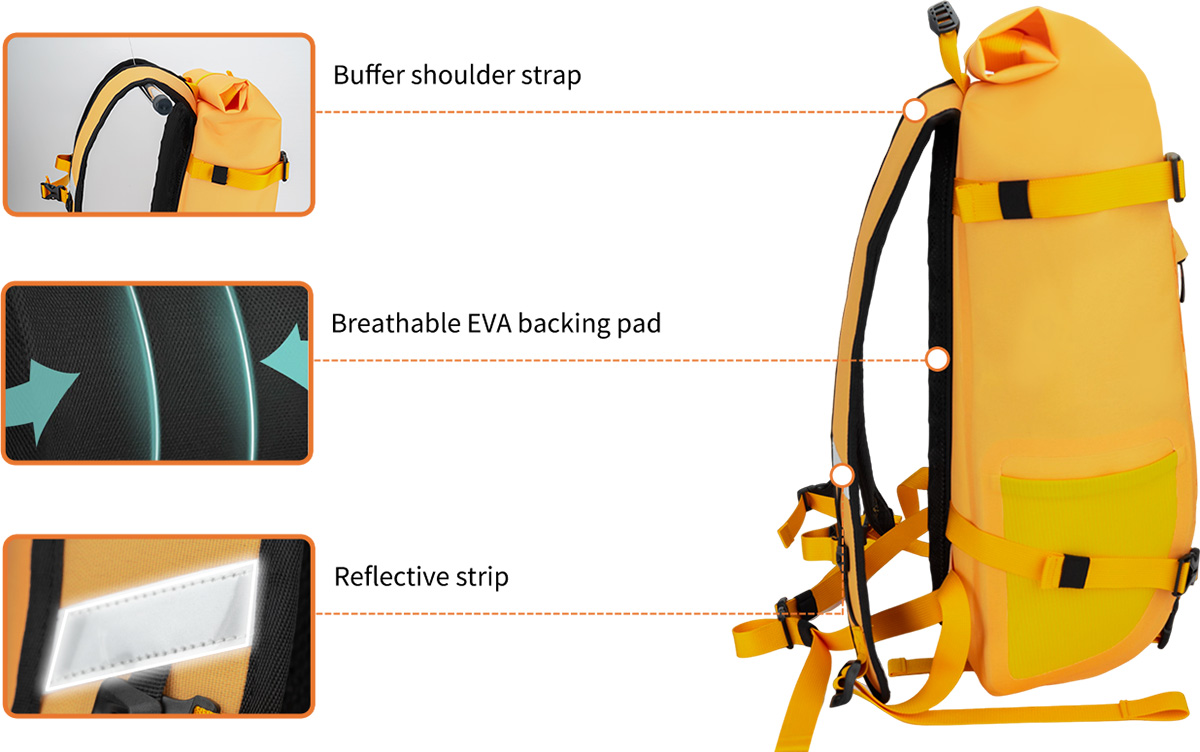
5. Mandatory QA & Lab Testing Criteria Before Shipment
Never rely on spot-checks at the end of a production run. Quality control must happen on the factory floor across the entire manufacturing cycle. Partners like Weierken run these essential tests before packing finished goods.
100% In-Line Inflation Leak Test
Random AQL inspections catch systemic flaws, but they miss individual welding slips. Require a 100% in-line pressure test for all airtight and roll-top marine dry bags:
- Inflation: Inflate the dry bag through a sealed nozzle or rolled neck to 2.0 PSI.
- Resting Period: Leave the bag pressurized on a flat inspection table for 30 minutes.
- Pressure Verification: Check the interior pressure with a digital gauge. Any drop beyond 5% signals micro-pinholes or poor seam closure, requiring immediate quarantine.
Hydrostatic Head Test
Test raw fabrics under static water pressure before the factory cuts panels, following ISO 811 procedures. Marine-grade performance requires an initial water column rating of at least 15,000mm to 20,000mm. This margin ensures the fabric remains totally waterproof even when heavily abraded or stretched under load.
Tensile & Tear Strength Test
Heavy contents like wet wetsuits, diving weights, or survival gear put high stress on carry points. Test structural elements on a universal tensile testing machine:
- Grab Handles: Must withstand a static pull force of ≥ 400 N (approx. 40 kg) for 60 seconds without seam displacement.
- Shoulder Strap Attachment D-Rings: Must resist ≥ 300 N of cyclic dynamic shock loading.
- Tear Propagation: Base fabric must achieve a minimum tear resistance of 45 N per ASTM D2261 (tongue tear method).
Frequently Asked Questions
Q1: What is the ideal MOQ for custom-colored private label marine dry
bags?
A1: Customizing Pantone colors for standard 500D PVC tarpaulin
typically requires an MOQ of 500 to 1,000 units. For specialized TPU-coated
nylon fabrics, raw material dye houses usually mandate minimum batch runs of
1,500 to 2,000 meters, which equates to roughly 1,000 to 2,500 finished bags
depending on their volume.
Q2: Why should our brand choose TPU over PVC despite the higher
material cost?
A2: TPU is significantly lighter, remains soft in
freezing climates, does not crack with repeated creasing, and is free of toxic
phthalate plasticizers. It also resists microbial degradation and gives your
brand a premium profile, allowing for higher retail price points and better
margins.
Q3: How many rolls are required for an IPX6-rated roll-top dry
bag?
A3: An IPX6 rating requires a minimum of three tight, uniform
downward rolls before snapping the buckles together. Rolling four times provides
extra protection against high-pressure washdowns or rogue boat spray.
Q4: Can we use standard screen printing inks for custom
branding?
A4: No. Standard screen inks adhere poorly to slick marine
coatings and peel after exposure to saltwater and friction. Demand two-part
polyurethane-based inks cured under heat, or opt for high-frequency debossed
logos that never flake off.
Q5: What is the typical production lead time for an OEM/ODM marine
dry bag run?
A5: Rapid prototyping and tooling adjustments usually
take 2 to 3 weeks. Once the sample is approved, bulk production takes 35 to 45
days, followed by final pressure testing, packaging, and freight handoff.
Conclusion & Sourcing Action Plan
Building high-performance private label marine dry bags takes more than stamping a logo onto an off-the-shelf catalog bag. It requires high-frequency welding, marine-grade substrates, salt-proof hardware, and strict in-line pressure tests. When you define these specifications in your initial tech pack, you protect your brand against field failures and win the loyalty of demanding watermen worldwide.
Do not leave your product quality to chance. Talk to our engineering team at Weierken to turn these technical specifications into production-ready gear. Request a quote and custom sample pack for your next marine gear run today.