

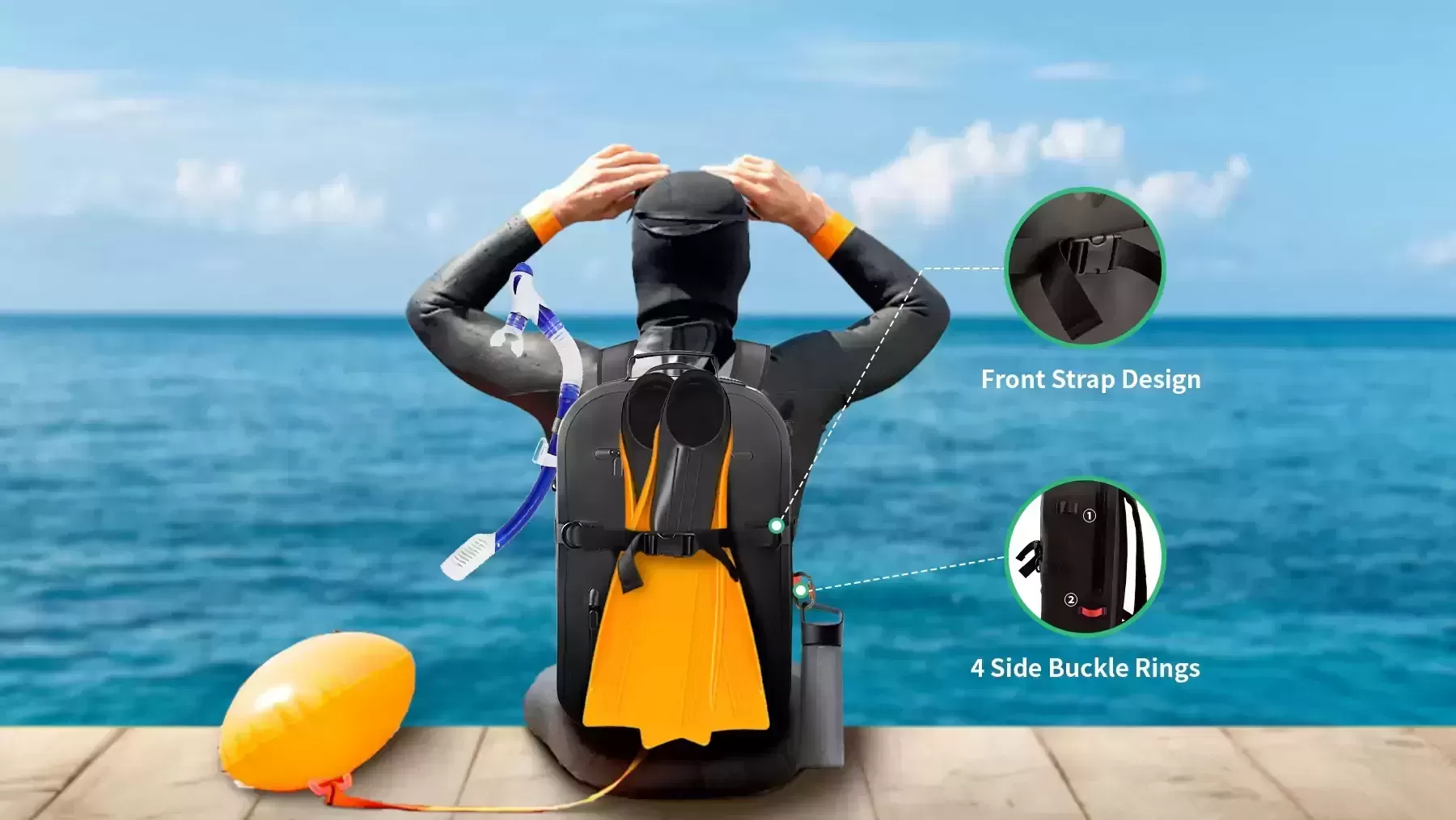
The global marine leisure industry is expanding rapidly. With more luxury yachts and charter vessels hitting the water, the demand for premium, durable gear has risen. Brand managers and marine retail buyers face a significant challenge: finding accessories that match the luxury and performance of modern vessels.
Standard dry bags often fail in harsh marine environments. Saltwater spray, intense UV radiation, and constant moisture cause cheap materials to crack, leak, and fade. To protect expensive electronics, personal gear, and apparel, sourcing from specialized yacht bag manufacturers is no longer optional—it is a business necessity.
Partners like weierken work with global brands to develop technical bags that endure these challenging conditions. Choosing the right manufacturer requires a deep understanding of marine material science and production techniques. This guide outlines how to evaluate potential partners to ensure your brand delivers reliable gear.
1. Waterproof Tech Standards: How to Evaluate Material &
Construction
To identify capable yacht bag manufacturers, you must first understand the technical specifications that separate basic consumer dry bags from professional-grade marine luggage. A high-quality bag must survive continuous exposure to salt, sun, and water pressure.
Material Science: TPU vs. PVC
The choice of base fabric determines how long a bag will last on a yacht deck. While PVC is a common material for entry-level dry bags, high-end marine brands prefer Thermoplastic Polyurethane (TPU). Here is a comparison of their performance traits:
Environmental Compliance: TPU is recyclable and meets strict REACH and RoHS standards, whereas traditional PVC often contains harmful phthalates.
Temperature Resistance: TPU remains flexible in freezing temperatures, while PVC tends to stiffen and crack in cold climates.
Abrasion and Tear Resistance: TPU offers superior resistance to puncture and tear, making it ideal for the rough surfaces of a boat deck.
UV Stability: High-quality TPU formulations resist yellowing and degradation caused by long hours of direct sunlight.
When sourcing heavy-duty marine luggage, ask prospective suppliers if they use polyether-based or polyester-based TPU. Polyether-based TPU is highly recommended for marine environments due to its excellent resistance to hydrolysis (water-induced breakdown).
Seam Construction: The Power of RF Wlding
Stitched seams, even when taped, are vulnerable points of failure. Under constant physical stress, needle holes can stretch, allowing water to seep in. Professional manufacturers rely on advanced bonding technologies rather than traditional sewing machines.
Using high-frequency welding TPU (often called RF welding) allows manufacturers to fuse the materials at a molecular level. This process uses high-frequency electromagnetic energy to heat and bond the polymer layers. The resulting seam is actually stronger than the surrounding material, ensuring the bag remains completely airtight and watertight under pressure.
| Feature | Stitched & Taped Seams | High-Frequency (RF) Welded Seams |
|---|---|---|
| Waterproof Reliability | Medium (Tapes can peel over time) | High (100% molecular bond) |
| Tensile Strength | Moderate (Dependent on thread strength) | Excellent (Stronger than the fabric itself) |
| Lifespan in Saltwater | Short to Medium (Salt degrades adhesive) | Long (Impervious to salt corrosion) |
Closure Systems and Water-Tightness
A bag is only as dry as its opening. Yacht bags require closure systems that match their intended use. For gear bags exposed to direct rain or deck spray, a roll-top closure system is reliable and simple to operate.
For submersible protection, look for manufacturers that can integrate airtight and watertight zippers. These zippers feature rubberized teeth that seal out both water and air pressure. Ensure your supplier tests these closures using inflation or immersion testing to guarantee performance before shipment.
2. B2B Buyer Criteria: Auditing Yor Manufacturer
Finding a factory with the right machinery is only the first step. To secure a reliable supply chain, B2B buyers must conduct a thorough waterproof bag factory audit to verify technical capabilities, quality control processes, and capacity management.
R&D and Customization Capabilities
Top-tier yacht bag manufacturers should offer more than basic templates. Your brand may require custom mounting hardware to secure bags to yacht guardrails, or specialized interior compartments for marine electronics. A capable OEM yacht bag supplier should provide:
3D Prototyping: The ability to convert concept drawings into digital 3D models before physical sampling.
Material Sourcing: Access to specialized marine-grade hardware, such as rust-free Duraflex buckles and YKK water-resistant zippers.
Ergonomic Design: Knowledge of how weight distributes when carrying heavy gear across wet, unstable decks.
For example, weierken offers end-to-end design support, helping clients balance aesthetic luxury with the rugged utility required for maritime environments.
Quality Control and In-House Testing Equipment
Do not rely solely on third-party test certificates. A reliable manufacturing partner must have a dedicated quality control lab on the factory floor. During your audit, check if the factory regularly uses the following testing equipment:
Hydrostatic Pressure Testers: These machines measure the fabric and seam resistance to water pressure, ensuring they meet IPX7 or IPX8 standards. Salt Spray Chambers are also critical; they simulate months of ocean exposure to test metal and plastic hardware for corrosion. Additionally, Tensile Strength Testers measure the maximum load limit of handles and shoulder straps, while UV Aging Chambers expose materials to concentrated ultraviolet light to verify colorfastness and prevent premature cracking.
Managing Production Capacity and MOQs
High-end marine gear is a niche market. Buyers often face high Minimum Order Quantities (MOQs) when dealing with large-scale factories. When interviewing potential partners, discuss how they handle production scheduling.
Look for manufacturers that can balance small-batch custom production with scalable volume. This flexibility allows your brand to test new designs in the market without overcommitting capital to excess inventory.
3. Sustainability in Marine Gear Production
The yachting community is deeply connected to ocean preservation. Today’s consumers expect brands to minimize their environmental footprint. Therefore, sourcing eco-friendly custom waterproof bags has transitioned from a marketing trend to a core business requirement.
Many leading manufacturers now offer sustainable material alternatives. These include recycled TPU made from post-consumer plastics, such as water bottles, and biodegradable TPU formulations that break down safely over decades rather than centuries in landfills.
To verify these green claims, check for globally recognized certifications. The Global Recycled Standard (GRS) ensures the traceability of recycled content, while OEKO-TEX Standard 100 guarantees the product is free from harmful chemicals. Partnering with a factory that holds these credentials protects your brand's reputation and appeals directly to environmentally conscious yacht owners.
4. Streamlining the Sourcing Process
Sourcing technical gear requires structured communication. To help your purchasing team save time and avoid common manufacturing mistakes, use the following step-by-step approach when reaching out to yacht bag manufacturers:
Define Your Tech Specs: Create a detailed Tech Pack specifying dimensions, required IPX waterproof ratings, material thickness (e.g., 420D TPU or 600D TPU), and hardware types.
Request Initial Samples: Never place a bulk order without testing physical samples in real-world marine conditions. Use this phase to check seam quality and zipper smoothness.
Conduct a Factory Audit: If travel is possible, visit the facility to review their assembly line. Alternatively, request a live video tour and copies of their ISO 9001 and BSCI audit reports.
Establish QC Milestones: Agree on inspection criteria for raw materials, mid-production runs, and pre-shipment finished goods.
At weierken, we emphasize clear documentation and transparent communication from the initial concept phase through to final logistics, ensuring your production run meets your exact specifications.
Conclusion: Build a Reliable Marine Partnership
Selecting the right manufacturing partner is a long-term investment. High-performance yachts require accessories that match their engineering and luxury. By focusing on advanced materials like high-frequency welding TPU, rigorous testing standards, and sustainable practices, you ensure your brand delivers reliable marine grade dry bags.
We invite you to partner with a manufacturer that understands these unique marine challenges. Contact weierken today to discuss your next custom project, request a product sample, or receive a comprehensive manufacturing estimate.
Ready to Develop Your Marine Bag Line?
Work with an experienced OEM yacht bag supplier to bring your designs to life. Our team provides technical expertise, quality assurance, and sustainable manufacturing options.
Send An InquiryFrequently Asked Questions
Q1: What is the minimum water resistance rating required for yacht bags?
For general deck use where bags are exposed to rain and spray, an IPX6 rating is sufficient. However, if the bag might be submerged or used on open tender boats, you should source bags with an IPX7 or IPX8 rating. These ratings require high-frequency welded seams and airtight zipper closures.
Q2: Why is TPU preferred over PVC for premium marine dry bags?
TPU is highly resistant to saltwater hydrolysis, UV radiation, and extreme cold. It does not crack or fade as quickly as PVC. Additionally, TPU is more environmentally friendly, meeting REACH and RoHS standards, which is a key selling point for modern consumers.
Q3: Can yacht bag manufacturers customize bag attachment systems?
Yes. A professional OEM yacht bag supplier can design custom D-rings, heavy-duty suction mounts, hook-and-loop straps, or specialized rail clips. These attachments allow crew members and guests to secure the bags safely on moving vessels.
Q4: How can I verify that a factory's waterproof claims are genuine?
During a waterproof bag factory audit, you should ask to see their quality control laboratory. A qualified manufacturer will have specialized testing equipment, including hydrostatic head testers, air inflation test stations, and immersion tanks, to verify water resistance on-site.
Q5: What are the typical MOQs for custom yacht bags?
Minimum Order Quantities vary depending on the complexity of the design and material availability. Typically, custom welded TPU bags require an MOQ of 500 to 1,000 pieces per design, as the specialized tooling and welding molds must be set up specifically for your product shape.
Q6: Are eco-friendly materials durable enough for marine environments?
Yes. Recycled TPU (RPET-TPU) and biodegradable TPU formulations undergo the same rigorous aging and tensile strength tests as virgin materials. They offer equivalent performance in terms of waterproof protection, UV resistance, and seam strength when processed by experienced manufacturers.