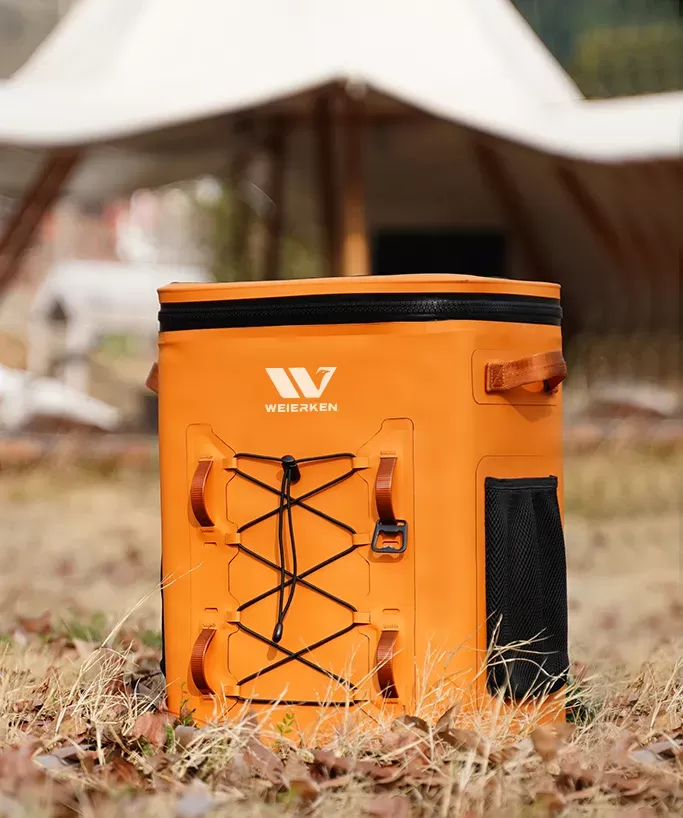

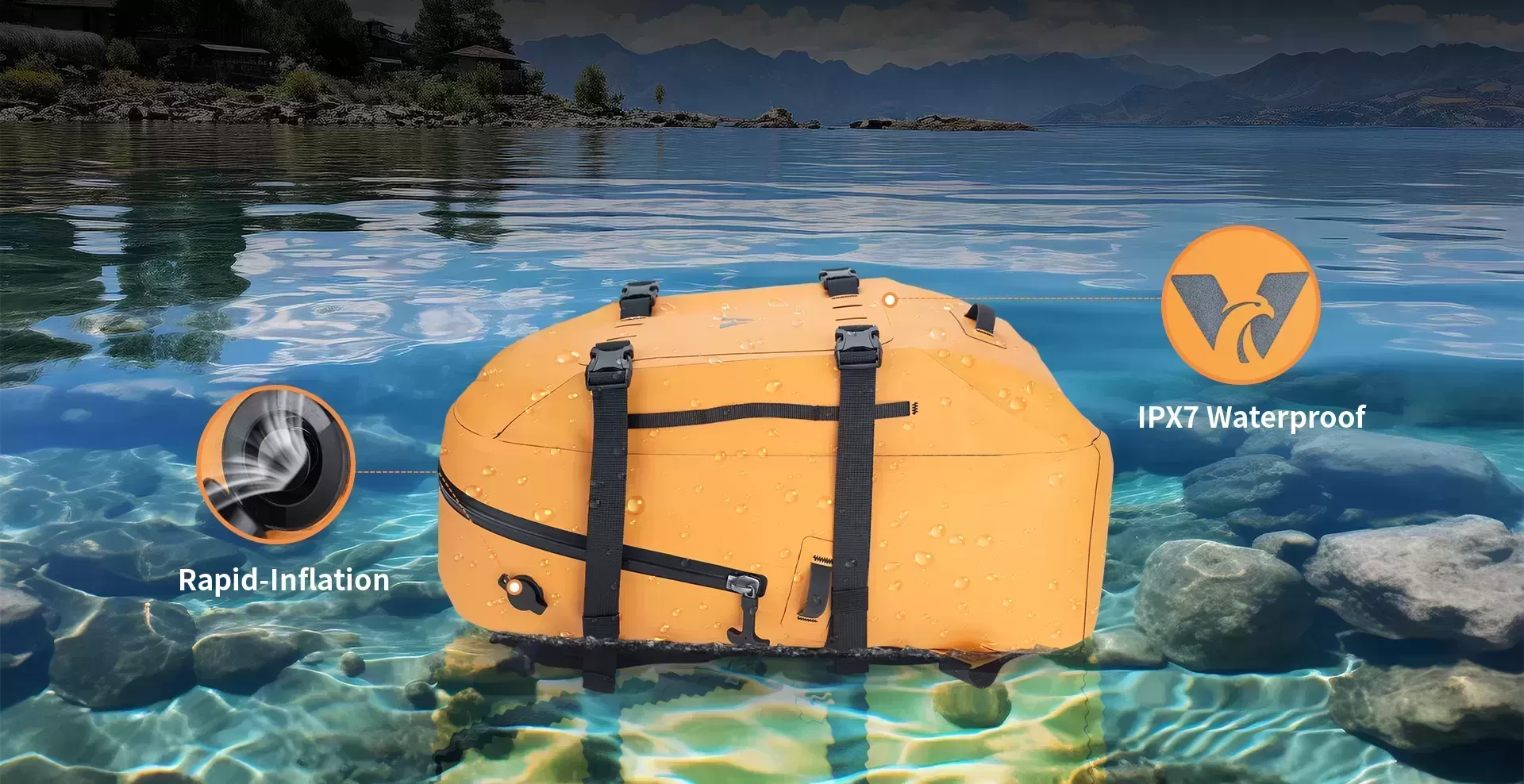
Outdoor brands face a difficult engineering challenge when developing amphibious gear. Standard waterproof bags protect contents from light rain, but aquatic adventures demand far more. Equipment must survive sudden submersion, rough rapids, and deep water while keeping contents dry and floating on the surface.
A true floatable backpack must balance two conflicting goals. It must provide heavy-duty airtight buoyancy while maintaining long-term carrying comfort. Achieving this balance requires specialized manufacturing techniques that standard bag factories cannot easily replicate.
For product managers and outdoor brands, choosing the right production partner is critical. At weierken, we believe that manufacturing these specialized bags requires high-precision engineering rather than simple sewing. Here are the five critical features a reliable floatable backpack maker must deliver to ensure your product succeeds in the market.
1. High-Frequency / Ultrasonic Welded Seams
Traditional sewing methods rely on needles and threads, which puncture the fabric and create thousands of micro-holes. Even when these seams are covered with waterproof tape, they tend to degrade under tension, heat, and moisture, leading to eventual leaks.
A reliable high-frequency welded dry bag supplier avoids traditional stitching entirely on the main body of the bag. Instead, they use advanced welding technologies to fuse the materials together at the molecular level.
High-Frequency (HF) Welding: This process uses electromagnetic energy to agitate the molecules of the polymer materials, melting and fusing them under pressure.
Ultrasonic Welding: Acoustic vibrations create localized heat to bond thin technical fabrics together without altering their chemical properties.
Structural Integrity: Welded seams create a continuous barrier that matches or exceeds the tensile strength of the base material itself.
When selecting a manufacturer, confirm they possess dedicated HF welding machinery. A factory with specialized welding jigs can guarantee clean, consistent seams that will not peel or delaminate during heavy outdoor use.
2. Verified IPX7/IPX8 Ingress Protection
In the outdoor industry, generic terms like "waterproof" can be misleading. Professional outdoor brands require standardized, quantifiable performance ratings. A quality floatable backpack maker must design, build, and test bags to meet international IP (Ingress Protection) standards.
The standard benchmark for floatable bags is IPX7, which requires the backpack to withstand complete submersion in 1 meter of water for 30 minutes without any leakage. Some specialized marine applications may even require IPX8 ratings for deeper or longer submersions.
To deliver this level of performance consistently, a factory must implement strict QC procedures:
Pressure Leakage Testing: Inflating the finished backpack with air and monitoring pressure drop over a set period.
Submersion Tanks: Sinking the inflated bag in a test tank to visually inspect for escaping air bubbles.
Traceable QC Reports: Providing documented IPX7 waterproof rating testing data for every production batch before shipment.
A trustworthy manufacturer should operate an in-house laboratory equipped with these testing devices, ensuring that your batch of backpacks meets the claimed ratings before they are packaged.
3. Airtight Closures & Buoyancy Control
Buoyancy is a simple physical equation: the bag must displace more water weight than its own total weight. To achieve this, the backpack must trap a reliable volume of air inside its main compartment. The closures and valves must prevent this air from escaping under pressure.
A reputable TPU floating backpack OEM like weierken focuses on two primary closure mechanisms to secure this air volume:
Airtight Zippers: Specialized zippers with polymer teeth and sealing lips that physically block air and water from passing through.
Reinforced Roll-Top Closures: Utilizing stiffening bands along the collar to ensure a tight, wrinkle-free seal when rolled three to four times.
Two-Way Air Valves: Integrated valves that allow users to blow air into the bag to increase buoyancy, or release excess air to compress the pack for travel.
These components must be welded securely into the bag body. Poorly integrated valves are common failure points, so your manufacturing partner must have precise tooling to weld rigid plastic components onto flexible fabrics.
4. Advanced Eco-Friendly & Weather-Resistant Materials
Marine environments expose gear to harsh conditions, including intense UV radiation, saltwater corrosion, and extreme temperature fluctuations. Traditional PVC materials are cheap but degrade quickly, crack in cold weather, and raise environmental concerns due to toxic plasticizers.
An experienced heavy-duty outdoor gear factory will steer brands toward modern, high-performance materials like TPU (Thermoplastic Polyurethane).
TPU Laminates: Highly resistant to abrasions, punctures, and tears while remaining flexible in sub-zero temperatures.
Hydrolysis Resistance: TPU does not break down or become sticky when exposed to water for extended periods, unlike lower-grade PU coatings.
Eco-Friendly Profiles: TPU is recyclable and biodegradable over time, aligning your brand with modern sustainability expectations.
Salt-Resistant Hardware: All buckles, clips, and D-rings must be made of UV-stabilized acetal or corrosion-resistant metals to withstand marine environments.
Your manufacturer should provide material certification sheets (such as REACH or RoHS) to verify the safety, origin, and technical specifications of the fabrics they use.
5. Ergonomic, Quick-Drying Harness Systems
A backpack can be completely airtight, but if the shoulder straps absorb water like a sponge, it fails as an amphibious product. Waterlogged straps add unnecessary weight, cause skin chafing, and develop mold during storage.
A reliable floatable backpack maker designs harness systems that repel water while offering proper weight distribution for long-distance hikes.
Hydrophobic Foams: Utilizing closed-cell EVA foam that does not absorb water, keeping the straps lightweight and buoyant.
3D Spacer Mesh and Drainage Channels: Designing back panels that allow water to drain away rapidly when transitioning from water to land.
Load Distribution: Incorporating sternum straps, padded hip belts, and load lifters to keep heavy loads stable on uneven terrain.
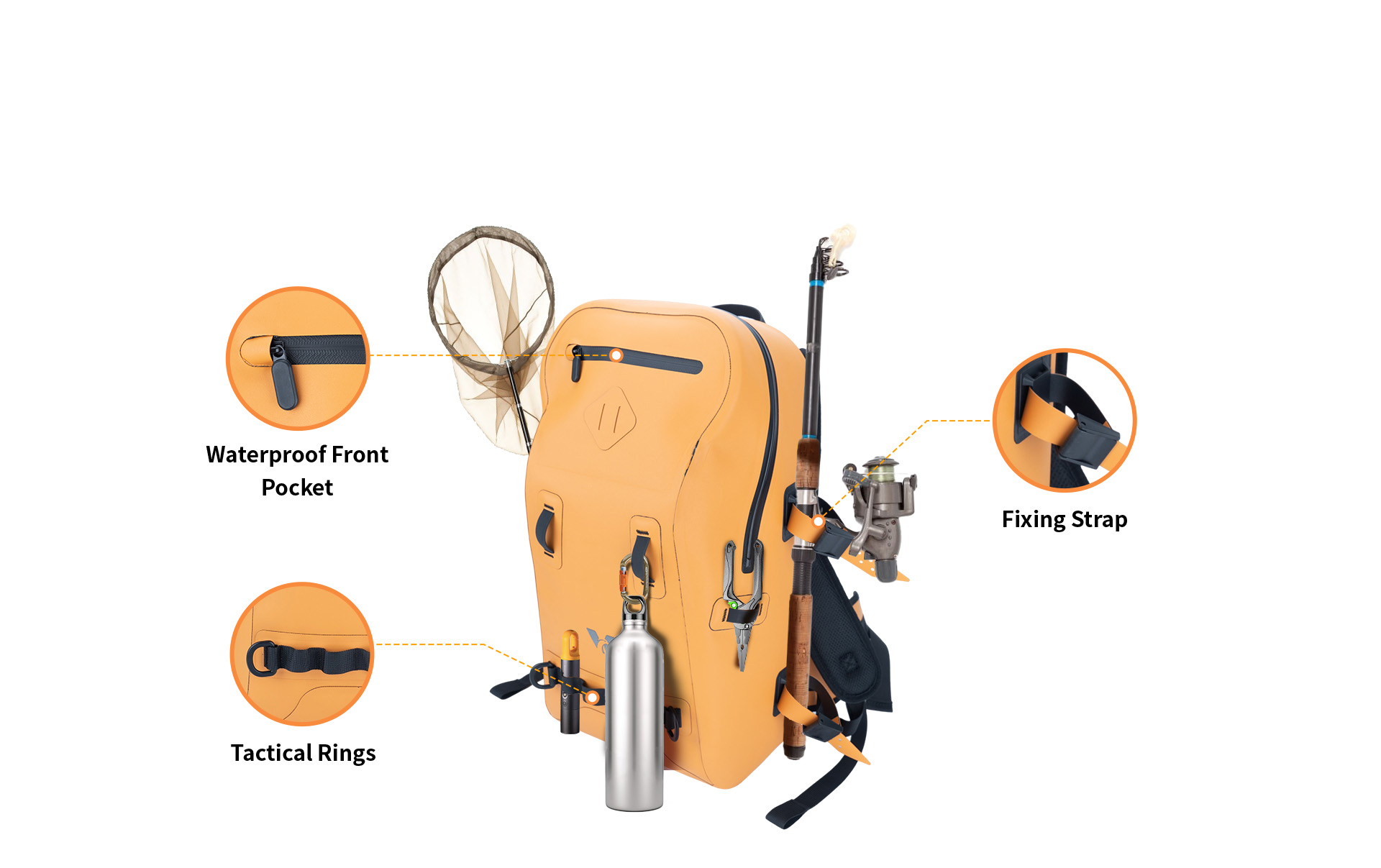
An experienced supplier understands how to attach these heavy-duty harness systems to a fully welded bag body without compromising the airtight compartment, often using welded anchor patches to distribute the pulling force.
Partnering with an Experienced Manufacturer
Developing a high-performance floatable backpack requires a deep understanding of materials, specialized machinery, and strict quality control. From initial design to mass production, every step must be handled with precision to ensure field reliability.
At weierken, we work closely with our partners to turn technical concepts into durable, market-ready outdoor gear. Our team provides comprehensive Design for Manufacturing (DFM) support, helping you optimize material choices, seam layouts, and valve configurations to match your target budget and performance standards.
By focusing on verified welding techniques, strict quality control, and robust material sourcing, we help brands deliver outdoor equipment that customers can trust in challenging conditions.
Frequently Asked Questions
What is the difference between waterproof and airtight in backpack manufacturing?
Waterproof bags resist water penetration from rain, splashes, or quick submersions, often using roll-top closures. Airtight bags prevent air from escaping even under pressure. To float reliably under heavy loads, a backpack needs airtight closures and welded seams that seal air inside the chamber.
Why is TPU preferred over PVC for floatable backpacks?
TPU is more environmentally friendly, lighter, and offers superior resistance to UV rays and saltwater. It also retains its flexibility in extreme cold, whereas PVC tends to stiffen and crack over time when exposed to low temperatures and sun.
How does a manufacturer test the buoyancy of a batch?
A factory uses air inflation tests, where the bag is filled to a specific pressure and monitored for drops over 12 to 24 hours. They also perform physical submersion tests in water tanks to check for any visible air bubbles escaping from seams, zippers, or valves.
Can we customize the buoyancy valves and zipper types?
Yes. A specialized manufacturer can source and integrate various styles of two-way air valves, relief valves, or airtight zippers depending on whether your target market is casual water sports, professional diving, or search and rescue operations.
What are the typical minimum order quantities (MOQs) for these bags?
Because high-frequency welding requires custom molds and specialized setup times for each design, MOQs for welded airtight bags are generally higher than standard sewn bags. MOQs typically range from 500 to 1,000 units per style, depending on the complexity of the design.
How do you ensure the welded straps do not rip off under heavy loads?
We use reinforced mounting patches that are welded directly to the bag's main body. The shoulder straps and carry handles are then stitched onto these heavy-duty patches. This distributes the stress across a larger surface area without puncturing the inner waterproof chamber.
Submit Your Project Details Today
Are you looking to develop or manufacture a reliable line of floatable backpacks? Our engineering and production teams are ready to help you optimize your design, select the right materials, and ensure IPX7-level performance. Please contact us today to discuss your specifications and request a detailed project quote.