

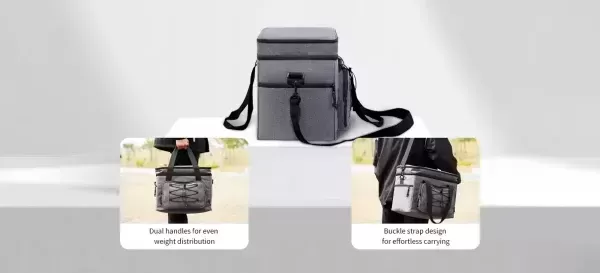
Insulated bags may look simple from the outside, but B2B buyers often run into costly performance failures. Issues like thermal degradation, split seams, and interior leaks occur frequently when manufacturing standards are loose. These quality issues directly harm retail brands and food delivery networks.
Evaluating a supplier based solely on a hand-made sample rarely reveals their true mass-production capabilities. Industrial procurement requires a structured auditing process. Buyers must analyze raw materials, mechanical tests, and compliance documentation to find a qualified partner.
Working with an established factory like weierken helps commercial buyers verify technical specifications before production begins. This article outlines five critical quality metrics for auditing a durable insulated bag maker to ensure consistent mass-production quality.
1. Thermal Retention Testing Standards & Quantitative Data
A professional factory does not rely on guesses to determine temperature control. They must supply real test data that proves how long their bags can hold specific temperatures under different conditions.
The Ice Retention Test Setup
Reliable manufacturers use environmental chambers to run standardized thermal testing. A typical test protocol involves:
Placing the insulated bag in a chamber set to a constant ambient temperature, such as 32°C (90°F).
Filling the bag with a standardized ratio of ice-to-volume (commonly 1:1 or 2:1).
Using digital temperature sensors to log internal temperatures over 12, 24, or 48 hours.
The resulting charts show exactly how long the interior stays within the safe food storage range of 0°C to 4°C (32°F to 40°F). This data-driven approach is essential for verifying insulated bag quality standards.
Insulation Core Properties and Thermal Conductivity
The type and density of the insulation core material determine its overall thermal conductivity. High-performing bags use dense insulation layers to block heat transfer:
High-Density EPE Foam: Usually ranges from 5mm to 10mm in thickness. It offers an excellent balance of structure, flexibility, and thermal resistance for most commercial orders.
NBR Closed-Cell Rubber Foam: Provides superior insulation performance and structural memory, making it ideal for high-end professional delivery gear.
2. Physical Resistance of Outer Shell Materials
The outer shell of a commercial-grade thermal bag must withstand daily friction, rough handling, and exposure to the elements. High-quality manufacturers use standardized textile tests to verify material durability.
Martindale Abrasion Testing
The Martindale test measures fabric wear resistance by rubbing the material against a standard abrasive under set pressure. For commercial delivery and outdoor applications, the outer fabric should meet clear thresholds:
Heavy-Duty Oxford Fabrics (900D/1680D): Should survive at least 20,000 cycles without tearing or severe pilling.
TPU-Coated Fabrics: Must resist surface peeling and maintain their water-resistant exterior coating after repeated abrasive contact.
Tensile and Tear Strength
A reliable custom cooler bag manufacturer tests physical limits using standards like ASTM D5034 (for grab breaking strength) and ASTM D2261 (for tongue tearing strength). These tests verify that fabrics will not rupture when loaded to maximum capacity.
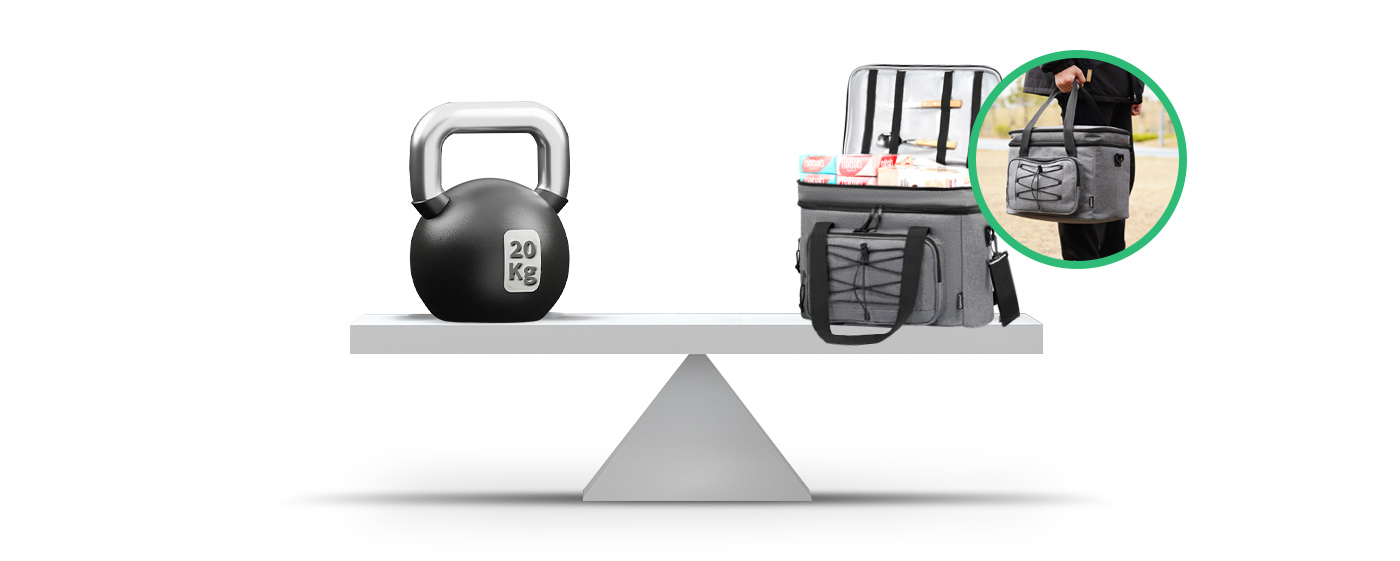
The connection points where the carry straps meet the bag body are especially vulnerable. Factories use industrial tensile testers to ensure these seams can support up to three times the bag's rated carrying capacity without tearing.
3. Seam Engineering and Leakproof Ratings
Traditional stitching is not sufficient for containing liquids or melted ice. Sewing needles leave thousands of tiny punctures in the lining, which inevitably lead to leaks over time.
To produce a reliable, leakproof thermal bag, manufacturers use advanced sealing methods instead of sewing the inner compartment:
RF Welding (Radio Frequency Welding): Uses high-frequency electromagnetic energy to fuse the edges of PEVA or TPU lining panels together. This creates a solid, seamless plastic joint that is completely waterproof.
Ultrasonic Heat-Sealing: Utilizes high-frequency acoustic vibrations to melt and bond thermoplastic layers, forming a clean, leak-free seal.
Working with an experienced factory like weierken ensures that interior linings are welded correctly. This prevents moisture from seeping into the foam core, where it can cause mold and ruin the bag's insulation performance.
Hardware and Closure Integrity
Zippers are often the first component to fail on a thermal bag. Quality manufacturers source durable zippers and perform reciprocating cycle tests. A reliable zipper mechanism should withstand at least 5,000 open-and-close cycles under tension without splitting.
Plastic buckles, adjustment slides, and D-rings must also resist cold-weather brittleness. Factories test these components down to -15°C (5°F) to ensure they will not crack when used in cold environments.
4. Food-Grade Safety and Environmental Certifications
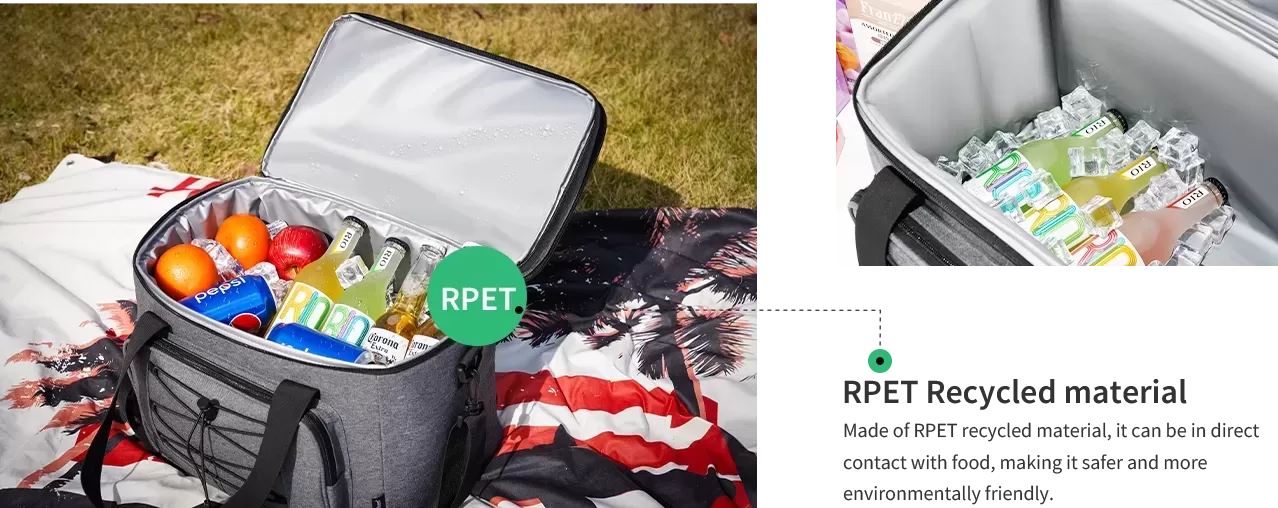
Because insulated bags are frequently used to carry food, drinks, or temperature-sensitive medical supplies, the interior lining must remain chemically stable and safe for direct contact.
A professional durable insulated bag maker must provide third-party verification that their materials are free from harmful chemical migration. Buyers should ask to see the following certifications:
FDA Food-Grade Testing: Ensures compliance with United States regulations for safe food-contact materials.
LFGB Compliance: Confirms the materials meet strict European food contact safety regulations, which have tight limits on chemical transfer.
REACH Standards: Verifies the absence of restricted hazardous substances within European Union markets.
BPA-Free & Phthalate-Free: Confirms that no harmful plasticizers or chemical additives can leach into food containers.
Sourcing from verified manufacturers protects your business from costly product recalls and compliance holds at international customs checkpoints.
5. Quality Control Systems and AQL Standards
The ultimate test of a factory is its ability to maintain consistent quality across large-volume production runs. A dependable manufacturer uses structured quality control systems to catch errors before cargo leaves the factory floor.
Acceptable Quality Limit (AQL) Standards
Qualified factories use the standardized AQL 2.5 / 4.0 system for outgoing shipments. This statistical inspection standard sets clear, objective rules for product acceptance:
Critical Defects (AQL 0): Zero tolerance for major issues like mold, chemical odors, or sharp metal parts.
Major Defects (AQL 1.5 or 2.5): Limits functional failures, such as broken zippers, failed seams, or incorrect dimensions.
Minor Defects (AQL 4.0): Sets acceptable limits for cosmetic issues, like slightly uneven stitching or loose threads, that do not affect how the bag functions.
Production Traceability
Factories operating under ISO 9001 or BSCI certifications use tracking codes for every batch of raw materials and finished goods. If a product fails in the field, this traceability system allows the factory to pinpoint the exact material roll or production shift responsible, making it easier to resolve issues quickly.
Vetting a durable insulated bag maker requires looking beyond competitive pricing and attractive samples. Buyers must evaluate objective performance metrics, including thermal retention data, fabric wear resistance, seam welding technology, and international chemical certifications.
Focusing on these quality metrics helps you establish a reliable, long-term supply chain. A disciplined factory that welcomes third-party audits will protect your brand reputation and lower your overall product replacement costs.
As a specialized manufacturer, weierken is committed to meeting strict commercial testing standards and safety compliance. Contact our technical sales team today to discuss your project requirements, request a quote, or arrange a custom sample evaluation.
Frequently Asked Questions
1. What is the difference between EPE foam and NBR foam in terms of thermal retention?
EPE foam is lightweight, semi-rigid, and highly cost-effective, making it the most common choice for consumer and retail thermal bags. NBR foam is a dense, highly flexible closed-cell rubber. It offers superior thermal resistance and retains its shape much better under heavy loads, which is why it is preferred for premium, commercial-grade delivery bags.
2. Why is RF welding superior to sewing for the inner lining?
Sewing relies on thread to join panels, which leaves tiny needle holes that allow melted ice and condensation to leak into the insulation. RF welding uses high-frequency energy to melt and fuse the lining materials together, creating a seamless, 100% waterproof barrier that keeps moisture from escaping.
3. How do you test the strength of the carrying handles?
Factories use specialized tensile testing machines to evaluate handle durability. The handle is pulled under mechanical tension to verify it can withstand two to three times the bag's maximum rated weight capacity without stitch failure or fabric tearing.
4. What does LFGB compliance mean for insulated bag liners?
LFGB is the German food safety standard, which is stricter than the standard European REACH framework. When a liner is LFGB-compliant, it has passed rigorous laboratory tests proving it will not transfer chemical odors, tastes, or hazardous substances to food products, even under varying temperatures.
5. How does Weierken ensure that bulk production matches the approved pre-production sample?
We use a multi-stage quality control process that starts with Incoming Quality Control (IQC) for raw materials, followed by In-Process Quality Control (IPQC) along the assembly line, and final inspections based on AQL 2.5 / 4.0 standards. Approved reference samples are kept on-site at each QC station to ensure mass-produced goods match the original specifications.