
In cold chain logistics and the fast-moving consumer goods (FMCG) sector, selecting the right manufacturing partner is a critical business decision. Ice cream requires strict temperature control, usually remaining at or below -18°C. Standard delivery bags cannot handle these thermal demands, making specialized production necessary.
When you look for a reliable ice cream insulated tote maker, you need to verify their raw materials, sealing methods, and quality control systems. A poor manufacturing choice can lead to melted products, ruined inventory, and damaged brand reputation. Businesses like weierken focus on meeting these technical demands through structured OEM production.
Before signing a supply contract, you should conduct a thorough factory audit. Here are six key checkpoints to evaluate during your physical or virtual factory inspection.
Checkpoint 1: Thermal Insulation Materials and Layering Configuration
The core value of an insulated tote lies in its thermal barrier. When auditing an ice cream insulated tote maker, the first thing to inspect is their material warehouse and composite bonding machinery.
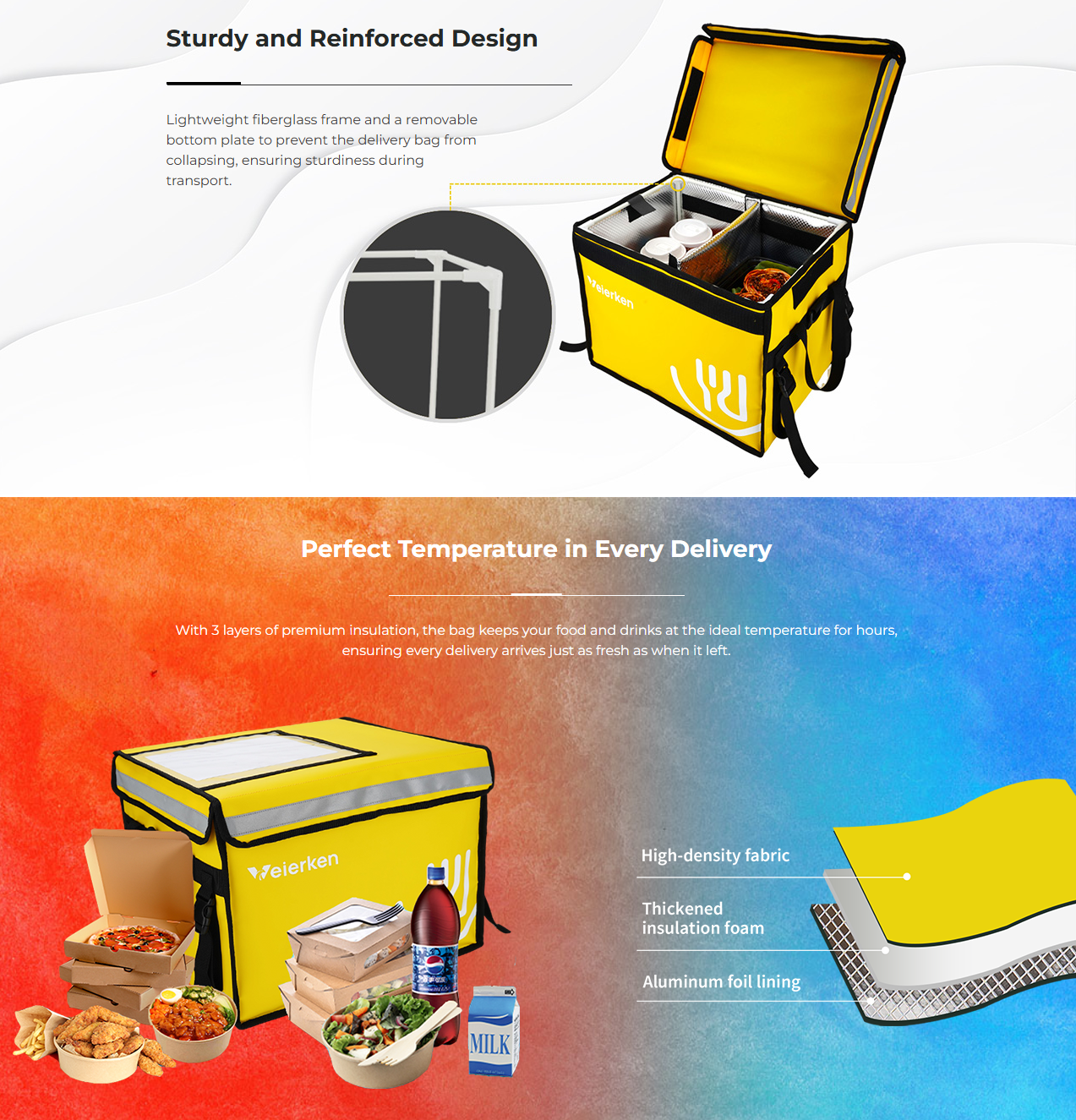
High-performance thermal bags do not rely on a single layer. Instead, they use a multi-layer composite structure designed to tackle heat transfer from conduction, convection, and radiation.
Inner Lining: The lining must use food-grade aluminum foil or high-reflectivity pearlized film. Aluminum foil reflects up to 97% of radiant heat, preventing external heat from warming the interior.
Core Insulation: This layer must use high-density Expanded Polyethylene (EPE) foam or Polyurethane (PU) foam. For ice cream delivery, the foam thickness should measure between 3mm and 8mm. Ask the manufacturer to show you their material thickness gauges.
Outer Shell: The exterior needs durable, water-resistant fabrics like 600D Oxford cloth, heavy-duty non-woven fabrics, or woven laminated films. These materials prevent external moisture from degrading the inner insulation foam.
Verify that the factory uses hot-melt lamination or flame bonding to join these layers. Solvent-based adhesives can emit strong chemical odors, which is a major issue for food-grade packaging.
Checkpoint 2: Leak-Proof Engineering and Seamless Sealing Technology
Ice cream melting is not the only risk; condensation and dry ice venting also create moisture inside the bag. Traditional stitched seams have thousands of tiny needle holes. Liquid quickly leaks through these holes, ruining the user experience and weakening the bag structure.
A qualified ice cream insulated tote maker must offer advanced sealing solutions instead of relying solely on standard sewing machines.
During your audit, check for the following technologies in the assembly department:
High-Frequency Voltage Welding: This process uses electromagnetic energy to melt and fuse the inner lining edges together. It creates a seamless, 100% leak-proof internal tub that keeps liquids contained.
Heat-Sealed Tape Seaming: If the factory uses sewing, they must apply waterproof sealing tape over the inner stitched seams using specialized hot-air taping machines.
Zipper and Lid Closures: Ask if they offer airtight zippers or waterproof zippers. A thick insulation flap must sit directly beneath the zipper line to block warm air from slipping through the zipper teeth.
Checkpoint 3: Food-Grade Compliance and International Certifications
Your insulated totes will work in close proximity to food products. If you export to markets like North America, Europe, or Japan, your manufacturing partner must comply with strict chemical and food-contact safety laws.
An experienced ice cream insulated tote maker should easily provide these documents during the initial compliance review:
Food Contact Safe Materials: The inner lining materials must hold test reports showing compliance with FDA (U.S. Food and Drug Administration) or LFGB (German food safety standards) regulations.
Chemical Restrictions: All materials, including the outer fabric, zippers, and inks, must comply with REACH and RoHS standards. They must be certified as BPA-free and heavy-metal-free.
System and Social Audits: Confirm that the factory maintains active ISO 9001 certifications for quality management. For retail distribution, ask for BSCI (Business Social Compliance Initiative) or SMETA audit reports.
During the factory walkthrough, look at how raw materials are labeled and stored. Certified food-grade materials must be kept in clean, designated zones away from industrial lubricants and recycled plastics.
Checkpoint 4: Load-Bearing Design and Handle Reinforcement
Ice cream is heavy, and commercial deliveries often include dry ice, gel ice packs, or heavy plastic tubs. A standard handle stitched onto thin fabric will quickly rip under this kind of weight.
A durable bag needs smart structural engineering. Look closely at the stitch patterns and reinforcement methods used in the sewing department of the ice cream insulated tote maker.
Look for these construction details:
Cross-Stitching (X-Box Stitching): The points where the handles meet the bag body must feature "X" patterned box stitches to distribute physical tension across a larger surface area.
Wrap-Around Webbing: High-capacity bags should have carrying straps that run completely under the bottom of the bag. This design transfers the weight load to the heavy webbing rather than the fabric seams.
Base Board Reinforcement: The bottom of the tote should include a removable or sewn-in rigid PE (Polyethylene) plate. This plate keeps the bottom flat under heavy loads, preventing the bag from sagging and crushing the delicate ice cream packaging inside.
Ask the factory if they have an on-site tensile testing machine. They should routinely test handle strength to confirm their bags can support your target load capacity.
Checkpoint 5: OEM Customization and High-Fidelity Printing
FMCG brands use insulated packaging as a mobile billboard. Your brand colors, logos, and promotional graphics must look sharp and professional. At this stage of the audit, evaluate how the factory translates your digital designs into physical products.
As a seasoned manufacturing partner, weierken offers customized printing options that match specific brand requirements.
Check the factory's printing workshop to see which methods they use:
Rotogravure Printing: Ideal for high-volume, photographic-quality designs printed on outer plastic film laminates.
Flexographic and Screen Printing: Suitable for simpler, bold logos directly applied to woven or non-woven fabrics.
Color Consistency: Ask about their color-matching systems. A professional ice cream insulated tote maker will use Pantone color matching and check print runs with spectrophotometers to keep color variations to a minimum.
Prototyping Speed: Inquire about their sampling process. A professional sample room should deliver an accurate physical prototype within 5 to 7 working days.
Checkpoint 6: Production Capacity and Supply Chain Stability
Ice cream sales are highly seasonal, peaking during the warm summer months. Your order volume will likely spike right before this peak season. Your manufacturer must have the production capacity to handle these sudden surges without delaying your shipments.
Evaluate these manufacturing metrics during your audit:
Daily Output Capacity: Calculate their daily production limits based on active assembly lines and workers. Ask about their peak-season labor pool.
Automation Levels: Look for automated fabric-cutting tables, ultrasonic welding stations, and automatic webbing-cutting machines. Automation improves consistency and speeds up production compared to manual processes.
Raw Material Buffer: A reliable factory keeps a buffer stock of key raw materials, like EPE foam and Oxford fabric, or has long-term supply agreements with local material suppliers to avoid sudden supply shortages.
Frequently Asked Questions
Q1: How does a professional ice cream insulated tote maker test thermal performance?
Factories use temperature-controlled environmental chambers. They place a data-logger inside the insulated tote alongside a set amount of ice or dry ice. They then place the bag inside a chamber set to 30°C or 40°C and monitor how long the internal temperature stays below -18°C.
Q2: Can we use dry ice inside these custom insulated bags?
Yes, but the materials must handle extreme cold without turning brittle. Regular PVC linings can crack when exposed to dry ice. A professional manufacturer will recommend low-temperature resistant materials like PEVA or TPU to keep the lining flexible and intact.
Q3: Can an ice cream insulated tote maker customize the bag size for specific tub dimensions?
Yes. Custom size design is a standard part of OEM services. The manufacturer can adjust the height, width, and depth of the bag to fit your specific ice cream tubs or shipping boxes, reducing empty space and improving thermal efficiency.
Q4: What is the standard MOQ for custom insulated tote bags?
Minimum Order Quantities (MOQs) usually depend on the materials and printing methods you choose. For custom-dyed fabrics or rotogravure printing, MOQs typically range from 1,000 to 3,000 pieces. Simpler screen-printed designs on stock fabrics may have lower MOQs.
Q5: How long do these insulated bags typically keep ice cream frozen?
Insulation time depends on the foam thickness, the use of cooling agents (like gel packs or dry ice), and external weather conditions. Generally, a high-quality 8mm EPE foam bag can keep ice cream frozen for 2 to 4 hours without dry ice, and much longer when cooling agents are added.
Request a Quote for Your OEM Insulated Bags
Finding a reliable manufacturing partner is essential for protecting your cold chain logistics and brand image. Working with an experienced ice cream insulated tote maker like weierken ensures your packaging meets strict thermal standards, food safety regulations, and heavy-duty load requirements.
Are you looking to develop a custom insulated bag for your ice cream business? Contact our team today to discuss your technical specifications, request a sample, or get a detailed production quote.