
Sourcing high-quality insulated gear requires careful planning. Unlike standard promotional backpacks, a technical thermal bag must balance two distinct functions: thermal retention and complete liquid containment. Achieving both requires specialized manufacturing processes and raw materials.
Many procurement managers face information asymmetry when evaluating suppliers. A factory might claim to produce leakproof coolers, but actual field use tells a different story. Asking the right technical questions early in your sourcing journey saves time and prevents costly recalls.
Working with a professional waterproof thermal bag maker like weierken can simplify this vetting process. Here are seven critical questions you should ask potential manufacturing partners to verify their technical capability, quality control, and supply chain reliability.
Question 1: What technology do you use to ensure the inner liner is completely waterproof?
Sourcing Objective: Confirm whether the supplier possesses genuine seamless bonding capabilities or relies on cheap stitching alternatives.
A standard sewing machine creates thousands of tiny needle holes. Under pressure, melted ice or condensation will seep through these holes. To prevent this, a professional waterproof thermal bag maker must use heat-sealing or welding techniques.
High-Frequency (HF) Welding: This method uses electromagnetic energy to fuse TPU or PVC materials at the molecular level. It creates a permanent, hermetic seal that is stronger than the parent material.
Hot-Pressing: This technique utilizes heat and physical pressure to bond thermoplastic materials. It is highly effective for PEVA linings.
Seam Taping: This involves sewing the pieces together and applying a waterproof adhesive tape over the seams. While cost-effective, tape can degrade and peel off under repeated tension or exposure to grease.
Ask your waterproof thermal bag maker to clarify their primary bonding method. If your application involves heavy ice or liquids, prioritize factories that offer HF welding for TPU liners rather than taped seams.
Question 2: Do your lining and insulation materials hold food-grade certifications?
Sourcing Objective: Ensure your imported products comply with target market safety regulations and avoid legal liability.
Thermal bags often carry groceries, hot meals, or beverages. If the inner liner contains volatile plasticizers or heavy metals, these substances can migrate into food. This is particularly critical when dealing with warm temperatures, which can accelerate chemical leaching.
A reputable waterproof thermal bag maker should provide up-to-date, verifiable certificates from independent third-party testing labs. Key standards to look for include:
FDA (Food and Drug Administration): Essential for the US market, confirming that materials like PEVA or TPU are safe for food contact.
LFGB (Lebensmittel- und Futtermittelgesetzbuch): The European standard, which is often stricter than FDA regulations regarding chemical migration.
RoHS & REACH: Standards that restrict hazardous substances and heavy metals in plastic compounds and synthetic fibers.
Always request the original PDF reports rather than simple product photos. Ensure the name on the certificate matches your supplier or their certified material source.
Question 3: What are your thermal performance testing standards? How many hours can the bag maintain cold or hot temperatures?
Sourcing Objective: Move past vague marketing claims and verify the functional insulation performance of the bag.
Vague phrases like "keeps ice for days" do not translate to reliable product specifications. A professional waterproof thermal bag maker uses standardized testing methods to measure thermal retention objectively.
Inquire if the factory has an in-house environmental chamber or if they use third-party thermal curve reports. A reliable testing protocol typically involves:
Ambient Temperature Control: Testing the bag in a controlled room held at a steady temperature (such as 32°C or 90°F) to simulate hot summer conditions.
Ice-to-Product Ratio: Using a standardized ratio (often 2:1 ice-to-contents ratio) to measure how long the ice takes to melt completely.
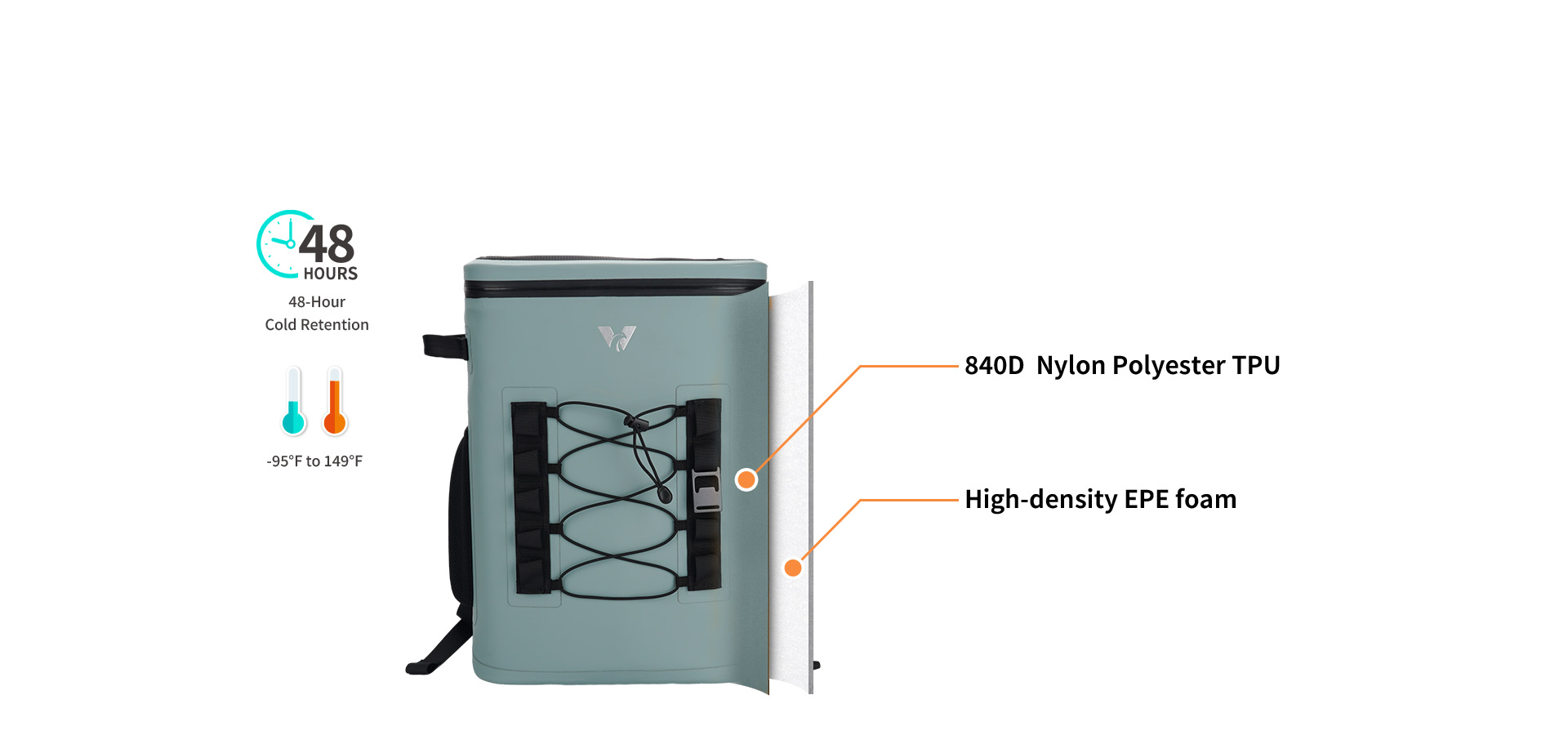
Internal Temperature Tracking: Placing digital data loggers inside the sealed bag to record temperature changes over 12, 24, or 48 hours.
For example, at weierken, we help buyers match the right foam density (such as EPE foam, NBR rubber foam, or PU foam) to their target thermal performance metrics. This ensures your end-users receive reliable performance without unnecessary material costs.
Question 4: What are the puncture and abrasion resistance ratings of your liner materials?
Sourcing Objective: Evaluate how well the bag performs when carrying sharp ice cubes, metal cans, or rigid seafood containers.
A thermal bag's waterproof seal is only as good as its physical durability. If a thin PEVA lining gets punctured by the sharp edge of a frozen food box or a soda can tab, the bag will leak. Ask the waterproof thermal bag maker about the physical properties of their lining materials.
Consider these material characteristics during your sourcing discussions:
Liner Thickness: Thickness is typically measured in millimeters or micrometers. Standard consumer bags use 0.15mm PEVA, while heavy-duty commercial bags use 0.35mm to 0.50mm TPU.
Base Fabric Denier: For the exterior, ask about the denier rating (e.g., 840D TPU-coated nylon or 1680D polyester). High denier numbers indicate better resistance to tears and scuffs.
Puncture Testing: Ask if the manufacturer conducts ASTM or ISO puncture resistance tests to verify the material can withstand everyday wear and tear.
Question 5: What structural designs do you offer to prevent leakage at the top opening?
Sourcing Objective: Solve the most common failure point in thermal bag design—the closure system.
Even if the bottom liner is perfectly welded, water can still leak out of the top zipper if the bag is tipped over. Similarly, cold air escapes through gaps in the closure. A reliable waterproof thermal bag maker should offer several closure options based on your budget and use case.
Review these common sealing options with your supplier:
Water-Resistant Zippers: Standard zippers treated with a PU coating. They repel light rain but are not submersible or completely airtight.
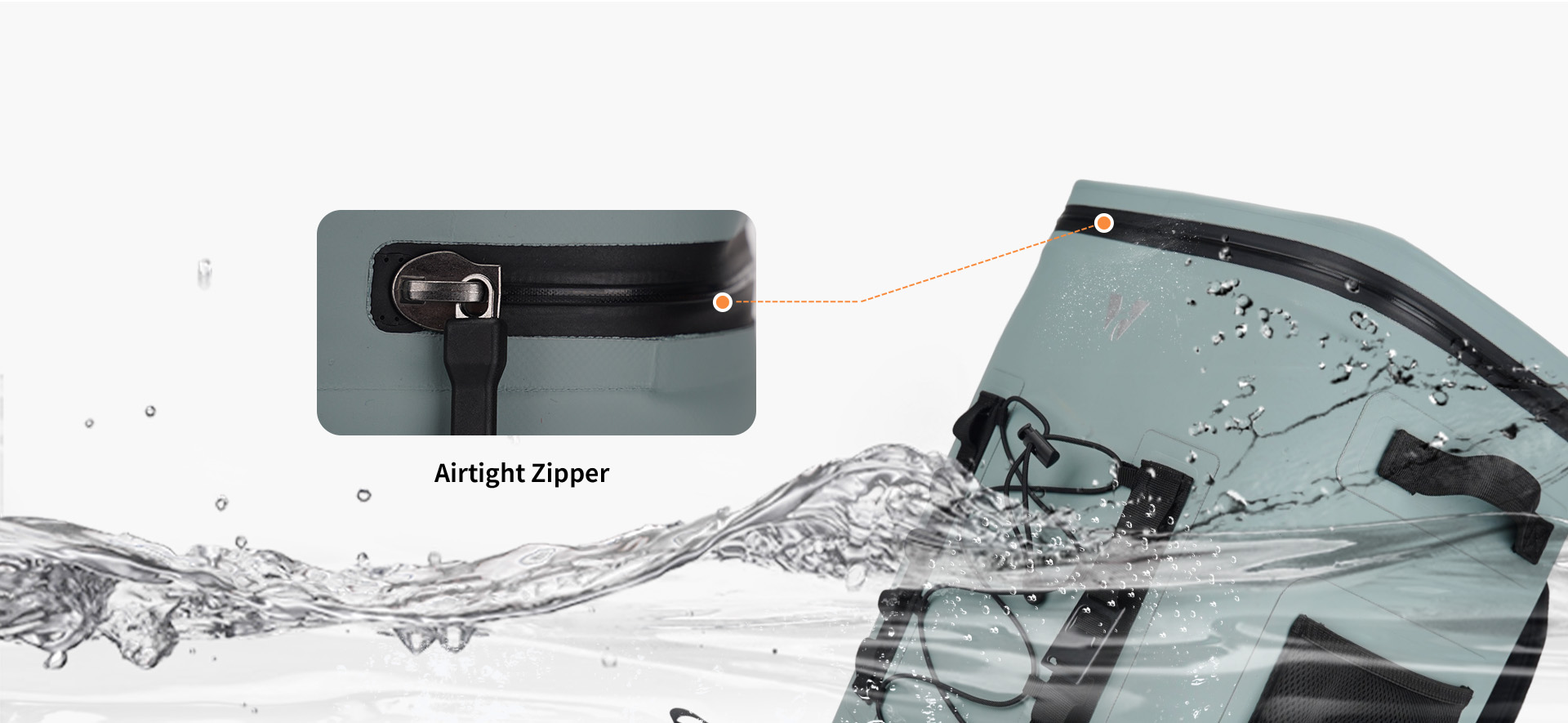
Airtight/Gas-tight Zippers: Specialized zippers with interlocking rubber teeth that seal completely. They prevent both water leakage and air exchange, though they require more force to pull.
Roll-Top Closures: A zipperless design where the top opening is rolled down three to four times and secured with buckles. This creates a highly reliable waterproof seal and is popular for dry bags and outdoor coolers.
Your manufacturer should help you select the most practical closure type for your target price point and intended application.
Question 6: What waterproof and quality control testing processes do you perform before shipment?
Sourcing Objective: Understand the factory's quality assurance system to prevent high defect rates in your batch.
High-quality materials are meaningless without rigorous quality control on the production line. When sourcing from a waterproof thermal bag maker, ask about their specific inspection steps during bulk assembly.
A reliable factory does not rely solely on visual checks. They use standardized testing protocols, including:
Inflation Pressure Testing: For bags utilizing airtight zippers, the factory inflates the bag with pressurized air and submerges it in water or monitors it for pressure drops over time. This quickly identifies microscopic leaks.
Static Water Leakage Testing: Filling a percentage of production units with water and letting them sit on dry paper for 12 to 24 hours to check for dampness.
AQL Sampling Standards: Utilizing clear Acceptance Quality Limit standards (such as AQL 2.5 for major defects and 4.0 for minor defects) to govern the final pre-shipment inspection.
Make sure to document these testing standards in your purchasing agreement so both parties have a clear benchmark for quality.
Question 7: What is your minimum order quantity (MOQ) and mold development timeline?
Sourcing Objective: Assess the manufacturer's production flexibility, capacity, and tooling capabilities.
Custom designs often require unique injection-molded plastic parts, specialized buckles, or custom-shaped base plates. These components require dedicated tooling, which impacts both your budget and timeline.
A professional waterproof thermal bag maker will provide transparent terms regarding:
Minimum Order Quantities (MOQ): High-frequency welding setups often require higher MOQs (e.g., 500 to 1,000 units per color) compared to standard sewn bags due to the complex machine calibration required.
Sample Lead Times: Standard samples using stock materials usually take 5 to 7 days, while custom welded prototypes can take 10 to 14 days.
Tooling and Mold Costs: If your bag requires a custom-molded base, handle, or valve, clarify the mold cost, ownership of the mold, and the production run volume needed to amortize those tooling costs.
Understanding these constraints upfront helps you manage your launch timeline and inventory risk effectively.
Frequently Asked Questions
Q1: What is the main difference between PEVA and TPU linings in waterproof thermal bags?
PEVA (polyethylene vinyl acetate) is a cost-effective, PVC-free, and food-safe material commonly used in light-use consumer cooler bags. TPU (thermoplastic polyurethane) is a premium material that offers superior puncture resistance, excellent low-temperature flexibility, and stronger welded seams, making it the preferred choice for heavy-duty outdoor and commercial bags.
Q2: Can we use standard sewing machines to make a completely leakproof bag?
No, standard sewing machines create physical needle holes that will leak under wet conditions. While some manufacturers apply seam-sealing tape over the stitched seams to make them water-resistant, a truly leakproof liner requires high-frequency welding or hot-press bonding to melt the seams together into a solid piece.
Q3: How long can a heavy-duty waterproof thermal bag keep ice frozen?
The ice retention time depends on several factors, including the insulation foam type, its thickness, the exterior temperature, and the ice-to-product ratio. Standard bags with 5mm EPE foam generally keep contents cold for 4 to 8 hours. High-end coolers using thick NBR rubber foam combined with airtight zippers can maintain ice for 24 to 72 hours.
Q4: Why does high-frequency welding have a higher MOQ than stitched bags?
High-frequency welding requires custom copper molds matching the exact shape of your bag's panels. Setting up these machines and aligning the components takes time and precision. Consequently, factories require higher minimum order quantities to offset the setup costs and run the machinery efficiently.
Q5: Are your waterproof thermal bags eco-friendly?
Many modern manufacturers offer eco-friendly options. We can source recycled outer fabrics (such as RPET polyester made from recycled plastic bottles) and combine them with biodegradable TPU or PEVA linings to create sustainable insulated packaging that meets modern environmental standards.
Partner with an Experienced Waterproof Thermal Bag Maker
Sourcing technical gear requires a manufacturer that understands the science of thermal retention and leak prevention. By asking these seven sourcing questions, you can identify a partner capable of delivering durable, compliant, and high-performing products.
As an established waterproof thermal bag maker, weierken helps brands and businesses globally bring reliable custom cooler designs to life. We offer advanced high-frequency welding, certified food-grade materials, and rigorous quality control testing to meet your target specifications.
Are you ready to discuss your next custom bag project? Contact our engineering and sales team today to share your specifications, request a prototype, or ask for a detailed price quotation.