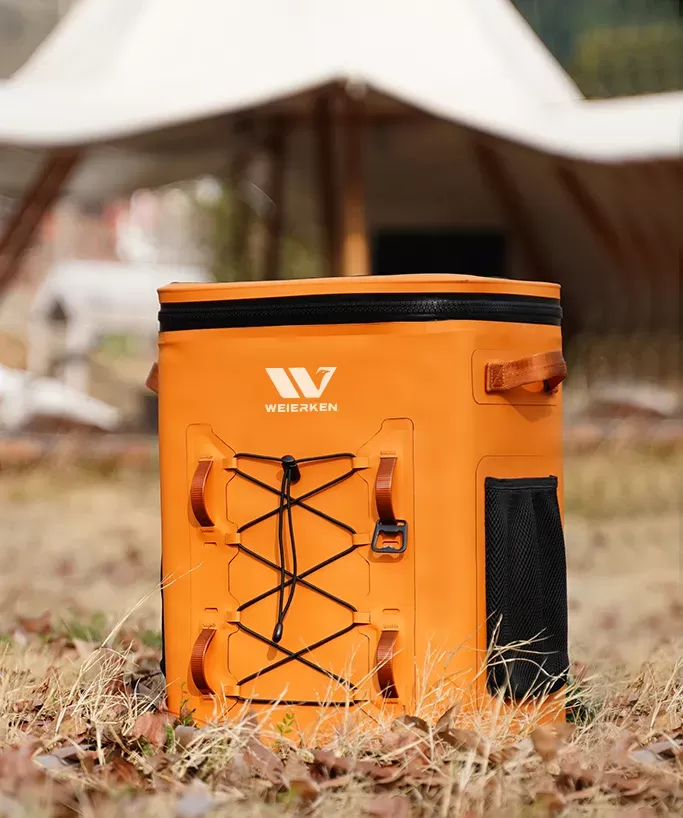

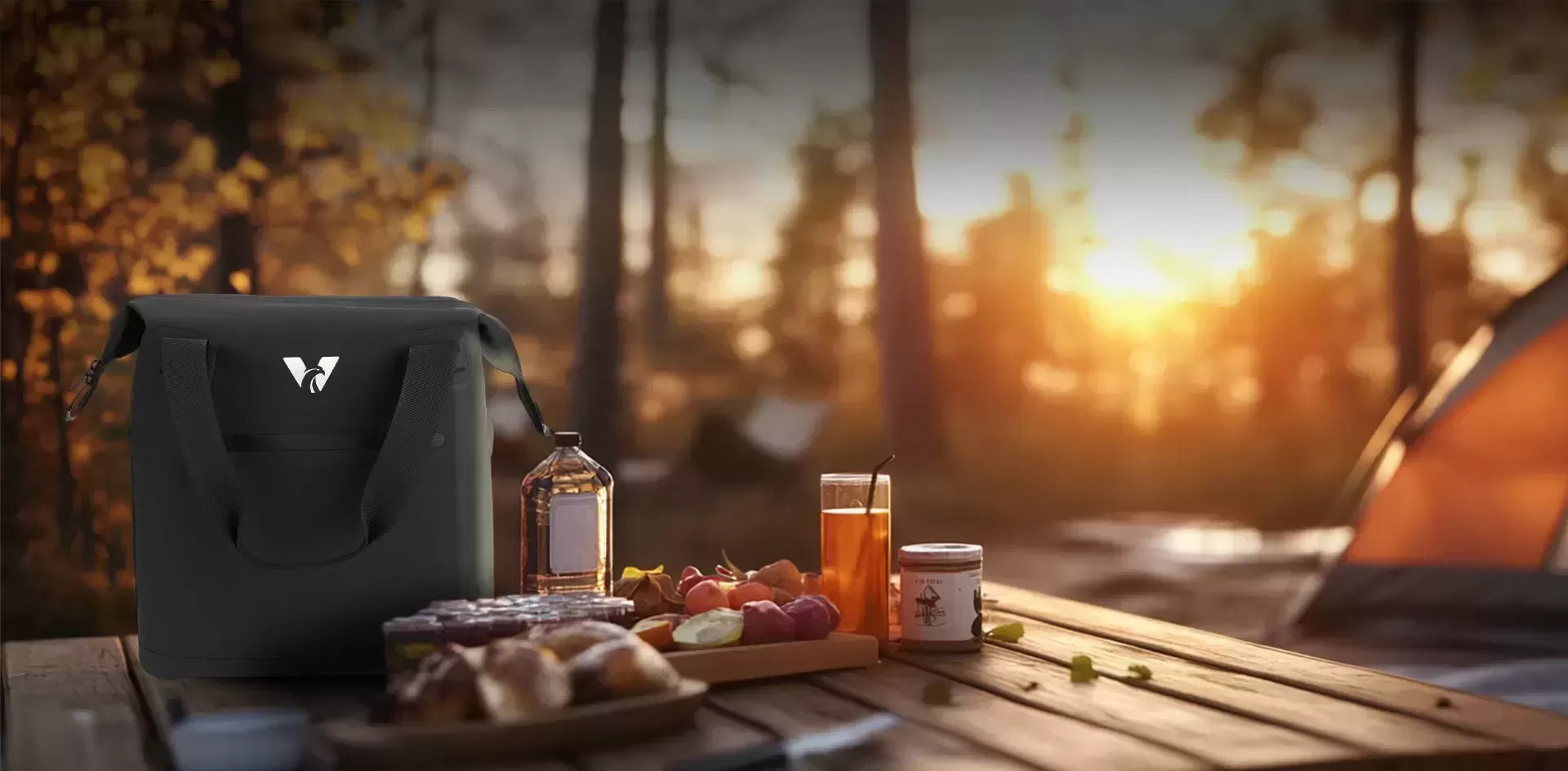
A leaking delivery bag ruins more than just a meal. It ruins customer trust. In fresh food logistics, food delivery, and outdoor recreation, melted ice or spilled liquids frequently escape poor-quality bags. This leads to messy deliveries, stained car interiors, and costly product returns.
For B2B buyers, purchasing reliable thermal bags is a strategic choice. A high-performing bag protects your goods and preserves your brand reputation. As an experienced waterproof thermal tote maker, weierken designs practical solutions to address these common structural weak points. Here is a technical look at how we build leak-proof insulation bags that perform consistently in the field.
1. Seamless Heat-Sealing Technology
Traditional sewing methods use needles and thread. While sewing provides strong mechanical joints, every stitch leaves a tiny puncture hole. Over time, liquid under pressure finds these microscopic holes and seeps out. Stitching is the primary cause of leakage in low-end thermal bags.
To eliminate this vulnerability, we replace traditional sewing in the interior chamber with advanced thermal bonding technologies:
High-Frequency Welding (HF Welding): This method uses electromagnetic energy to agitate the molecules of the lining materials (such as TPU or PEVA). The molecules fuse together at a joint level, creating a single, continuous sheet of material with no physical holes.
Hot-Pressing: This process applies precise heat and high pressure to the overlapping edges of the inner liner. The materials melt together to form a highly durable, liquid-tight barrier.
The Importance of Corner Welding
Corners are structural weak points. When a delivery driver carries a heavy load, gravity pulls the bag downward, putting intense physical stress on the bottom corners. If the joint is weak, micro-tears develop.
At weierken, we use specialized corner-reinforcement molds during the heat-sealing process. By applying rounded welds rather than sharp angles, we distribute physical tension more evenly across the material. This technique prevents the tiny corner splits that often compromise standard leak-proof cooler bags.
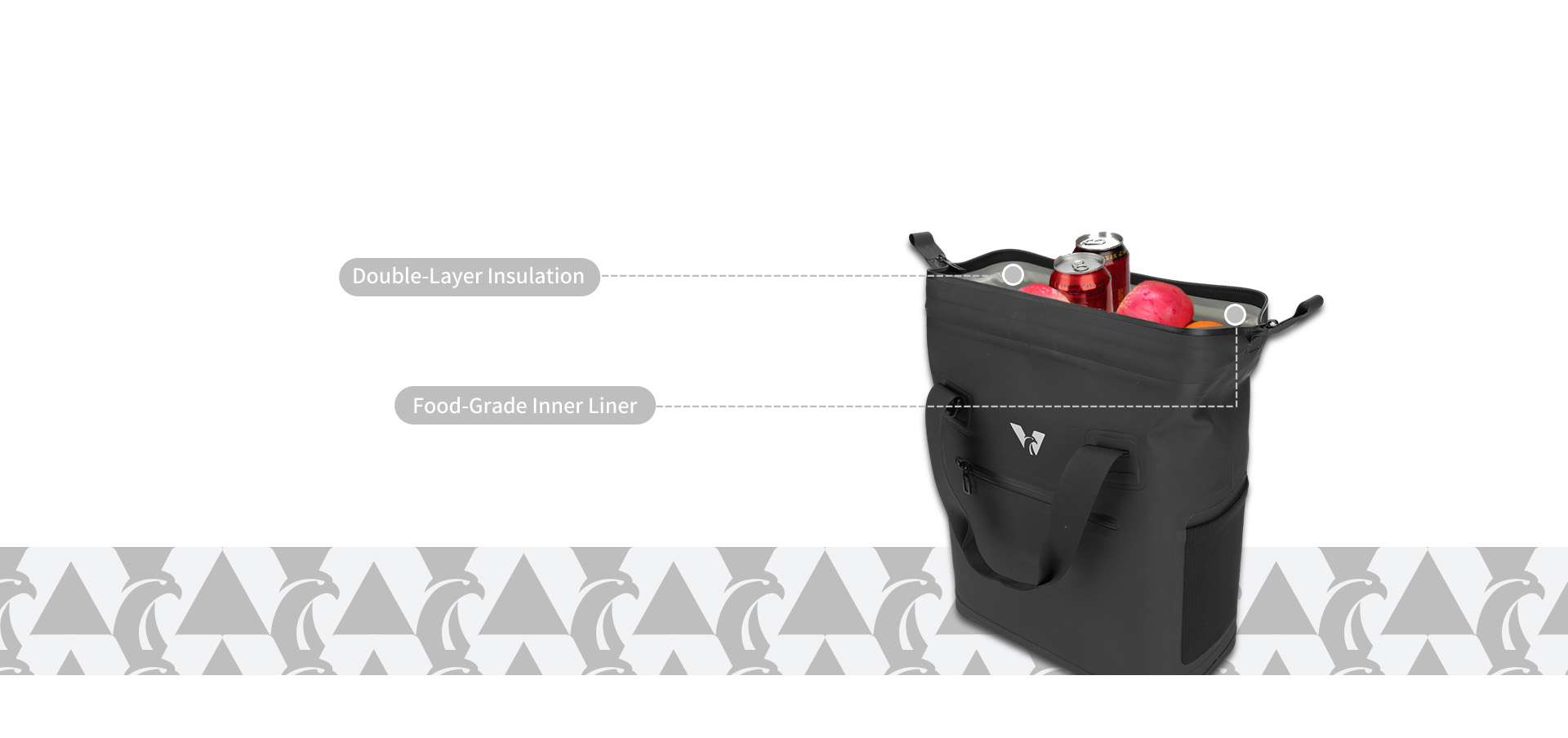
2. Puncture-Resistant, Food-Grade Liner Materials
A waterproof seal is only effective if the liner itself remains intact. Sharp plastic containers, frozen seafood shells, and ice blocks constantly scratch and press against the inner walls of the bag. A reliable waterproof thermal tote maker must select the correct liner material for the specific commercial application.
We analyze and utilize two primary food-grade materials for our inner linings:
PEVA (Polyethylene Vinyl Acetate): This material is PVC-free, odorless, and highly cost-effective. It works well for standard grocery distribution, daily supermarket deliveries, and consumer-facing promotional lunch bags.
TPU (Thermoplastic Polyurethane): TPU offers superior tensile strength, abrasion resistance, and flexibility at low temperatures. It remains highly pliable even in deep-freeze environments, making it ideal for professional cold chain logistics and heavy-duty outdoor gear.
Balancing Liner Thickness and Cost
Liner thickness directly affects both durability and manufacturing cost. A 0.20mm liner is lightweight and economical, but it offers limited defense against sharp objects. Conversely, a 0.35mm or 0.40mm liner provides excellent puncture resistance but increases overall bag weight and material costs.
We work closely with clients to find the right balance. For heavy commercial use, we recommend a minimum liner thickness of 0.30mm to ensure long-term physical durability without over-inflating the unit cost.
3. Water-Resistant Closures and Zippers
The top opening of an insulated bag is a common point of failure. If a bag tips over during transit, liquids can easily seep through standard zippers. Even when the bag remains upright, warm air can enter through minor gaps, melting the ice inside and increasing the volume of liquid.
To secure this opening, we deploy specific closure designs based on our clients' performance requirements:
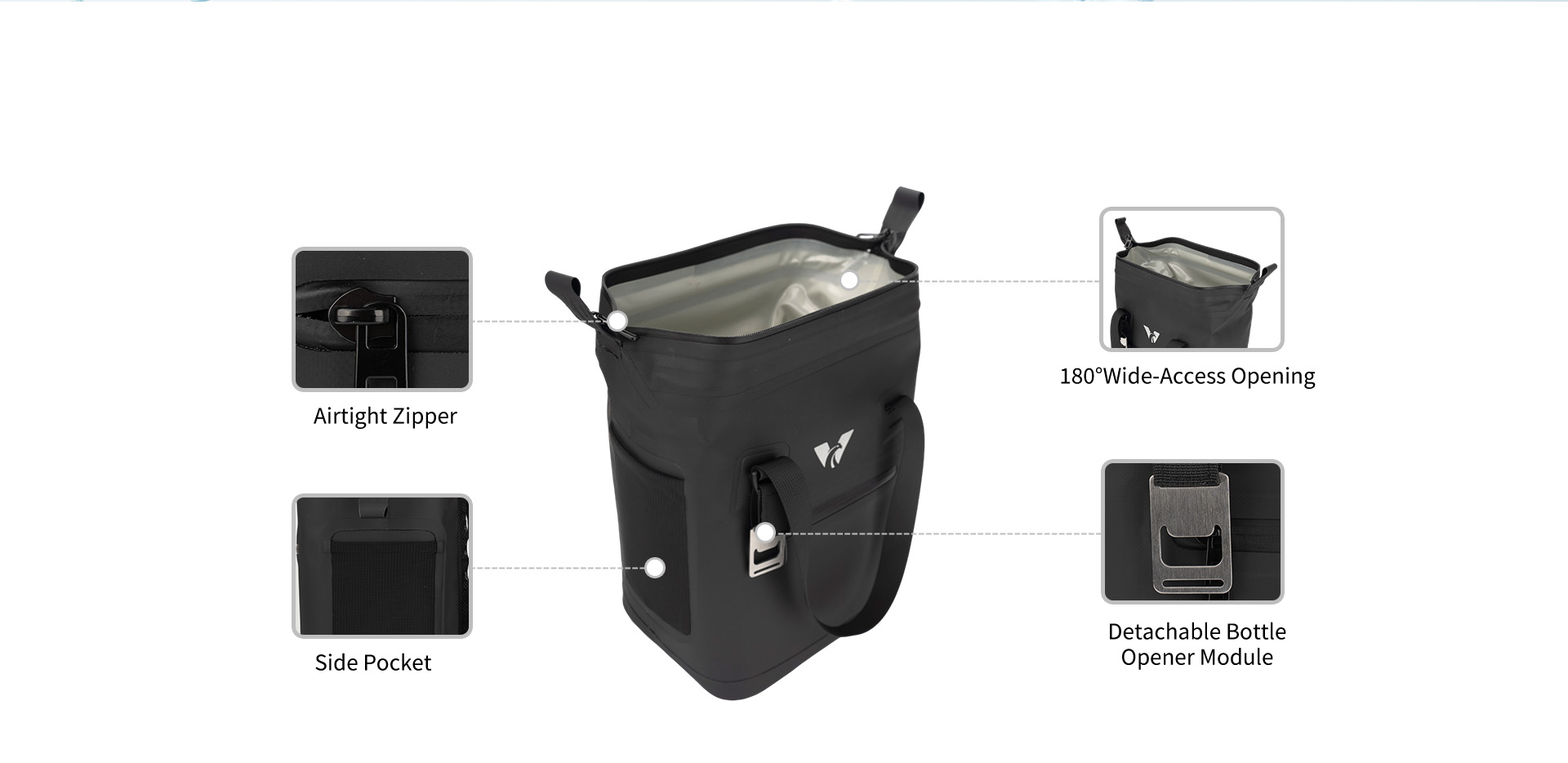
PU-Coated Water-Resistant Zippers: These zippers feature a reverse coil design covered by a polyurethane layer. This coating repels light splashes and rain, making it suitable for standard food delivery operations.
Airtight and Waterproof Zippers: For heavy-duty applications, we use fully sealed, pressurized zippers. These teeth interlock so tightly that they prevent both air and liquid from escaping, even when the bag is completely inverted.
Roll-Top Closures with Heavy-Duty Velcro: Inspired by outdoor dry bags, this design involves folding the top opening down three times before fastening it with wide nylon hook-and-loop strips. This mechanical fold creates a highly reliable barrier against spills without relying on zippers.
By offering these diverse closure systems, weierken helps buyers match the level of water resistance to their specific logistics environment and budget.
4. Multi-Layer Composite Structure
True leak prevention requires a systems-based approach. The inner liner does not work alone; it functions as part of a multi-layer composite structure. Each layer serves a specific purpose to protect the integrity of the entire bag.
We build our high-quality insulated delivery bags using a proven three-layer standard:
| Layer Position | Material Options | Primary Protective Function |
|---|---|---|
| Outer Layer | High-density Oxford polyester (900D/1680D) or heavy-duty tarpaulin with scratch-resistant PVC/TPU coating. | Protects against external weather, physical abrasions, and rough handling in transit. |
| Middle Layer | Expanded Polyethylene (EPE) foam or closed-cell NBR foam (thickness ranges from 5mm to 15mm). | Provides thermal insulation, cushions the contents from impact, and maintains the bag's physical structure. |
| Inner Layer | Seamlessly welded PEVA, TPU, or heavy-gauge aluminum foil composite. | Creates a liquid-tight barrier, contains internal spills, and allows for quick cleaning. |
The middle foam layer plays a critical role in leak prevention. By absorbing physical shocks during transportation, the foam reduces the mechanical stress placed on the inner heat-sealed joints, extending the service life of the bag.
5. Factory-Level Leakage Testing Standards
Quality control cannot rely on guesswork. As a professional waterproof thermal tote maker, weierken subjects our production runs to structured, physical stress tests before shipment.
We use three key testing protocols to verify the integrity of our bags:
Static Water Filling Test: We fill the bag with water to a designated depth and leave it on a dry surface for 24 hours. Quality control technicians inspect the base and seams for any signs of moisture penetration.
Inverted Leak Test: We fill the bag with water, seal the closure mechanism, and turn the bag completely upside down. This test evaluates the water resistance of the zippers and top folds under direct fluid pressure.
Swing Test with Load: We load the bag to its maximum weight capacity with a mixture of water and weighted blocks. The bag is then mounted to a mechanical arm that simulates the rhythmic walking or riding motion of a delivery courier. This ensures that the welded seams can withstand real-world operational stress.
These systematic tests ensure that every batch we deliver to our B2B partners meets professional trade standards.
Frequently Asked Questions
Q1: What is the main difference between PEVA and TPU liners?
PEVA is lightweight, highly affordable, and perfectly suitable for daily grocery runs or consumer lunch bags. TPU is a premium material with significantly higher tensile strength, excellent resistance to cold temperatures, and superior puncture resistance, making it the preferred choice for commercial cold chain operations.
Q2: Can sewn seams ever be truly waterproof?
No. Sewn seams require a needle to pass through the fabric, which creates permanent physical holes. While manufacturers can apply waterproof tape over sewn seams, this tape can peel off over time due to heat and physical wear. For true, long-term leak prevention, seamless high-frequency welding is highly recommended.
Q3: How do you choose the right foam thickness for insulated delivery bags?
The choice depends on your required holding time and the fragility of your goods. A 5mm foam layer is suitable for short trips under 1 hour. For professional delivery services requiring 3 to 5 hours of temperature retention, we recommend using 8mm to 12mm high-density EPE or NBR foam.
Q4: Are your materials safe for direct food contact?
Yes. As a responsible manufacturer, weierken uses food-grade, non-toxic, and BPA-free materials for our inner linings. Our TPU and PEVA materials comply with major international food safety regulations.
Q5: What is the minimum order quantity (MOQ) for custom insulated bags?
Our minimum order quantities vary depending on the specific materials, sizing, and customization requirements of your project. Please reach out to our sales team with your specifications, and we will provide a detailed breakdown of MOQs and production timelines.
Partner with a Reliable Waterproof Thermal Tote Maker
Finding a reliable waterproof thermal tote maker can protect your logistics operations from costly damage and client complaints. At weierken, we combine high-frequency welding technology, robust food-grade materials, and rigorous physical testing to produce high-performing, custom insulated bags for global businesses.
Whether you need heavy-duty thermal bags for fresh grocery logistics or lightweight insulated totes for food delivery, our engineering team can help you build the right product. Contact us today to discuss your technical specifications, request physical material samples, or obtain a competitive quotation for your next manufacturing run.
Are you ready to optimize your cold chain packaging? Request a quote from our technical team today to get started on your custom order.