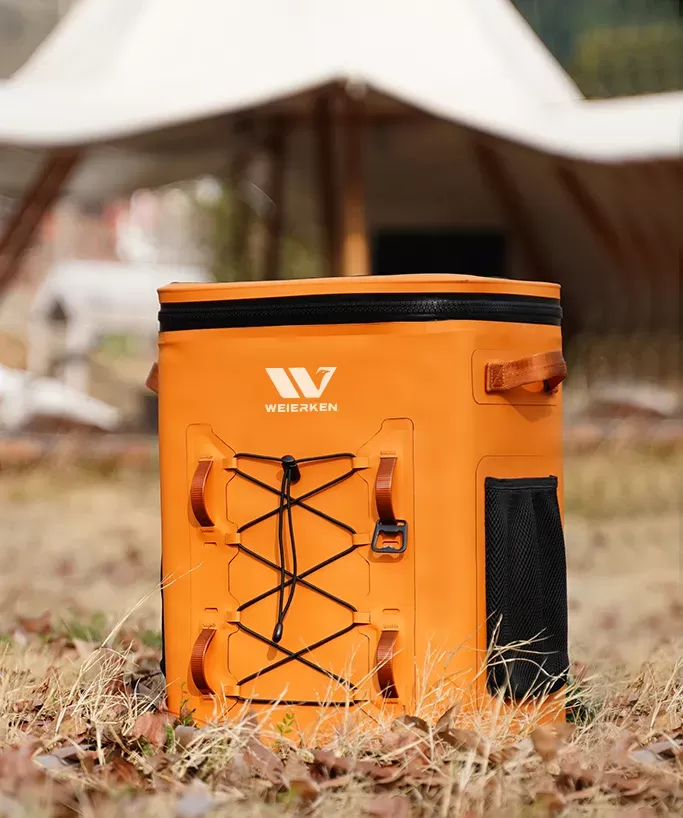

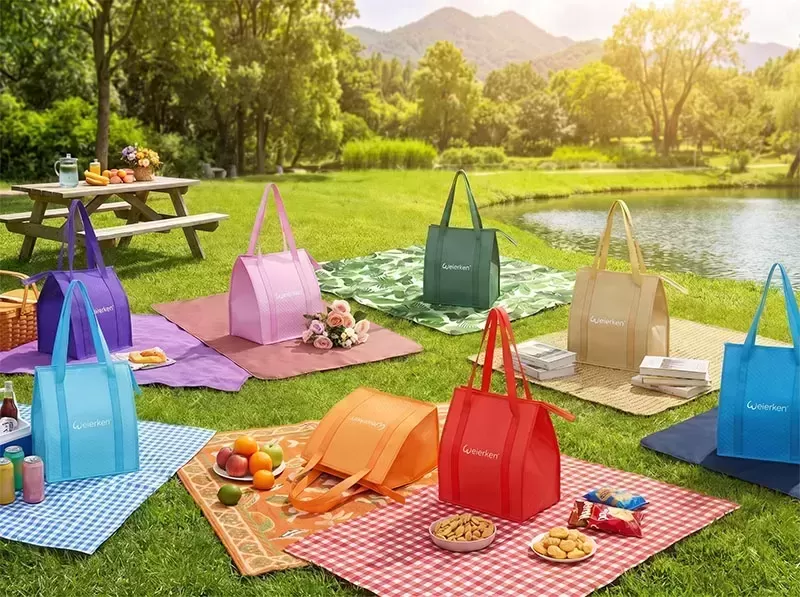
Procurement managers face a constant balancing act. You must keep unit costs low while ensuring products do not fail in the hands of customers. In the cooler bag market, a single leaking seam can lead to costly product returns and damage your brand's reputation.
Squeezing your supplier for the lowest price often backfires. It can lead to poor-quality materials and manufacturing flaws. However, you can achieve significant savings through smart engineering and strategic sourcing. As an experienced leakproof insulated bag maker, Weierken helps global brands optimize their budgets without sacrificing performance.
This article shares five practical ways to lower your sourcing costs. We examine these strategies from a manufacturing perspective, focusing on materials, production, and shipping logistics.
1. Select the Right Liner Material and Thickness
The inner liner is the most critical part of a soft cooler bag. It prevents water from melting ice and leaking into the outer layers. Many brand managers ask for premium TPU linings because high-end brands use them. However, this choice can drive up your manufacturing costs unnecessarily.
If you are targeting the mid-range retail market, a **PEVA liner** is a highly cost-effective alternative. It offers excellent performance and meets safety standards at a lower price point.
PEVA vs. TPU: PEVA is highly flexible, easy to clean, and affordable. While TPU offers higher puncture resistance, PEVA is perfect for daily picnic and lunch bags.
Optimize Thickness: Many buyers assume thicker materials are always better. In reality, a liner thickness between 0.25mm and 0.35mm provides reliable leakproof protection for daily use.
Fusing Technology: A qualified custom cooler bag manufacturer uses **high-frequency welding technology** rather than traditional stitching. This fuses the edges together to create a secure, seamless barrier.
By choosing the right material and thickness, you can significantly reduce your material expenses. This approach helps you maintain quality while staying within your target budget.
2. Match Insulation Foam to Your Target Market
The middle insulation layer directly affects both thermal performance and material costs. Manufacturers typically use Expanded Polyethylene (EPE) foam, Nitrile Butadiene Rubber (NBR) foam, or Polyurethane (PU) foam. Over-specifying this layer is a common procurement mistake.
For standard consumer use, you do not need thick, heavy-duty insulation designed for multi-day camping trips. Selecting a foam that matches your customer's actual needs can save you 5% to 15% in raw material costs.
Standard Commutes (4–6 hours): Use 5mm to 8mm of **EPE foam insulation**. It is lightweight, flexible, and very affordable.
Extended Day Trips (12–24 hours): Use 10mm to 12mm high-density EPE or a thin layer of NBR foam. NBR offers better thermal performance but increases weight and costs.
Extreme Use (24+ hours): Save thick NBR or PU foam for specialized outdoor product lines where customers are willing to pay a premium.
Aligning your insulation choices with realistic use cases keeps your **thermal bag factory cost** highly competitive. It ensures you do not pay for excess performance that your customers do not require.
3. Standardize Bag Dimensions and Use Stock Hardware
Custom shapes and specialized hardware make your product stand out, but they also increase tooling costs. A unique bag design requires custom cutting dies, while custom zipper pulls require dedicated injection molds. These expenses can quickly drain your product development budget.
At weierken, we recommend using standard dimensions and stock accessories whenever possible to keep costs down.
Use Existing Molds: Ask your factory for their list of standard bag dimensions. Adjusting your design by just a centimeter or two can save you thousands in tooling fees.
Standardize Colors and Hardware: Custom-dyed webbing and custom-molded plastic buckles require high minimum order quantities. Choosing standard black, grey, or navy blue accessories avoids these extra costs.
Source General Components: Working with a factory that buys common parts in bulk allows you to benefit from lower volume-based pricing.
When you purchase **wholesale insulated thermal bags** in volume, avoiding custom tooling charges makes a big difference. It speeds up your production timeline and lowers your upfront investment.
4. Design for Shipping to Lower Volumetric Weight
Soft cooler bags are lightweight but bulky. In international shipping, carriers charge based on volumetric weight rather than actual weight. This means transportation costs can become a large percentage of your total landed cost.
An experienced **leakproof insulated bag maker** will design products with shipping logistics in mind from the very beginning.
Flat-Pack Design: Add strategic fold lines to the side panels of your bags. This allows them to fold flat during shipping without damaging the insulation foam.
Vacuum Packaging: For bulky bags, talk to your factory about vacuum packing options. This removes excess air from the packaging to reduce the box size.
Optimize Master Carton Sizes: Design your product dimensions to fit perfectly inside standard shipping boxes, leaving no empty space.
Using a smart **flat-pack design** helps you fit more units into each container. This simple change lowers your **landed cost** per unit and improves your profit margins.
5. Apply Design for Manufacturability (DFM) Principles
A bag that looks great on paper can sometimes be difficult and expensive to assemble on the factory floor. Complex curves, multiple fabric transitions, and hard-to-reach seams increase manual labor time and raise defect rates during mass production.
We recommend involving your manufacturer's technical team early in the design stage. This collaborative approach helps streamline the production process.
Simplify the Sewing Path: Reduce the number of curved seams, especially near thick corners. Straight seams are faster to sew and weld, which lowers labor costs.
Consolidate Fabric Types: Using fewer types of fabric simplifies your bill of materials (BOM). It reduces cutting waste and helps your factory manage material inventory more efficiently.
Optimize Attachment Points: Weld handle straps directly to the bag body instead of using complex, sewn patch designs. This creates a strong bond while reducing assembly time.
Using **design for manufacturability (DFM)** principles reduces production errors and material waste. Working closely with an experienced partner like Weierken helps you identify these assembly savings before you begin mass production.
Smart Choices Drive Real Savings
Reducing your sourcing costs does not require you to compromise on quality or leakproof performance. By choosing cost-effective materials, standardizing dimensions, and planning for shipping, you can protect your margins and deliver a reliable product.
Partnering with a dedicated **leakproof insulated bag maker** like Weierken ensures you have the support needed to balance cost and performance. Our experienced team can help you refine your designs, choose the right materials, and manage your production efficiently.
Frequently Asked Questions
1. Why is high-frequency welding better than sewing for preventing leaks?
Sewing punctures the fabric and lining, creating tiny holes where melted ice can leak out. High-frequency welding uses electromagnetic energy to melt and join the TPU or PEVA layers together. This creates a seamless, watertight bond that keeps liquids securely contained.
2. Is PEVA safe for food contact?
Yes. PEVA (Polyethylene Vinyl Acetate) is a non-toxic, chlorine-free, and BPA-free material. It is widely used for food-contact linings in lunch bags and coolers, and it complies with major international standards like FDA and LFGB.
3. How does the choice of zipper affect the total cost of the bag?
Standard nylon zippers are affordable but are not airtight or waterproof. True watertight zippers prevent any leaks if the bag tips over, but they are more expensive. If you are on a tight budget, using a water-resistant zipper with a protective storm flap offers a good balance of cost and performance.
4. Can we print our custom logo on standard bag shapes?
Yes. Using a factory's standard bag shape does not mean your product has to look generic. You can easily customize the bag with your own logo using screen printing, heat transfer, or custom rubber patches. This approach gives you a unique brand look without the high cost of new cutting molds.
5. What is the standard production lead time for bulk orders?
Once the design and samples are approved, standard mass production typically takes 35 to 45 days. This timeline can vary depending on the order size, material availability, and the current factory production schedule.
Start Your Next Sourcing Project Today
Are you looking for a manufacturing partner to help you optimize your cooler bag production and reduce costs? Our engineering team is ready to analyze your designs and provide a detailed manufacturing quote.
Contact Weierken today to discuss your project requirements, request physical samples, or learn more about our production capabilities.