
Cold chain logistics costs remain a major challenge for food distributors, meat processors, and e-commerce brands. Packaging costs can quickly erode the thin margins of premium meat products. When looking to protect your bottom line, finding a factory-direct frozen meat thermal bag maker is a solid first step to strip away middleman markups.
However, simply finding a factory is not enough to achieve significant savings. True cost reduction requires strategic collaboration during the product design and procurement phases. An experienced manufacturer, such as weierken, can help you identify hidden expenses that go unnoticed during standard sourcing.
This article shares three practical cost-reduction tips directly from the factory floor. These strategies will help you lower procurement costs without sacrificing the thermal safety of your frozen meat shipments.
Tip 1: Match Material Specs to Transit Time to Avoid Over-Engineering
Many procurement managers believe that thicker insulation always translates to better value. They automatically request the thickest possible materials, such as 5mm or 8mm EPE foam linings, for all their packaging. This often leads to over-engineering, which unnecessarily drives up material costs.
To optimize your budget, you must align the material specifications with your actual transit times. Consider these scenarios:
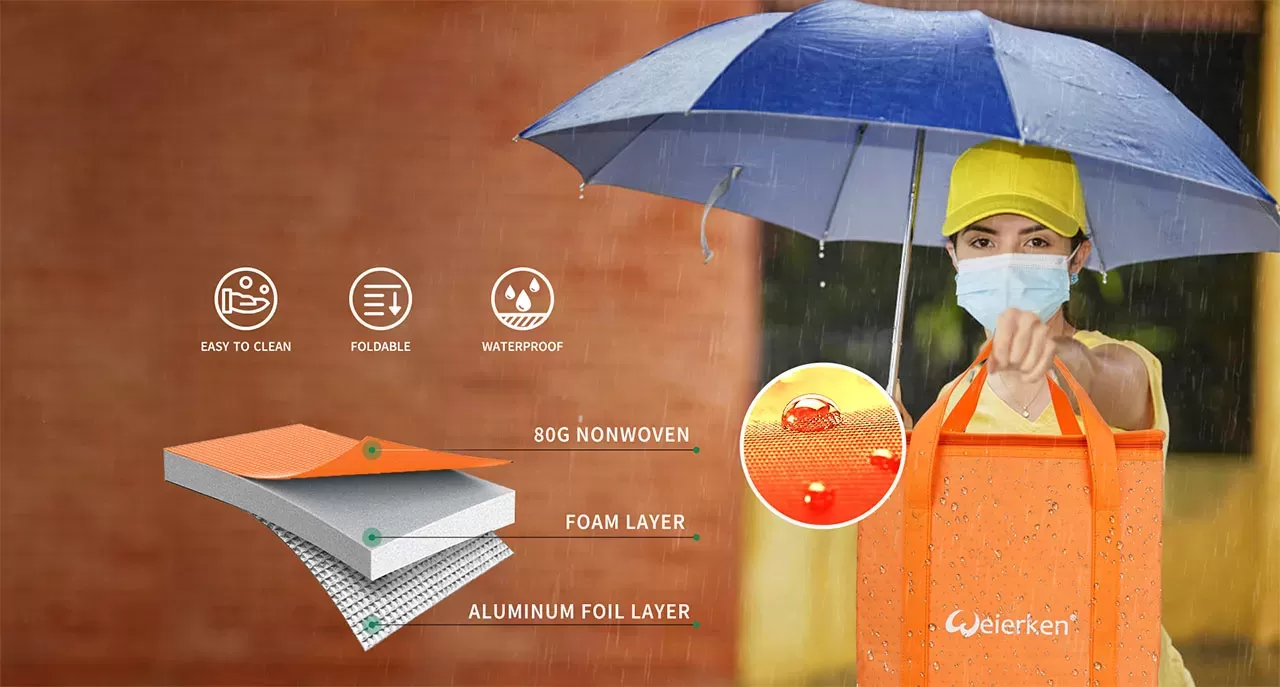
Last-Mile Delivery (Under 12 Hours): If you distribute frozen meat locally using refrigerated trucks, a lighter 2mm or 3mm foam bag with a simple aluminum foil layer is usually sufficient when paired with a gel ice pack.
Regional Shipping (12 to 24 Hours): For overnight courier shipments, a 3mm to 4mm composite barrier bag provides the necessary thermal protection without adding excessive weight.
Cross-Country Transit (24 to 72 Hours): This is the only scenario where heavy 5mm+ foam linings or double-layered insulated boxes are economically justified.
A professional frozen meat thermal bag maker will analyze your shipping routes and average ambient temperatures. By matching the bag's insulation thickness to your target transit window, you can avoid paying for excessive material performance that your logistics chain does not require.
Tip 2: Optimize Dimensions and Packaging to Slash Freight Costs
Thermal bags are lightweight but highly volumetric. This means they take up a lot of space relative to their weight. In logistics terms, you are billed on dimensional weight rather than actual weight. Shipping empty, air-filled bags from your frozen meat thermal bag maker to your fulfillment centers can sometimes cost almost as much as the bags themselves.
To combat high freight fees, you can implement three specific design and packing optimizations:
1. Standardize Your Dimensions
Custom-sized bags require specialized cutting dies, which increases the initial tooling cost and can lead to a higher material scrap rate during production. Ask your manufacturer for a list of their existing tooling sizes. Adopting a standard size can eliminate mold fees entirely and reduce the unit cost of the bag.
2. Fit Your Outer Cartons Perfectly
Ensure that the dimensions of the thermal bag align with your external shipping boxes. Any empty space inside the shipping box forces you to buy larger cartons, pay more for dimensional shipping, and use extra void-fill materials. A tight fit also improves thermal insulation by eliminating convective air pockets.
3. Request Vacuum Compression Packaging
Ask if your frozen meat thermal bag maker can ship your order using industrial vacuum packing. Compressing the bags flat allows the factory to pack 30% to 50% more units into a single shipping carton. This significantly reduces your shipping costs per unit, especially for ocean freight or long-distance trucking shipments handled by partners like weierken.
Tip 3: Leverage Forecasting and Off-Peak Blanket Orders
The prices of raw materials, such as plastics, non-woven fabrics, and aluminum foil, fluctuate based on global commodity markets. Additionally, thermal bag factories experience sharp seasonal demand spikes ahead of winter holidays and summer barbecue seasons. Sourcing during these peak times usually means paying premium prices and dealing with extended lead times.
You can use your purchasing schedule to negotiate better rates by applying these supply chain strategies:
Consolidate Your Orders: Instead of purchasing small batches of 500 bags every month, consolidate your volume into a single quarterly order to meet higher minimum order quantities (MOQ). This unlocks volume discounts from the factory.
Utilize Blanket Orders: Establish a yearly contract with your frozen meat thermal bag maker. You can lock in a lower unit price based on your annual volume, while arranging staggered deliveries (call-offs) throughout the year. This protects you from raw material price spikes and reduces your on-site storage needs.
Schedule Off-Peak Production: Place your orders during the factory's slower months. Manufacturers are often willing to offer discounts during these periods to keep their production lines running consistently.
Planning your procurement schedule in advance allows you to utilize the manufacturer's capacity when prices are low and delivery times are fast.
Reducing sourcing costs for your cold chain packaging is not just about choosing the cheapest option. It requires careful material selection, freight optimization, and collaborative supply chain planning. Working with an experienced frozen meat thermal bag maker helps you target and eliminate waste throughout the manufacturing process.
As an industrial manufacturer, weierken works closely with B2B buyers to develop cost-effective, high-performance packaging solutions. Contact us today to receive a free packaging audit and request a quote for your business.
Frequently Asked Questions
1. How does the choice of closure affect the cost of a frozen meat thermal bag?
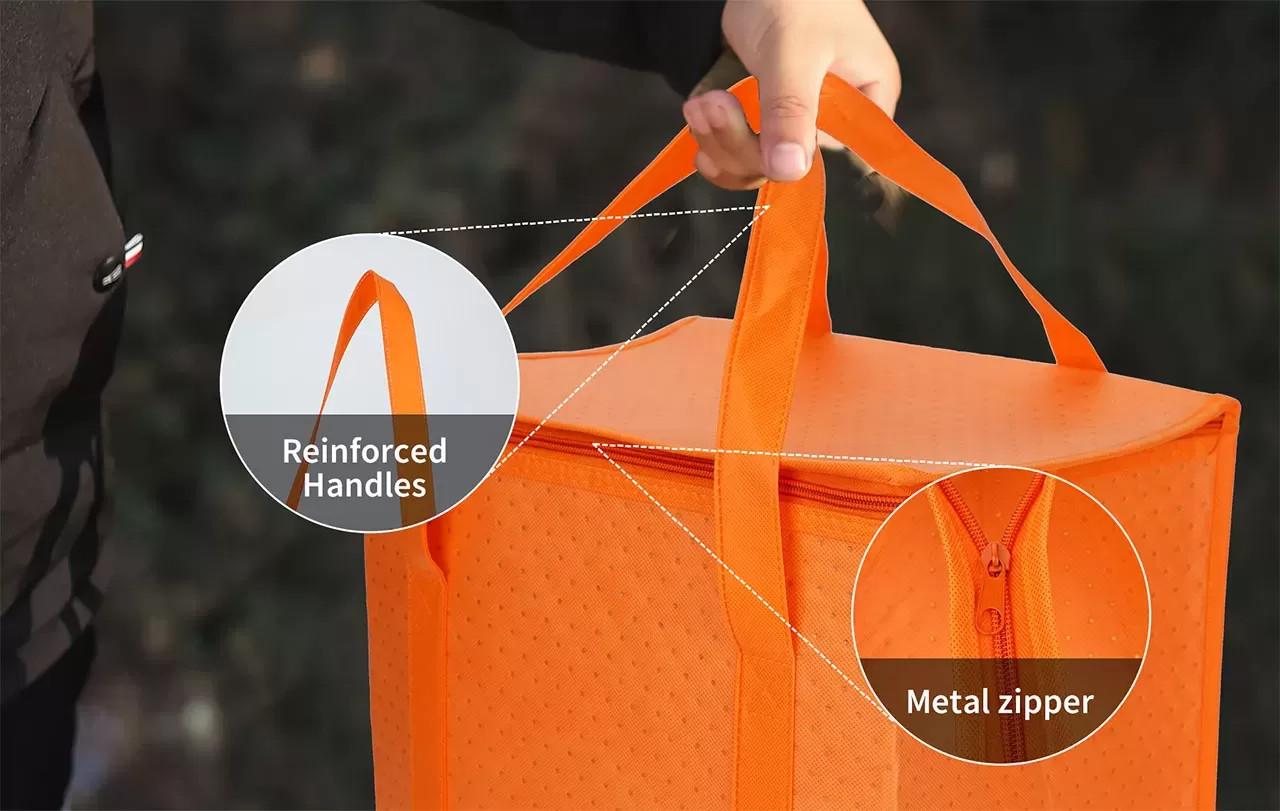
The closure system has a direct impact on both material and assembly labor costs. Zipper closures offer excellent sealing but are more labor-intensive to sew, making them more expensive. Adhesive strip closures or Velcro options are generally more cost-effective for single-use or short-transit shipments.
2. Can vacuum-compressed thermal bags recover their shape without losing insulation power?
Yes. High-quality EPE foam features closed-cell structures that regain their original thickness shortly after you open the vacuum packaging. This recovery process ensures the bag retains its full thermal performance during transit.
3. Why is the scrap rate important when calculating custom bag costs?
During manufacturing, raw material rolls are cut into specific panel sizes. If your custom dimensions do not fit efficiently within the standard width of the material roll, the leftover material becomes waste. Working with your frozen meat thermal bag maker to adjust your dimensions by even a few millimeters can often reduce waste and lower your unit cost.
4. Is it cheaper to buy flat-packed thermal bags or box-shaped gusset bags?
Flat-packed envelope-style thermal bags are generally less expensive to manufacture and ship. Box-shaped bags with flat bottoms require more complex folding, stitching, or heat-sealing, which increases labor costs. However, box-shaped bags fit rectangular boxes better and maximize internal shipping space.
5. How does a blanket order contract work for cold chain packaging?
A blanket order is a long-term agreement where you commit to purchasing a set quantity of bags over a 6 to 12-month period. The frozen meat thermal bag maker manufactures the goods in larger, cost-effective runs, stores them in their warehouse, and ships them to your facility in smaller batches as needed.