
In the world of temperature-controlled storage and industrial cooling, the choice of manufacturer dictates the success of your product line. A professional nylon cooler factory provides more than just a container; it delivers a technical solution for thermal retention and durability. Whether you are sourcing for the medical, food, or outdoor gear industries, the stakes remain high. Failure in the field leads to spoiled goods and damaged brand reputations.
Many suppliers claim to offer high-performance cooling solutions, but few meet the rigorous demands of professional B2B procurement. Companies like weierken understand that reliability is built on consistent engineering and strict quality gates. Finding the right partner means looking beyond the surface level of a website and examining the actual production standards that govern the factory floor. This article outlines the six critical standards every buyer must verify when choosing a nylon cooler factory.
1. Raw Material Traceability and Certification
Quality begins with the pellet. A reliable nylon cooler factory must be transparent about where they source their nylon resin and insulation materials. High-purity nylon is essential for maintaining structural integrity under stress. If the factory uses recycled or low-grade plastics without proper stabilization, the cooler will likely crack or warp when exposed to extreme temperatures.
Verify that your supplier can provide the following certifications:
RoHS and REACH Compliance: This ensures the materials are free from hazardous substances, which is critical for food-grade and medical coolers.
UL Certification: For industrial coolers used near electrical components, flame retardancy and safety certifications are non-negotiable.
Material Data Sheets (MSDS): A professional nylon cooler factory will provide technical specs showing high thermal resistance and anti-aging properties.
By demanding traceability, you protect your brand from future liability. Traceability ensures that every batch of coolers has a recorded history, allowing for targeted recalls if a material defect ever occurs. It also proves the factory is invested in a high-standard supply chain management system.
2. Advanced Molding Process Control Capabilities
The performance of a nylon cooler depends heavily on the precision of the injection molding or extrusion process. Inconsistent wall thickness or internal stresses can lead to insulation gaps. A top-tier nylon cooler factory invests in automated equipment that monitors every variable in real-time. This level of automation reduces human error and ensures that the 10,000th unit is identical to the first.
Key technical parameters the factory should monitor include:
Temperature Precision: Strict control of the melt temperature to prevent nylon degradation.
Injection Pressure: Ensuring the mold is filled completely to maintain dimensional accuracy and structural strength.
Cooling Time Cycles: Proper cooling prevents internal warping and ensures the mounting interfaces align perfectly with other components.
When you visit a nylon cooler factory, look for machines equipped with digital monitoring systems. If the factory relies on manual adjustments and legacy machinery, they may struggle to meet the tight tolerances required for high-performance thermal insulation products. Companies like weierken prioritize these automated workflows to maintain superior product consistency.
3. Standardized Temperature and Pressure Testing
Nylon coolers often operate in harsh environments. They must withstand high internal pressures and fluctuating external temperatures. A reliable nylon cooler factory does not guess about performance; they use laboratory equipment to prove it. You should ask for burst pressure test reports and thermal stability documentation before placing a bulk order.
Standard tests should include:
Thermal Resistance: Testing the cooler at temperatures above 120°C to ensure it does not lose shape or insulation efficiency.
Bursting Pressure: For coolers used in pressurized systems, the factory must perform destructive testing to find the failure point.
Low-Temperature Impact: Ensuring the nylon does not become brittle and crack in freezing conditions.
A reputable factory maintains a dedicated testing lab. They should be able to provide traceable test reports for every production batch. This data is the backbone of a reliable nylon cooler factory and provides the technical assurance that your product will survive the rigors of real-world use.
4. Sealing Performance and Leakage Rate Control
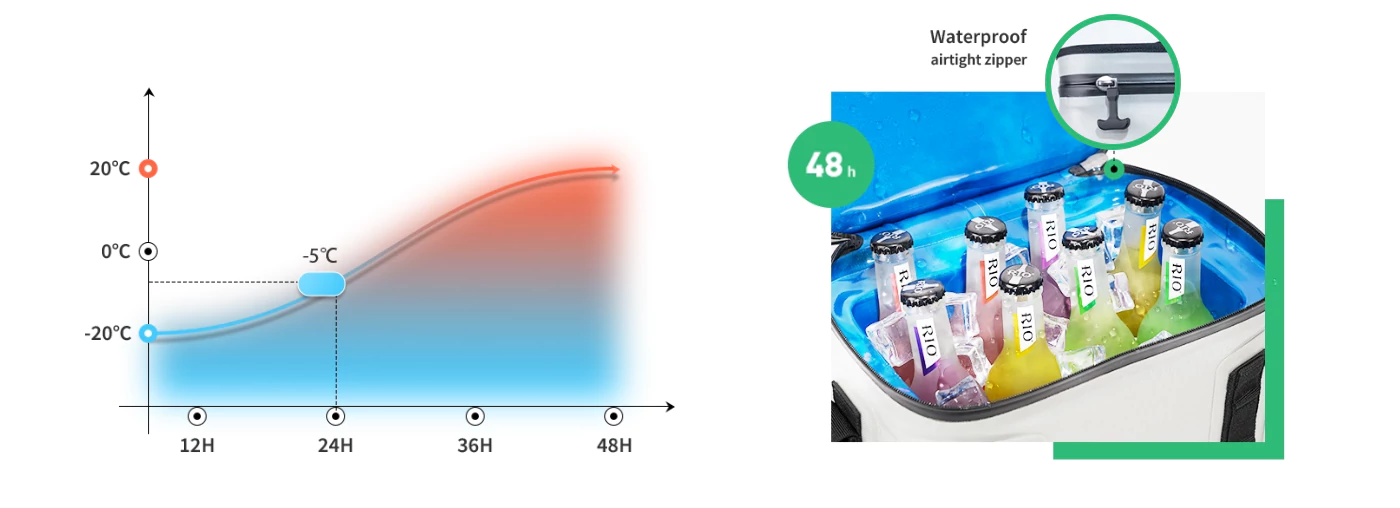
The insulation is only as good as the seal. Whether the cooler uses a mechanical gasket or a high-frequency welded seam, the sealing structure determines the long-term effectiveness. A professional nylon cooler factory employs sophisticated leak detection equipment to ensure every unit is airtight. Even a tiny leak can significantly degrade thermal performance and lead to condensation issues.
Typical industry-leading sealing standards include:
Pressure Differential Testing: Using air pressure to detect leaks that are invisible to the naked eye.
Water Submersion Testing: A classic but effective method for verifying the integrity of sealing gaskets.
Leakage Rate Limits: Leading factories keep leakage rates below ≤0.5mL/min to ensure vacuum insulation or airtightness is maintained.
Ask your nylon cooler factory about their Quality Assurance (QA) process for sealing. Do they test 100% of the units or just a small sample? For critical applications, 100% testing is the only way to guarantee a zero-defect shipment. Precision in sealing is what separates a generic container from a professional-grade cooling solution.
5. Dimensional Stability and Batch Consistency
B2B clients often integrate coolers into larger systems. If the dimensions vary between batches, the product might not fit the intended housing or mounting brackets. A high-quality nylon cooler factory establishes a Statistical Process Control (SPC) system. This system tracks critical dimensions like wall thickness, internal diameters, and interface alignments across every production run.
Reliable batch consistency offers several benefits:
Interchangeability: Components from different batches can be swapped without assembly issues.
Reduced Assembly Time: Consistent dimensions mean your production line doesn't have to stop for "bad fits."
Reliable Performance: If the wall thickness is consistent, the thermal conductivity remains predictable across all units.
A professional nylon cooler factory will use coordinate measuring machines (CMM) or high-precision calipers for sampling. They should share their SPC charts with you upon request. This level of transparency proves that the factory is not just "making parts" but is managing a precise manufacturing process.
6. Custom Development and Technical Response
Rarely does an off-the-shelf product meet all the requirements of a specialized industry. A reliable nylon cooler factory must have strong R&D capabilities. They should have an engineering team capable of modifying molds or designing entirely new cooling structures to fit your equipment. weierken excels in this area by offering full-cycle support from initial CAD drawings to final production.
Check for these indicators of strong development support:
In-house Mold Workshop: This allows for faster revisions and lower costs during the prototyping phase.
Engineering Support: Can they suggest better materials or structural changes to reduce costs?
Rapid Prototyping: The ability to provide 3D-printed or CNC-machined samples within a few days.
Beyond development, consider their after-sales response. If a quality issue occurs, does the nylon cooler factory have a "closed-loop" mechanism for handling complaints? They should be able to identify the root cause, implement a fix, and report back to you within a set timeframe. This accountability is the final pillar of a reliable manufacturing partnership.
Summary of Quality Standards
Choosing a nylon cooler factory is a technical decision that requires looking at data, machinery, and management systems. By insisting on raw material traceability, advanced process control, and rigorous pressure testing, you ensure your product stands up to industry demands. Consistency in sealing and dimensions, backed by strong engineering support, makes for a partner that grows with your business.
Working with a proven leader like weierken gives you access to these high standards and more. They combine technical expertise with a commitment to quality that ensures your cooling solutions are world-class.
Frequently Asked Questions (FAQ)
1. Why is nylon preferred over other plastics for coolers?
Nylon offers a superior balance of tensile strength, thermal resistance, and chemical stability. Unlike cheaper plastics, nylon can withstand high temperatures without losing its shape, making it ideal for industrial-grade coolers and high-performance insulated bags.
2. How long does a typical nylon cooler development project take?
For a standard nylon cooler factory, prototyping usually takes 7 to 14 days. If a new mold is required, the tooling process can take 30 to 45 days. Once the mold is finalized, mass production typically takes another 30 days depending on the quantity.
3. Can these coolers be used for medical transport?
Yes, provided the nylon cooler factory uses food-grade, non-toxic materials and meets specific cold chain validation standards. Medical coolers often require 100% leak testing and certified thermal retention durations.
4. What is the difference between Nylon 6 and Nylon 66 in manufacturing?
Nylon 66 typically has a higher melting point and better abrasion resistance, while Nylon 6 is easier to mold and more cost-effective. A professional factory will recommend the best version based on your specific temperature requirements and budget.
5. What are the common causes of failure in nylon coolers?
Failure is usually caused by poor weld strength, material degradation due to improper injection temperatures, or inadequate wall thickness. Choosing a factory with strict process control and pressure testing protocols eliminates these risks.
6. Do you provide customized logo and branding options?
A professional nylon cooler factory like weierken offers various branding methods, including silk-screen printing, embossed logos on the mold, and customized color matching (Pantone) to ensure the product aligns with your brand identity.
Ready to secure a manufacturing partner that meets these rigorous standards? At weierken, we specialize in high-performance nylon cooler factory services, ensuring every unit we produce is built to last. Our engineering team is ready to help you optimize your design for maximum efficiency. Request a quote today to learn how we can support your next project with precision and reliability.